Nearly two decades ago, a generation came of age as September 11 took place. Today, another generation is growing up amid a pandemic. COURIER spoke with both to see how the events of 9/11 and their aftermath continue to take a toll.
As the nation continues to mourn the mounting toll of the coronavirus pandemic, today is also a day of remembrance across the United States. It has been 19 years—nearly two decades—since the 9/11 attacks took place. President Trump and former Vice President Biden are commemorating the event in New York City and Pennsylvania, and around the country, families who lost loved ones on that day continue to mourn.
The events of September 11 had profound effects on the world. The US has been engaged in a shape-shifting War on Terror since 2001. Troops are still in Afghanistan and Iraq, despite President Trump’s pledge to remove them. Immigration and refugee programs—long in place to help those displaced by just such conflicts—have essentially been shut down by the Trump administration. And executive orders have been passed specifically targeting those trying to enter the US from majority Muslim nations.
Like the current pandemic, 9/11 drastically changed the political, social, and cultural landscape of the United States itself. And just as the coronavirus—as well as a host of issues from school shootings to climate change emergencies—is marking those entering adulthood right now, 9/11 had profound impacts on people becoming adults directly in its wake.
With that in mind, COURIER spoke to two generations of Americans—those who became adults as 9/11 and its immediate aftermath took place, and those who are becoming adults now. And the differences are pronounced.
September 11 Had a Profound Impact on Service Members—Here’s What They Have to Say.
Pete Stegemeyer, 36—Afghan War Veteran Based in New York, New York
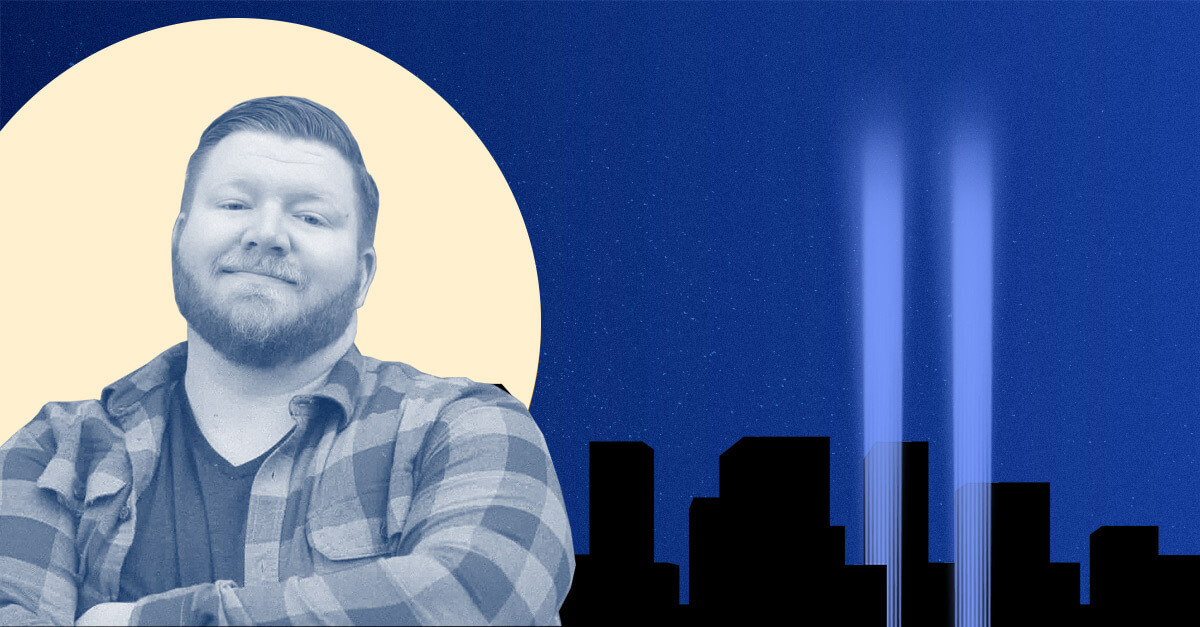
Pete Stegemeyer is an Afghan War veteran. He grew up in a small one-stoplight town in Wisconsin where they were never really scared about anything. But that all changed on September 11, 2001.
Seeing the Twin Towers collapse on television pulled back the security blanket that previously protected his town. “I remember people would be like—and this is, again, small, small-town USA—but people would see planes and be like, ‘Is that flying too low?’” he recalled to COURIER.
Stegemeyer was a senior in high school on 9/11, and at that time was unsure about where his journey would take him after graduation. Witnessing the attacks on live television that morning inspired him to serve in the United States Armed Forces.
“It changed me in a way that I was like, ‘Okay, well, joining the military is something that I have to do. This isn’t okay. This is why people join, to fight stuff like this,’” he added. “I don’t know if it was at all a patriotism thing, but it just felt like the right thing to do.”
Stegemeyer, now a cybersecurity engineer and comedian, said he did not feel prepared to be sent off to war. He was only 18 years old when he went to boot camp and then deployed to Afghanistan.
Being deployed to Afghanistan completely changed his viewpoint on America’s War on Terror and its response to the 9/11 attacks.
“The truth of it is, when you get there, these villagers have no idea what’s going on, they’ve never heard of Osama bin Laden, they don’t have TV or internet or anything like that,” the 36-year-old veteran added. “They just know that one day we showed up in their village.”
The wars in Afghanistan and Iraq are now more than two decades old. For the first time, there are soldiers now fighting in the War on Terror who were not alive on 9/11, which launched that very war. After serving two tours in Afghanistan, Stegemeyer is moved by this fact and has some advice for young Americans contemplating enlisting in the US military.
“If you want to join the military for good reasons like you’ve got family that served and stuff, that’s great,” Stegemeyer said. “But if you’re trying to join for revenge or whatever things that you think you might be joining for—think about that a little bit. You’ve got to make sure that you’re doing it for the good opportunities and not some weird idea of what we should be doing.”
Andrew Hampton, 21—Army ROTC College Student Based in Anchorage, Alaska and Brooklyn, New York

Andrew Hampton—an Army ROTC college student from Anchorage, Alaska—was only 2 years old on September 11, 2001. He doesn’t have an exact memory of the events at that age, but recalls seeing footage of the attacks being replayed on television every anniversary.
“At such a young age, you don’t understand what happened,” Hampton told COURIER. “Why is the building on fire? Why did these towers fall? So when I was young, to me it was just: These buildings are on fire and they fell and we watch it every year or it’s played every year on TV.”
His desire to join the military also began at a very young age. He knew he wanted to enlist when he was in second grade. However, it was because of a book he read on Pearl Harbor.
“It’s interesting to see that, as a Gen-Zer, my reason for joining was a different attack on US soil that happened way before I was born,” Hampton added, before noting that he also believes that his interest in enlisting also came subconsciously from watching his father come home every day in his Navy uniform as a member of the US Public Health Services (UPHS), one of the country’s eight uniformed services.
According to Hampton, Pearl Harbor likely had a bigger impact on him because he learned more about World War II in school than he did about the 2001 attacks. Hampton had to learn about Al Qaeda and the PATRIOT Act through his own research, not in school.
“We never really learned about 9/11,” he said. “You know what happened. You see it on TV every year and hear it on the radio. I would say aside from that, I remember a couple of years in elementary school specifically, we’d do a moment of silence on 9/11 and that was about it.”
Although he has the highest respect for the armed services—and is on track to be commissioned in the Navy in 2022 through the ROTC program—he doesn’t see an end to the wars in Afghanistan and Iraq and believes they will continue to adversely impact generations beyond his own.
“We’re in year 19 of the war in Afghanistan and 17 of the war in Iraq,” Hampton added. “And I think right now, it’s going to continue. Just due to the amount of time we spent in the War on Terror, I think 9/11 is going to have major implications in the way we try to adapt for the coming years.”
How Did 9/11 Affect Muslim-Americans?
Rana Abdelhamid, 27—Queens, New York
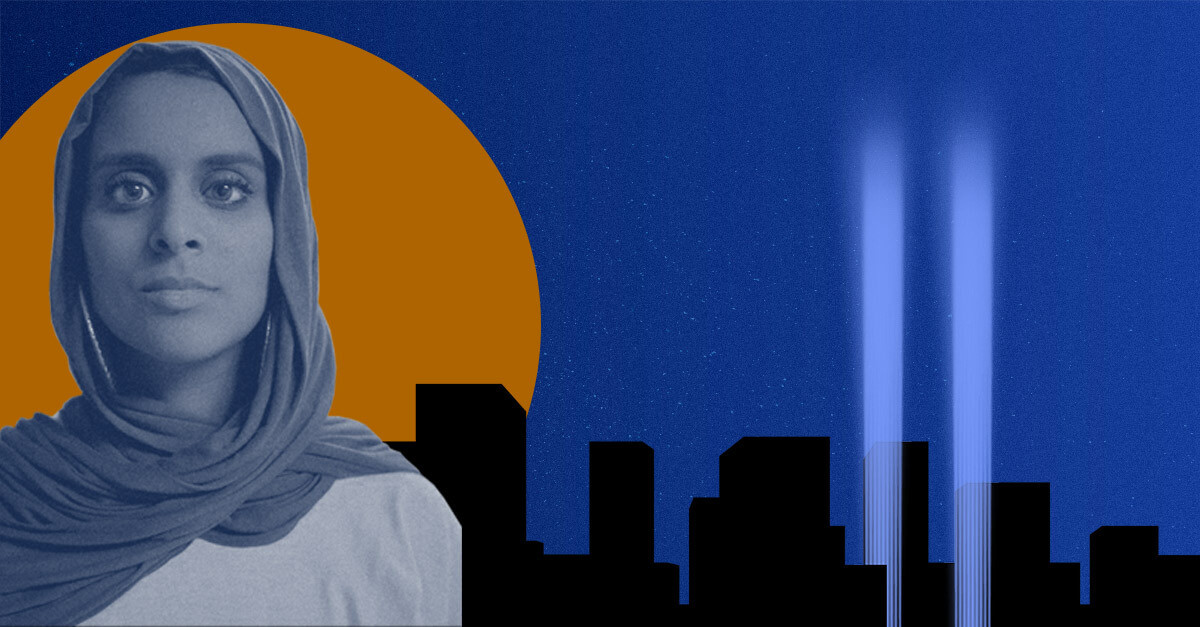
Rana Abdelhamid hates to admit it, but the September 11 attacks defined so much of her life that—at times—it’s too hard to discuss.
“It’s hard. It’s really hard to be a New Yorker, and to be Muslim, and to realize that tragedy was both devastating for me as a New Yorker, as someone who loves my city so much,” Abdelhamid said. “I love this city so much. But then also, to turn around and see your city and your government betray you, which is not surprising for communities of color, Black communities … and working-class people. But again, as a young person, it was really, really devastating. Yes, my life was deeply impacted.”
Abdelhamid was 8 years old in 2001. The 9/11 attacks forced her to grow up a lot faster than she wanted. After that day, Abdelhamid’s neighborhood in Astoria, Queens—predominantly Arab and Muslim—filled with people who were terrified. Some changed their names, others were deported. In the middle of the night, Abdelhamid said people would be picked up and detained.
It was a time of fear for everyone. But for Muslims in the United States, it took a different toll.
“You go from this time of sadness and tragedy and loss, to being shaken and scared that you’re going to be targeted, and you are targeted,” Abdelhamid said.
“[There was] a lot more bullying around my Muslim identity that I never had to experience before that moment,” Abdelhamid added. “And then, my Muslim identity just became way more salient. Before that moment, I was kind of just like a Latina passing girl, no one really knew or cared about what my background was as a North African. But now, I was really Muslim. Muslimness felt very real to me.”
When Abdelhamid was 15, it became real—and violent. She was assaulted by a man who tried to rip off her hijab while walking down Jamaica Avenue, in Queens.
“At the moment, I didn’t have the language to describe what I experienced, but I experienced hate crime,” she said. “And we know that after 9/11, hate crimes against Muslims in the United States increased by 1600%.”
She never thought that nearly 20 years later, the number of anti-Muslim hate crimes would climb even higher with President Donald Trump in office.
Experiencing racist violence prompted Abdelhamid to start her own non-profit organization, Malikah, to help women from all marginalized communities defend themselves—whether that’s through self-defense classes or restorative justice work.
Even though Abdelhamid is leading the way for other women, the legacy of 9/11 is something that continues to mark her entire life.
“Every time it’s September 11, that day is so heavy. That day is so heavy for me as a New Yorker,” Abdelhamid said. She knew people who died that day, including first responders who were friends of her family.
“Sometimes I would feel really bad about the amount of sadness that overwhelmed me on 9/11 every single year,” Abdelhamid added. “It almost feels like for me, this is such a big day for me that I need to process and heal, from the devastation as a New Yorker, but also as a Muslim New Yorker. And I think just creating that space for our people, for ourselves, for communities of color that were impacted, for New Yorkers to really just mourn, and grieve, and take a step back if it’s needed, is really important. And I hope folks create that for themselves.”
Aaliyah Hussain, 17—Brooklyn, New York
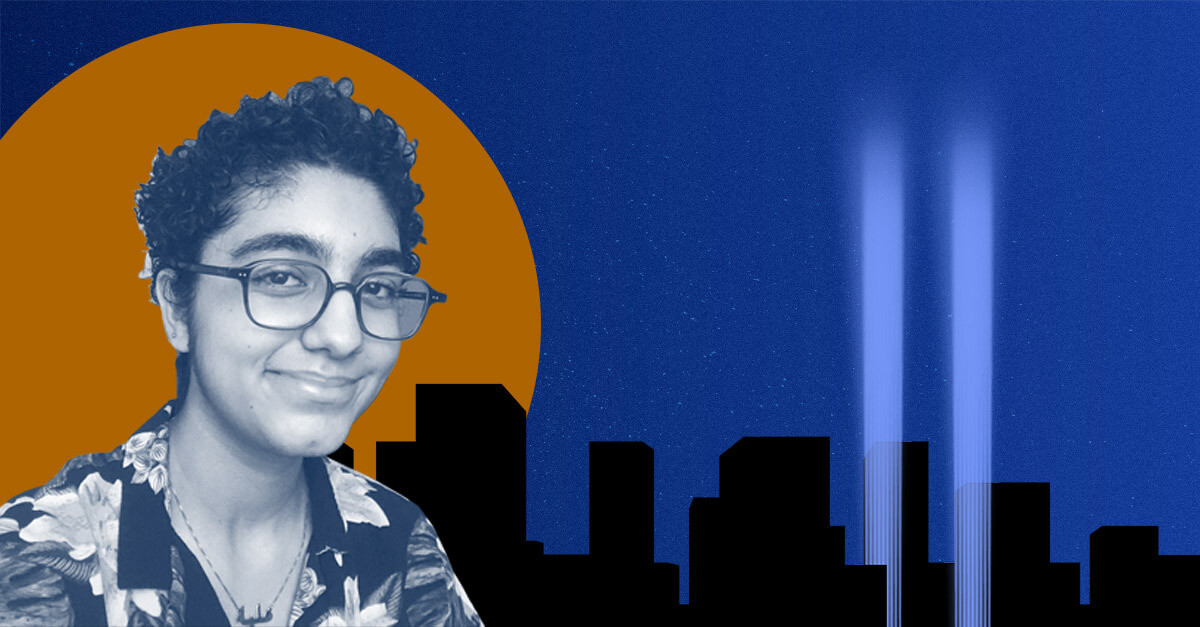
Aaliyah Hussain is an American-born Muslim teenager. She wasn’t alive when the 9/11 attacks occurred, but that hasn’t shielded her from the effects of that day.
“Basically, for as long as I can remember, that whole stereotype of Muslims or Arabs just being terrorists has kind of followed me around everywhere,” Hussain said.
“I know personally that I would kind of dread going to school on September 11 because I knew people were going to make jokes about it to me. It was never a fun experience for me to have to deal with that.”
For the 17-year-old, it’s painful to be associated with organizations and violence to which she has no connection. “It’s just always been hard,” she told COURIER. “Because not only do I have to deal with the fact that this happened and we talk about it in school, but then kids give you dirty looks around the classroom, or they’ll make side comments that you can hear where they’re like cracking jokes about you and your religion and your culture.”
And the bullying isn’t just one day a year.
“People would ask me if 9/11 was my holiday or they’d just call me a terrorist,” she said. In third grade, she heard classmates taunting a girl wearing a hijab during recess, repeatedly calling her a terrorist. “I don’t wear a hijab, which is like a whole other thing, but just hearing that that’s how people felt about Muslims in third grade was kind of ridiculous,” she recalled
The fear of racism was with Hussain even when she visited the 9/11 memorial with her Arab family members. She said she “was so scared of the looks we were going to get, and how people were going to be like, ‘What are you doing here?’”
Hussain feels that she has grown up faster because of 9/11 and her identities as an Arab and Muslim.
“Most people, when they deal with 9/11, they deal with the fact that those people died and it was a terrible attack on our country and things will never be the same,” she added. “But then there’s the added weight of how it personally affects you and how you have to deal with this on a whole gamut, racism and all this other stuff on top of it.”
The Perspective of New Yorkers, Native and Newly Arrived
Madeline Moitozo, 36—Los Angeles, California and Brooklyn, New York
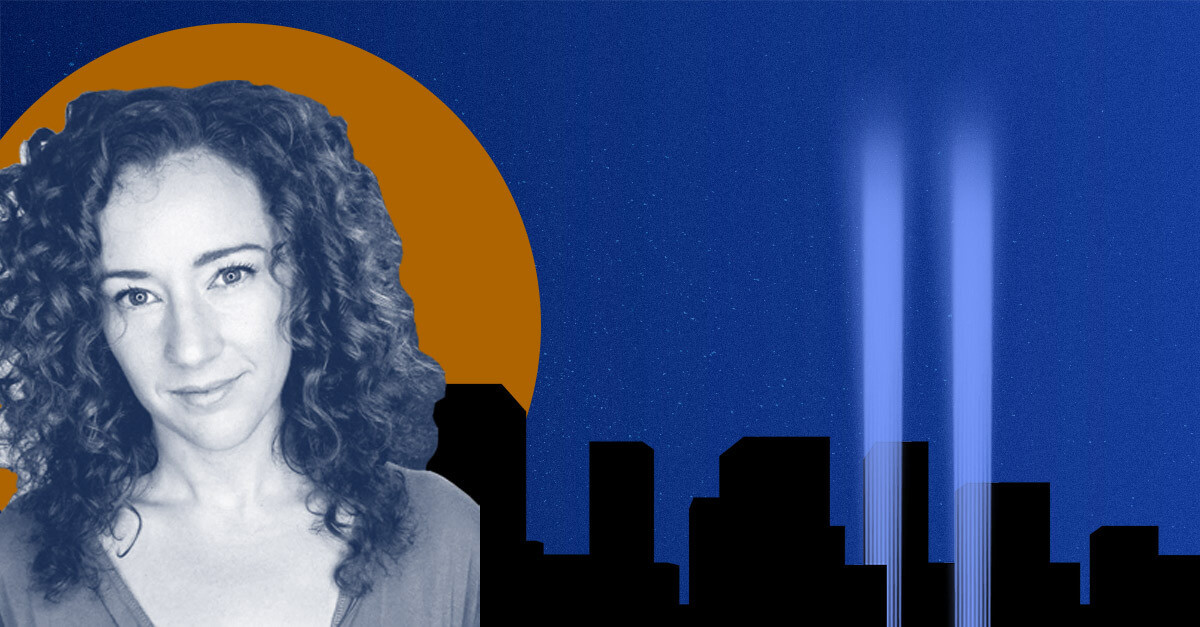
Despite being a New Yorker now, Madeline Moitozo believes that 9/11 affected more than just New York City. Although the national tragedy is a somber moment in her life, she feels it’s necessary to acknowledge how the nation’s response to the aftermath has adversely impacted the lives of so many other people around the world.
After permanently relocating to New York City from the San Francisco Bay Area in 2013, she finds that the politicization of that day has done a great disservice to the tragedy and the Americans affected by it. “I think what happened is so terrible,” Moitozo told COURIER. “Especially being a teenager when it happened, it shaped the world I was growing up in, literally. Yes, we definitely need to protect our country, I agree. I think that it’s important to do that, but we also are responsible for creating the dynamic that makes a need for it to be protected.”
Moitozo experienced loss herself on 9/11. Her neighbor’s son was on United 93, which crashed into a field in Stonycreek Township, Pennsylvania, and two people from her high school were killed.
Years later, Moitozo is still fearful of another terrorist attack. While she believes that the country has enacted protections to prevent another plane attack, she told COURIER that she is fearful of bioterrorism in particular. “I don’t necessarily feel safer than I did around 9/11,” she revealed. “I think probably my concerns are more domestic than international.”
The 36-year-old highlights the alarming cases of school shootings, climate change, the coronavirus pandemic, and police brutality as major transformative events for younger generations.
“You’d think for sure that shooting up an elementary school would be the end-all-be-all change. Nobody imagined that this would still be happening after those kindergartners died,” Moitozo added, referring to the Sandy Hook Elementary School shooting.
“I think that Gen Z is just facing so many different issues that we didn’t think about as much. Not to say that they didn’t exist, but they weren’t at the forefront,” she said. “I just think there’s so many more threats now. I think that something like 9/11 or terrorism is only one of the several threats to life now. I think that there’s an uprising happening for a really important reason when we look at Black Lives Matter too. There’s just a need for justice and change.”
Rosanna Monterosso, 18—Brooklyn, New York
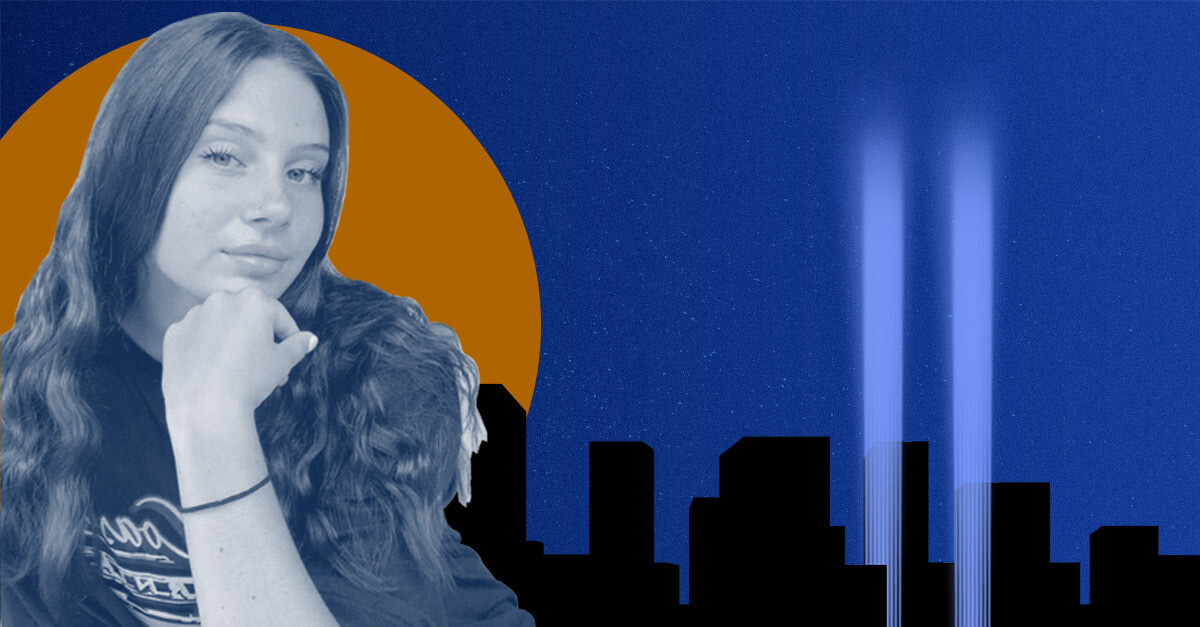
Like many of those born in late 2001, Rosanna Monterosso came into this world in a time of fear and uncertainty. Although she had not been born at the time of the attacks, Monterosso still feels a deep connection to the national tragedy.
“I’ve been learning about it since I was little,” Monterosso said. “My mom, she worked in the city too and she was told not to go to work and she was pregnant with me. I always think of that.”
Her mother, Beth, was 20-weeks pregnant with Monterosso when the Twin Towers were hit. At the time, her father was headed to Manhattan for work when a victims’ keys landed on his car. According to the 18-year-old, her father helped drive 10 strangers out of Manhattan—a place so many were struggling to flee that day.
Monterosso said her parents still talk about what took place on that day and she believes that it has affected her life.
“Yeah, I feel like it has an effect,” she added. “I find it interesting because I was almost there, but not really. It’s crazy to think that they were. They weren’t in the buildings or really weren’t hurt or anything, but they were still living in that time and had something to do with it.”
Despite her own family’s connection with the events of that day, Monterosso does worry about the how politicians have manipulated the narrative around 9/11. “It was a really bad tragedy,” she offered. “I feel like it’s not always appropriate. It depends on what they’re using it for, but I just feel like they shouldn’t always use it. They’re being insensitive to people too.”
And while Monterosso said she feels safe in New York City, she does have fears about current events.
“I think all of these things have created so much fear within us too,” she said. “It’s sad because it’s not really good to live in fear at all. I’ve learned that from this pandemic, too.”
Does she worry that something like 9/11 will happen to her generation? “ I think there’s always that fear that it will happen again, and especially since we didn’t experience it, we don’t want to and I don’t think anybody does,” she told COURIER. “Yeah, I definitely fear it happening again.”
How Those Outside of New York City Experienced 9/11
Jamil Khan, 28—Lahore, Pakistan and Alexandria, Virginia
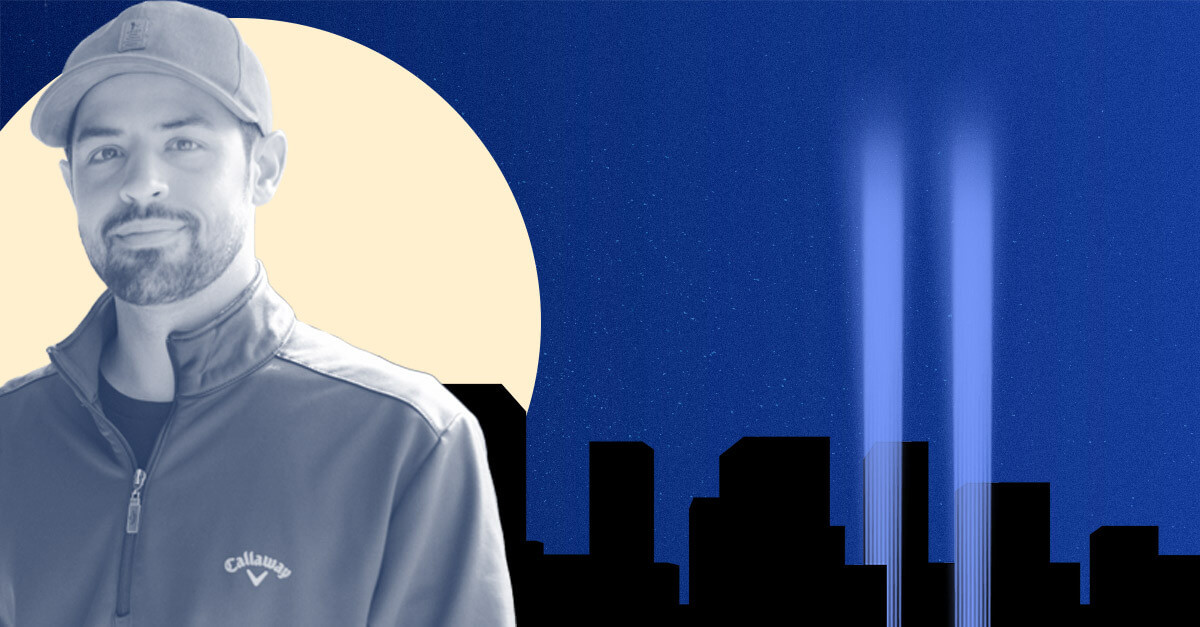
Jamil Khan had a different experience than most Americans on September 11, 2001. “I was an American living overseas during 9/11,” he told COURIER. He and his family—Americans of Pakistani descent—were living in Lahore, Pakistan on the day of the attacks.
Their initial reaction to the tragic news prompted one urgent question: Is it safe to stay in Pakistan?
“I think it was 24 hours or even within hours of the attacks, and there was already a drumbeat to start the War on Terror,” Khan, who was 14-years-old at the time, remembered. His family was concerned about what would happen if a then-potential war in Afghanistan spilled over into Pakistan.
Like many other Americans living abroad, the Khan family decided their safest bet was to travel back to the US. “I got on a flight a few days after the attacks,” he said “It was weird being on a flight full of people—a lot of people that I knew—and we didn’t know whether we were going to come back [to Pakistan] and when.” However, other friends in Pakistan were concerned that his move back to Washington, D.C., where his mother’s family was based, was less safe than staying in Pakistan.
Within a short amount of time, the attacks completely changed Khan’s life. It split his family apart—his mother stayed in the US to look after his older sisters and he went back to Pakistan with his father to finish his grade schooling. And that separation hasn’t been rectified. “9/11 separated us and then we never really got back together,” Khan said. “We are still family, but it scattered us.”
As Muslim communities in the US have endured bullying and worse in the long wake of 9/11, Khan experienced the inverse as an American living in Pakistan.
“There were a lot of people who were just like, ‘What is this American doing here?’ Even though I’d been born in and grew up [in Pakistan],” Khan said. He added that many of his friendships went sour.
“There was news of Taliban offering bounties for Americans in Pakistan and people would be like, ‘I’m going to throw you under the bus,’” he said. “‘You mess with me, I’ll call an uncle and have you disappeared.’” But Khan also says he has learned to adapt—out of necessity. “‘I can adapt to any environment’ is what I learned through living there, living here now, and having traveled a lot,” he told COURIER.
Khan also sees broad changes that—despite the nearly two decades that have passed since 9/11—continue to affect citizens of the US.
“It definitely was life-changing,” Khan said. “Metal detectors in schools and things like that was a new reality for me.”
But the changes are deeper, too. Despite being an American, Khan is still targeted by the nation’s security apparatus. “I have Global Entry and yet I’m still sent to Secondary Immigration,” he said. “I’ve done everything to try to clear my name and yet I’m still given that extra unnecessary, in my opinion, security theater at airports. No one likes that, but then again, I just have to get through it.”
Maeve Begley, 15—Chicago, Illinois
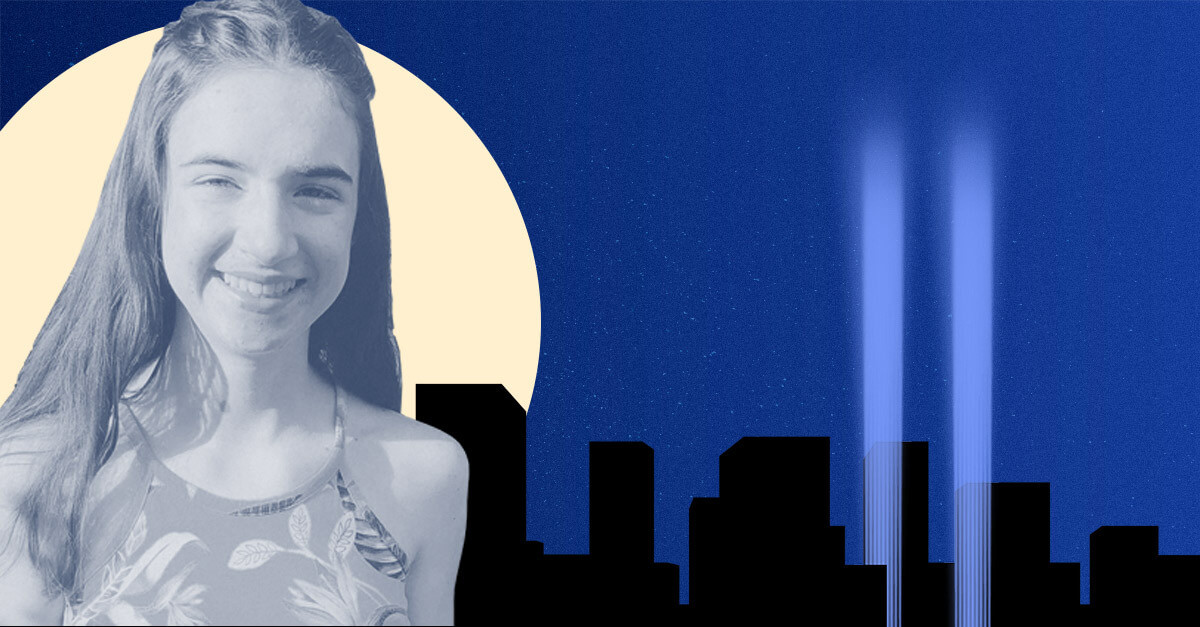
Maeve Begley came into the world four years after the 9/11 attacks. Although her family lived through the era of September 11, Maeve’s connection to it is fairly ephemeral.
At 15, Begley has only known an America that has been mired in the endless War on Terror. She knows people have to take their shoes off and go through intense screenings at airports, and that politicians often exploit 9/11 for their own agendas. She also recognizes that the events of 9/11 changed America’s own perception of itself. “They thought it was invincible,” she told COURIER. “America was invincible.”
At school, conversations about 9/11 and the aftermath have been limited in Begley’s experience. “We kind of started learning about it in third grade,” she told COURIER. “It wasn’t really part of the curriculum—it was kind of just special, for that day. Teachers would do a lesson about it. They talked about the planes flying into the Twin Towers, the firefighters who wanted to save people, they talked about the passengers who took one of the planes back over [before it crashed].”
According to Begley, there weren’t a lot of conversations or lessons about how September 11 impacted Muslims or the Middle East. She also doesn’t recall being offered lessons that dispelled stereotypes about Islam. However, she recognizes that the way that current politicians speak about Muslim Americans is rooted in bigotry related to 9/11. “It’s kind of embarrassing that our president’s talking about it like that,” she added. “I think it’s really sad, and I feel like it’s so undeserved for them.”
She learned more about the attacks and its toll on all Americans from her parents at home, where they live in a predominantly Muslim and Arab neighborhood. “My mom told me about some stories about people who had undeserved prejudices against them because they were Muslim,” Begley said.
As a Gen-Z teen, it’s difficult for Begley to honestly answer if she believes the 9/11 attacks still have an impact on her generation. If anything, she believes the coronavirus pandemic and climate change are the defining events and issues of her life.
“I think the pandemic was more transformative,” Begley added about her generation. “I think it had a bigger impact.”