
Arizona abortion-rights supporters deliver over 800,000 petition signatures to the capitol to get abortion rights on the November general election ballot on July 3, 2024, in Phoenix. (AP Photo/Ross D. Franklin)
The battle for how the Arizona Abortion Access Act will be described to voters in an information pamphlet is still ongoing, with two recent court decisions breaking in favor of the group that is championing a ballot measure to amend the state constitution to include the right to abortion.
Ahead of every general and midterm election, Arizona sends registered voters an informational pamphlet that outlines what candidates’ positions are on various issues. It also offers a quick rundown on what ballot measures would do if passed or rejected.
The language included in that pamphlet is supposed to be impartial, according to state law, in order to maintain its mission of informing but not guiding voters. A committee within the Arizona Legislature determines what that language should look like.
RELATED: Arizona lawmakers sued for using biased language in voter pamphlet
Last month, however, the Republican-majority committee made the decision to use the words “unborn human” for the Arizona Abortion Access Act, a phrase that’s popular among anti-abortion activists. The medically correct, and thus impartial, language instead would be “embryo” or “fetus.”
“I don’t care what the medically accurate term is,” Arizona Rep. Ben Toma, a Republican, said.
The Arizona for Abortion Access campaign filed a lawsuit to get rid of the “unborn human” language in the voter pamphlet, and won when Maricopa Superior Court Judge Christopher Whitten, appointed by Democratic former Gov. Janet Napolitano, ruled recently in their favor.
“The term ‘unborn human being’ is packed with emotional and partisan meaning, both for those who oppose abortion and for those who endorse a woman’s right to choose whether to have an abortion,” Whitten wrote in his ruling.
Toma and Arizona Senate President Warren Petersen, both Republicans on the committee that determined the language, said they will appeal.
“We aren’t surprised by this win because our opposition’s arguments had no basis in Arizona law and were nothing more than false talking points,” the Arizona for Abortion Access campaign said in a statement. “If our opposition appeals, we are confident we will prevail just as we are confident we will win at the ballot box this November.”
In a separate lawsuit, Arizona Right to Life, an anti-abortion group, tried to get the Arizona Abortion Access Act removed from the November ballot altogether. The petition to add the measure to November’s ballot received over 820,000 signatures, more than double the amount needed to qualify for the ballot.
Arizona Right to Life tried to argue that the amendment’s 200-word description was misleading.
Maricopa County Superior Court Justice Melissa Iyer Julian, appointed by Republican former Gov. Doug Ducey, denied the request from the anti-abortion group.
RELATED: Abortion will likely be on the ballot in Arizona. Here’s what to know
All appeals will head to the Arizona Supreme Court, which is entirely made up of conservative justices appointed by Ducey and former Gov. Jan Brewer, also a Republican.
Justice Clint Bolick recused himself from the case surrounding the language describing the Arizona Abortion Access Act. His wife, Rep. Shawnna Bolick, a Republican, was one of the lawmakers who voted in favor of using the language “unborn human beings.”
Another conservative justice, Bill Montogmery, said he will not recuse. Montgomery has previously compared abortion to genocide. He has also suggested that Planned Parenthood kills children and sells their body parts.
Regardless of what the Arizona Supreme Court determines the language should be in a voter pamphlet, Arizonans will still have the opportunity to weigh in on whether or not they want abortion access protected in the state constitution when they go to the polls in November.
The Arizona Abortion Access Act would give people the right to get an abortion before fetal viability—the point in a pregnancy where the fetus could survive outside of the uterus—which is around 24 weeks of pregnancy.
Abortions would be legal after fetal viability if a healthcare provider determines that the abortion is necessary to protect the life or physical or mental health of the patient.
The measure would also prevent the state from prosecuting or penalizing anyone who helps another person get an abortion, from driving a person to the appointment or scheduling it for them.
Author

Support Our Cause
Thank you for taking the time to read our work. Before you go, we hope you'll consider supporting our values-driven journalism, which has always strived to make clear what's really at stake for Arizonans and our future.
Since day one, our goal here at The Copper Courier has always been to empower people across the state with fact-based news and information. We believe that when people are armed with knowledge about what's happening in their local, state, and federal governments—including who is working on their behalf and who is actively trying to block efforts aimed at improving the daily lives of Arizona families—they will be inspired to become civically engaged.


Explained: Why AZ doctors are fighting these abortion rules in court right now
You may remember that last November, Arizona voters approved Prop 139 to protect abortion rights in the state constitution. But a year later,...

‘Crisis pregnancy centers’ in Arizona are deceiving pregnant women
When someone goes to the doctor’s office to get a diagnosis or treatment, they expect to get accurate and expert information from a licensed...

Trump’s VA abortion ban is a step backwards for Arizona veterans
In August, the US Department of Veterans Affairs (VA) announced that it would no longer allow veterans to access abortion care or counseling through...
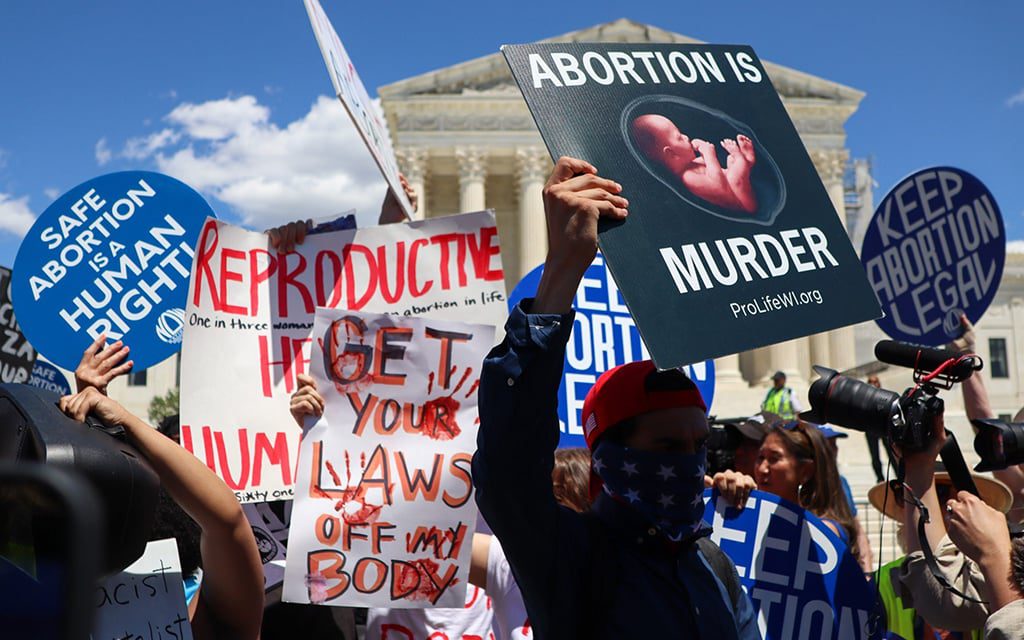
Travel time rose post-Dobbs in states limiting abortion, with AZ seeing surge from Texas
WASHINGTON – In 14 states that made abortion all but impossible to obtain after the Supreme Court overturned Roe v. Wade, women seeking to end a...