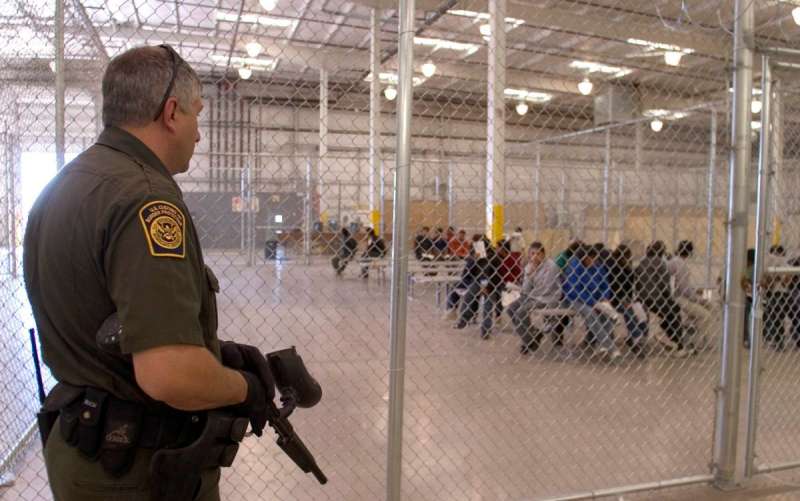
In some Border Patrol sectors, migrants have been allowed to keep no more than could fit into a small plastic bag, with the rest of their possessions discarded.
WASHINGTON – U.S. Customs and Border Protection has directed agents to stop discarding migrants’ personal belongings, after a scathing report detailing how medicine, clothes, cell phones, cash and identity documents have been taken by authorities at holding facilities and never returned.
The new rules classify legal documents, contact information and religious items as “essential personal property” that cannot be stripped from migrants. Phones, cash, medical documents and items of sentimental value must be stored, with migrants given written instructions on how to retrieve their belongings.
In April, the Government Accountability Office issued a report affirming long- standing complaints from migrants and their advocates, and documented hundreds of instances of migrants losing birth certificates, cash and clothing.
In some Border Patrol sectors, migrants have been allowed to keep no more than could fit into a small plastic bag, according to GAO, with the rest of their possessions discarded.
The American Civil Liberties Union celebrated the changes Tuesday, though Noah Schramm, the ACLU of Arizona’s border policy strategist, said he remains concerned because the rules don’t explicitly ensure that migrants get their belongings back when they’re moved to another facility or released.
RELATED: These border town mayors are putting their trust in a Kamala Harris presidency
And, he said, some might have to travel hundreds of miles back to the holding facility to exercise their rights.
“The risk there is that Border Patrol field locations will interpret the directive to only require that these belongings are stored, but not that they are physically returned to people on release,” he said. “You could imagine scenarios where Border Patrol field locations decide to hold people’s property back, and only give that (back to) people who are willing to make the often long journey back.”
In February, the ACLU and a coalition of immigrant advocacy groups, including Arizona-based ProtectAZ Health and tThe Kino Border Initiative, released a report asserting that CBP policies “systematically fail to ensure humane treatment of migrants and their belongings,” citing hundreds of instances in which authorities confiscated medicine, clothing, phones and money.
The CBP directive reflects GAO recommendations to improve the handling of personal belongings and give migrants clear instructions on how to retrieve their stored items.
Under the directive, CBP “will allow detainees to keep as much of their personal property as their facility’s physical capacity, safety considerations, transportation limitations, and personal availability allow.”
Filthy clothing and other items deemed a health hazard may still be discarded.
Migrants have complained that border agents have been overly aggressive in enforcing the health hazard provision.
GAO cited an incident in which an agent took the backpacks and clothes from a group of migrants on grounds the items “could be soiled,” rather than assessing the actual condition of the items.