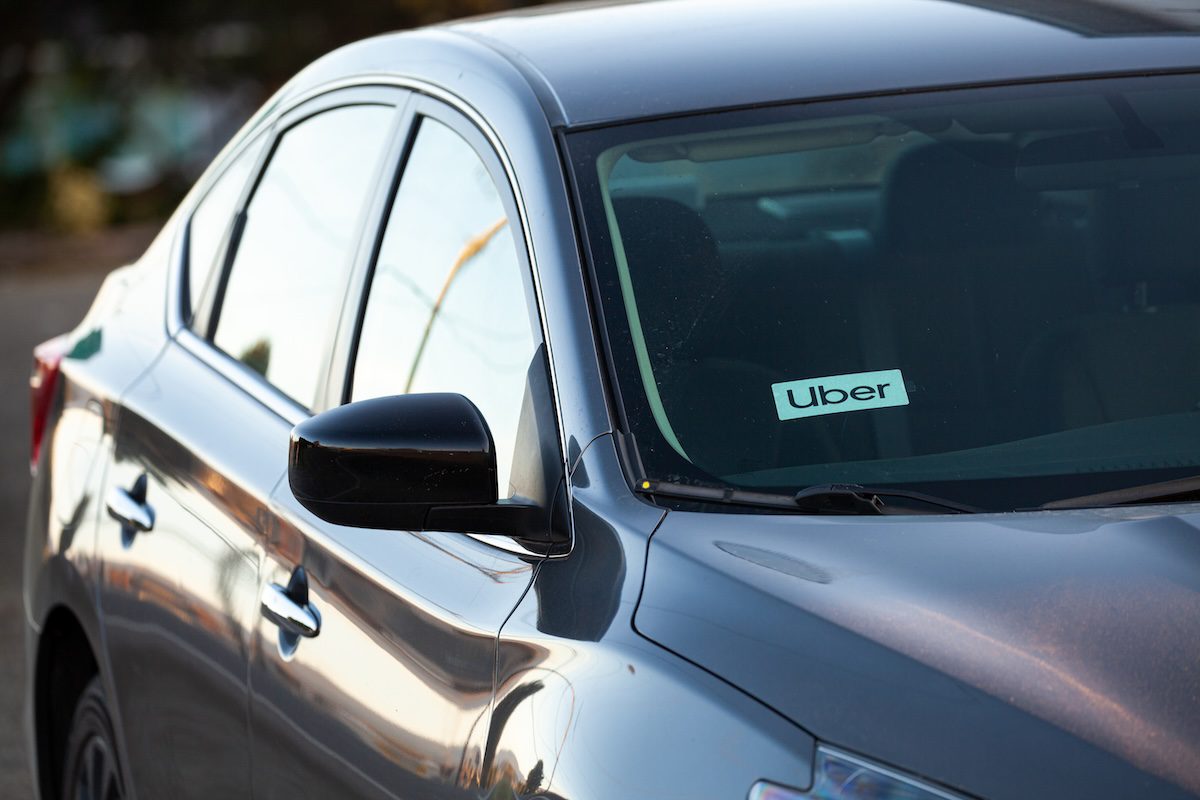
Portland, Oregon/USA-April 13, 2020: Uber rideshare car waiting for next pickup. (Hrach Hovhannisyan/Shutterstock)
A landmark lawsuit against Uber began trial this month in Phoenix federal court, in a growing wave of sexual assault claims against the rideshare giant.
Jaylynn Dean thought she was doing the safe thing. After a night out in Tempe in November 2023, she ordered an Uber for a ride home. Dean alleges her driver raped her during the trip. Her lawsuit against Uber, now unfolding in a Phoenix courtroom, is part of several other sexual assault claims against the company.
In court, Dean’s lawyers argue that Uber’s corporate culture encouraged trust in drivers while failing to implement meaningful protections.
Uber’s attorneys contend the company is not liable for the acts of a third party.
MORE: Ex-Sen. Kyrsten Sinema sued for allegedly breaking up bodyguard’s marriage
In an emailed statement, Uber spokesperson Gabriela Condarco-Quesada said, “Sexual assault is a devastating crime, and we take every report extremely seriously. Safety is foundational at Uber, and our commitment to help protect people on the platform will never stop. We continue to invest in innovative technologies, strong policies, and trusted partnerships to strengthen in-app safeguards, help prevent harm, and work with law enforcement and advocates to support survivors.”
This is the first trial in a federal process that groups similar lawsuits — known as multidistrict litigation.
The outcome could influence how other pending claims against Uber are resolved. The trial began Jan. 13 and is expected to run through the end of the month.
Over 500K reports of sexual violence from Uber riders
Court filings show that Uber has had complaints from thousands of riders who alleged sexual abuse by drivers.
In federal court, more than 90 cases were centralized in the Northern District of California as part of the multidistrict litigation.
The Dean case was selected as the first test trial. Simultaneously, Uber has defended a parallel group of cases in California state court through a special California state process that lets judges handle similar lawsuits together.
Plaintiffs introduced Uber’s own data showing over 558,000 reports of sexual violence linked to the platform between 2017 and 2024, according to court records. Plaintiffs said the volume of incidents and the patterns in timing — late nights, weekends, near bars — demonstrate the company’s awareness of risk.
But the lawsuit claims Uber allegedly failed to act decisively, even after receiving complaints about the same drivers in prior incidents.
Marketing behind Uber’s safety strategy
At the heart of the trial is a debate whether Uber prioritized safety sentiment over real safeguards. Plaintiff attorneys say the company cared more about appearances than action.
One internal email from Uber’s communications chief, Jill Hazelbaker, showed the strategy behind a planned safety report in which she wrote their goal would be to “shut down the press cycle in 24–48 hours.” In a recorded deposition, Hazelbaker said she believed transparency mattered. She pointed out that Uber’s 2017–2018 Safety Report acknowledged that women face unique risks — especially when alcohol is involved.
But plaintiffs argued those warnings were buried deep in the document, and Uber never directly alerted drivers or riders to the danger.
Inside Uber’s own reports, the risks were clear, yet there were no targeted warnings, no rider alerts and no mandatory training, according to plaintiff’s attorneys. Plaintiffs argued this showed a failure to act on known risks.
Hazelbaker pushed back, insisting safety was a priority, but said that, for a time, decisions about who got to drive were made by teams focused on growing the business, not protecting passengers.
Uber’s defense: Progress and protections
Uber argues it has dramatically improved safety over the past decade. Court documents show the company promoted safety improvements through deeper background checks, yearly driver screenings, and barring anyone with serious criminal records — including sexual assault — from getting behind the wheel.
The company said that more than 185,000 drivers were removed for misconduct.
By 2023, Uber had rolled out a set of safety tools meant to reassure passengers — features like selfie-based ID checks to verify drivers, an in-app button that connects straight to 911, and even the option to stay on the line with a live ADT safety agent for the length of a trip. ADT is a private security company that partners with Uber to provide real-time monitoring and emergency response.
Hazelbaker testified that the company “invested in our safety products and technology,” and that Uber led the industry in safety features.
Still, the plaintiff’s lawyers argue these changes came too late for riders like Dean. They allege Uber ignored red flags about her driver, including a prior sexual assault complaint that Uber retroactively invalidated.
As the Phoenix jury hears testimony, the case is being watched as a test of Uber’s liability in future sexual assault claims and the case may influence the company’s legal exposure for years to come.
Reporting by Miguel Torres, Arizona Republic
Author

Arizona attorney general sues Chinese online retailer Temu over data theft claims
Arizona Attorney General Kris Mayes announced Tuesday that Arizona is the latest state to sue Temu and its parent company PDD Holdings Inc. over...
Kelly bill would allow lawsuits over social media algorithms that promote violence, extremism
WASHINGTON – Lawmakers have struggled for years to regulate social media platforms in ways that tamp down misinformation and extremism. Much of the...

National Indigenous Domestic Violence Hotline provides culturally specific help
PHOENIX – Seven days a week, 365 days a year, the StrongHearts Native Helpline provides care and services for Indigenous people experiencing...

Report: Maricopa County Sheriff’s Office misused millions meant to remedy racial profiling
PHOENIX (AP) — The sheriff’s office for metro Phoenix spent millions of dollars budgeted for compliance costs in a racial profiling case over Joe...