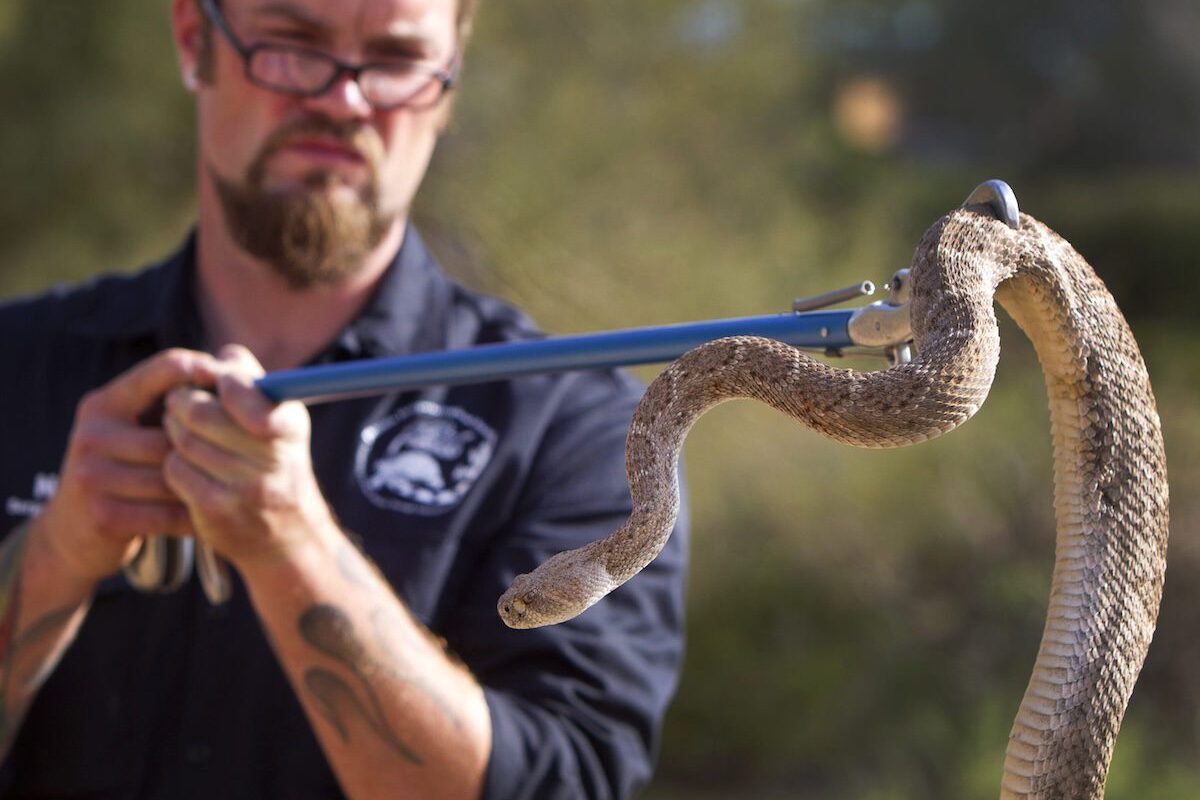
Phoenix Herpetological Society serpent curator Nate Deason handles a Western diamondback rattlesnake. The unseasonably high temperatures have drawn snakes out early, prompting experts to advise caution on Feb. 15, 2014. (Cheryl Evans/The Republic via Reuters Connect)
If you’ve ever been hiking in Arizona, chances are you, or at least your bravest friend or family member, have a snake story. It usually starts with “So we were just walking” and ends with someone leaping three feet into the air.
Welcome to snake season, Arizona’s unofficial warm-weather tradition.
Snake season typically ramps up in spring and runs through early fall, when rising temperatures bring snakes out to hunt and mate. Arizona is home to more than 50 snake species, including several rattlesnakes, such as the Western Diamondback, Mojave, Sidewinder and Black-tailed rattlesnake. You’ll also find non-venomous species such as gopher snakes, kingsnakes and coachwhips.
Most snakes want absolutely nothing to do with hikers. They strike only when threatened, stepped on or surprised. That famous rattle? It’s basically nature’s polite warning system: “Please step back.”
Here is everything to know about snake season in Arizona.
What time of year are snakes most active in Arizona?
Peak rattlesnake season, and any other type of snake, in Arizona is typically March through September or October, when the warmth draws them out.
Where are the most rattlesnakes in Arizona?
Rattlesnakes are found throughout Arizona, which has a diverse range of habitats suitable for these reptiles. Here are five places where rattlesnakes are frequently found in Arizona:
- Sonoran Desert.
- Chiricahua Mountains.
- Superstition Mountains.
- Organ Pipe Cactus National Monument.
- Grand Canyon region.
What repels snakes immediately?
Commercial rattlesnake repellents are available, but their effectiveness is a topic of debate.
But according to PETA, some smells can strongly discourage them, such as clove oil, cinnamon oil and even vinegar.
What should I do when I see a snake?
Encountering a rattlesnake on the trail or in your yard can be nerve-wracking. Rattlesnakes are generally not aggressive and usually try to avoid confrontation, but they may strike if they feel threatened.
Make sure to always keep your distance and simply back up and move away. When sticking to well-defined hiking trails in open areas, the risk of encountering rattlesnakes or any type of snake is very low, and snake bites are rare. There is a slightly higher risk of accidentally stepping on or near a hidden snake when hiking off-trail or amid vegetation or rocky terrain.
If you encounter a snake in your home or yard, do not attempt to capture or kill it. Engaging with the snake could lead to a bite. Do not attempt to handle the situation on your own. Call a professional snake removal service, pest control company or your local animal control agency.
What to do if a snake is coming at you?
Running from a rattlesnake or making any other sudden movement is not recommended. It could provoke the snake and increase the likelihood of a defensive strike.
Do not try to hit, kick or pick up the snake; it increases the risk of being bitten. Try to get to higher ground, but your best course of action is back away slowly and calmly while keeping your eyes on the snake. Maintaining a safe distance and allowing the snake a clear path to retreat reduces the risk of confrontation.
Will a snake follow you?
Snakes do not naturally “follow” people the way other animals might. They aren’t out to get you and they don’t chase out of aggression. What can feel like following usually comes down to either the snake happens to head in the same direction, moving from one hiding place to another and in some rare cases, a snake may move more boldly during mating season.
How do I protect my dog from snakes?
The best way to keep your dog away from snakes is to keep it on a leash. The smaller the area they roam, the less likely a snake encounter will be.
Some dog owners seek an aversion training program that can teach dogs to avoid snakes, available through specialized trainers.
Reporting by Tiffany Acosta, Arizona Republic
MORE: Where to find the most scenic dispersed camping in Arizona
Author

It’s roof rat season in Arizona. Here’s what to know about the rodents
In Arizona, we have it all, scorpions, snakes and yes, even rats. Specifically, roof rats and before you panic, no, they aren’t your typical New...

Doggone: November is National Adopt a Senior Pet Month
This November, celebrate the beauty of older pets with National Adopt a Senior Pet Month. Sure, baby animals are irresistibly adorable, but they...
We checked out St. Vincent de Paul’s new vet clinic helping pets of unhoused Arizonans
Take a closer look at the brand new St. Vincent de Paul Marion and Bob Auray Companion Animal Hospital in Phoenix, which offers free pet care. In...
Hunkapi Farm therapy horses beat the heat, help riders heal and connect
SCOTTSDALE – In the stalls at Hunkapi Farm, as the brutal sun scorches the surrounding grounds, therapy horses feel the heat. While most of the...