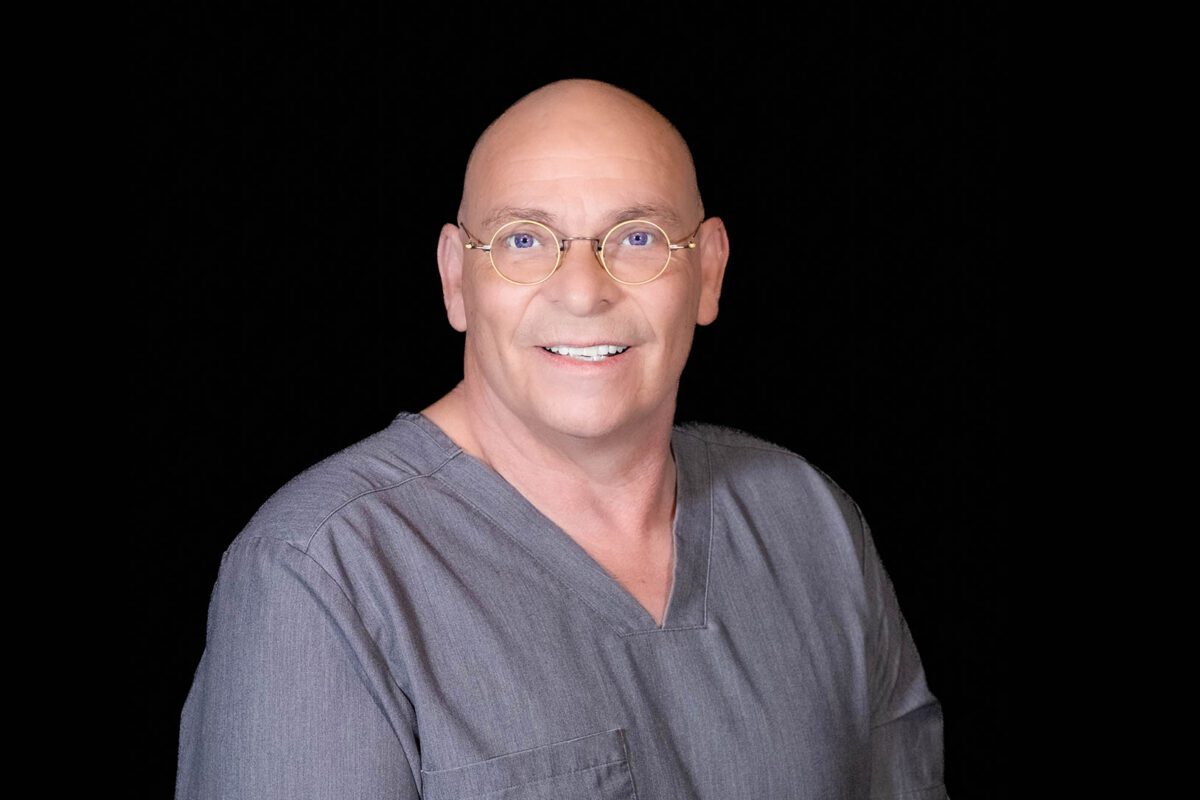
COURTESY PHOTO/Dr. Paul Isaacson
In early February, the women of Arizona scored a major win when longtime abortion providers Dr. Paul Isaacson and Dr. William Richardson, along with the Arizona Medical Association, persuaded Judge Gregory Como to strike down three barriers to abortion care in the state as unconstitutional.
With the court win, women in Arizona are no longer forced to go through a 24-hour period between scheduling and getting an abortion—an outdated practice suggesting that women can’t make rational decisions.
They also no longer have to listen to state-mandated, anti-abortion propaganda before ending a pregnancy.
What’s more, women carrying fetuses with genetic abnormalities are now free to speak with abortion providers about potentially ending their pregnancies—which they had not previously been permitted to do.
The Copper Courier wanted to know what kind of man would sue the state of Arizona on behalf of the women here, so we reached out to Dr. Paul Isaacson. It turns out that he’s spent the past 17 years overcoming fears about his personal safety and advocating for women’s rights to make their own choices.
Here’s his story, in his own words, as told to special correspondent Bonnie Fuller.
“It was 1994, and I was an OB-GYN resident working on Saturdays at a Planned Parenthood clinic in Boston to earn a little extra money.
On a Friday when I wasn’t there, a man came into that clinic and shot and killed the receptionist. Her name was Shannon Lowney. She was a college student in her early 20s.
The man wounded three other people, then he went farther down the street to another clinic that provided abortion care, Preterm Health Services, and killed the receptionist there, too.
The devastating attacks had a couple of effects on me.
First, it was a moment when I really had to decide how committed I was to doing abortion health care. I was working these ridiculous hours as a resident and then working extra on Saturdays at Planned Parenthood.
Was this a little side job, or was I really committed to this?
Ultimately, I decided that I was committed, and I continued to work in that clinic for the next several months. I just knew in my core that having access to abortion was a person’s right. People had a right to control their bodies and their lives.
I also learned that I had stubbornness in me. I just refused to let some crazy person prevent me from doing this work.
‘What I saw made an impression on me’
I’m originally from Detroit, and I went to medical school in Boston. Being an OB-GYN appealed to me as a specialty because it’s highly varied work, from surgical procedures to delivering babies, which by and large is a very joyful experience.
But I had experiences as a medical student that really brought home to me how important abortion access was. During one delivery on my obstetric rotation, I saw a 20-year-old delivering her third baby at a Catholic hospital. It was extra poignant because she had no family or partner there.
It just seemed that this woman’s life was regulated by her reproduction, whether it was her choice or not.
There were also times when I could see women with partners where you could sense that the relationships were bad and that they were being locked into that relationship with another child.
Then occasionally there would be a woman with a pregnancy with a terrible complication, and she may not have been offered the option to terminate that pregnancy and so was delivering a child that would die rapidly.
All of this made a big impression on me, and it made me determined in the years I practiced as an OB-GYN to try to have open and nonjudgmental conversations with pregnant women so that they were aware of all their options, including termination.
‘There were good opportunities for a doctor in Arizona’
As a young doctor starting out in the mid-1990s, there were good opportunities to practice in Arizona, and so I moved to Phoenix.
At that time, there were very few restrictions on abortion. The state, while leaning conservative, was more libertarian in the sense that the government should just butt out of most things.
But then very quickly it went from one of the very best states in the country for abortion access to one of the worst.
When Jan Brewer became governor in 2009, within a very short time a huge number of restrictions came into being. That’s when the two-trip requirement started, with patients having to come into clinics for a consultation one day and then having to come back a minimum of 24 hours later to have the actual procedure.
The two-trip requirement provided a real barrier to women accessing care. Gasoline is $4 a gallon, and they would have to miss an extra day of work or school—not a small thing for a lot of people.
I was also required by the state to deliver inherently biased information to them about abortion. A lot of it was unscientific and really intended to dissuade somebody from having an abortion.
One of the things we had to tell patients is that the father was obligated to provide child support if they chose to carry the pregnancy to term. That was frequently met with eye rolls.
All of these requirements were done under the guise of improving health care for women, which they did not.
I can’t imagine a similar situation with anything to do with a man’s health. It felt like we were talking down to women.
I think that’s been one of the major drivers for me in being active and challenging these laws, because they are so dishonest.
They pass them under the guise of abortion being dangerous, but scientific data tells us that abortion is significantly safer than the alternative of carrying a pregnancy to term, both physically and psychologically. It’s just maddening to me.
Pregnancy is fraught with risk. Abortion, especially in the first trimester, is not.
‘Why I started to fight the state’
In 2004, I and my colleague Dr. Eleanor Stanley took over a clinic, Family Planning Associates, that we had both worked at for many years. As the years went on and restrictions piled on, we were able to continue to provide abortion care if the patient was able to jump through the necessary hoops.
But as a full-time abortion provider, I had to ask myself: Am I doing enough by doing the abortions? Can others be the ones in the public eye, fighting the fight?
All of that changed for me in 2009, when this ridiculous two-trip scheme came into play here in Arizona.
The Center for Reproductive Rights actually reached out to me and said, “We’re preparing a challenge to the law. Would you be willing to be a plaintiff?”
It seemed to me that I had to. It just felt so wrong to me that the Republican-controlled state legislature could create this humongous barrier without me doing something about it.
And so I did it. I became a plaintiff in the lawsuit.
Unfortunately, the two-trip requirement remained law until my successful case with the Center this past February 2026, when it was struck down by a trial court judge.
After that first effort to end the two-trip requirement, I embarked on a series of legal challenges with the Center for Reproductive Rights against abortion restrictions. It was all in for me.
I ultimately became a plaintiff in eight cases challenging Arizona’s anti-abortion laws, including 20- and 15-week abortion bans and a fetal personhood law, which would give the fetus equal rights to its mother.
And then Dobbs happened in 2022. [The US Supreme Court’s decision in Dobbs v. Jackson overturned Roe v. Wade.]
I was at my clinic, and we had patients scheduled for procedures on the day that the Dobbs decision came down.
There was an 1864 law on Arizona’s books still that banned all abortions from conception, as well as a 15-week abortion ban and the fetal personhood law. It was unclear which law was operative and would go into effect in the state immediately if Roe were overturned. On the advice of our legal counsel, we believed that abortion would become illegal in Arizona immediately.
I don’t intend to be in a jail cell, so it was our decision that the safest and most rational bet was to stop doing any abortions if that happened.
Our biggest concern was that we would be in the middle of a second-trimester abortion, which can occur over two or three days, and that we would not be able to continue.
After we heard about the Dobbs decision, we had to go out to patients in our waiting room and explain that we couldn’t help them. We also have a clinic in Nevada, so we gave them that information.
Once we had dealt with all the logistics, we found a bottle of sangria in our fridge from a birthday celebration and a bunch of us sat around, had a sip of sangria and talked.
That day, several of our office staff told me that after working here, they had really developed an understanding of what this work means, and they were sad at the prospect of going to get jobs in the future in places where it would not be as meaningful as this had been on a daily basis.
It struck me that the Republican-controlled government and some parts of the media portray the health care professionals who provide abortion care as somewhat flawed.
So patients come into our clinic expecting some dark place with a creepy doctor. But instead, they are treated with kindness, the staff is engaging, and the patients are exceptionally grateful.
It is very gratifying to the staff, and it is very gratifying to me.
‘A culture of silence’
It became a culture of silence when we were banned from providing abortions to women with fetuses diagnosed with a genetic abnormality.
You could see that there were some patients who were particularly devastated when they came into the office, and we were not able to provide the type of support to those women that I would have wished to have done. To say to those patients, “Rest assured that most women who have this diagnosis take the same course of action that you are taking. You are not alone.”
I suppose there are lawmakers who believe they are defending life by preventing abortions, but I think it’s part of a bigger issue of what they believe a woman’s role is and how a woman should behave with respect to her sexuality. That there should be a price for women who have sex and are not married. There should be punishment for that.
‘My family inspires me’
When I first started to take a more public stance in support of abortion, my wife was fearful for me and the kids. But she has been proud of me and extremely supportive, despite her fears.
I have three daughters and a son. The idea of one of my daughters having an unintended pregnancy and being denied the option of whether she does or does not want to be pregnant is just horrible for me to think about.
Two of my daughters are in college, and the younger of the two wrote a short essay talking about how when she was younger, her mother told her to only say, when asked, that her dad was an OB-GYN and leave it at that.
Her mom did not want anyone to do us harm. But when Roe was overturned, my daughter wrote in her essay, “To hell with this. I need to talk about this,” and she talked about being open with her friends at school about what I do.
She also talked in her essay about volunteering to work to pass Proposition 139, the constitutional amendment passed by Arizona voters in 2024 establishing the right to an abortion in the state.
But when she went to volunteer, she was too young to collect signatures, so she got to work in the office scanning signature pages.
She wrote about the people who collected signatures standing in 110-degree heat in Arizona, and she concluded her essay by saying, “Feminism means activism, and activism means standing in the heat to get signatures on a petition.”
‘We’re not giving up’
I have just learned that the Republican president of the Arizona Senate and the Republican speaker of the Arizona House of Representatives have filed a notice of appeal to our win in state court.
We all knew this would happen. The appeals court and the Arizona Supreme Court may be tougher, but I’m trying to enjoy practicing with this freedom while it lasts.
We’re going to keep fighting. We’re not giving up.
I want the Arizona Republican lawmakers to know that the best move is to leave the science to the scientists and leave the medicine to doctors and other health care providers.
Women are capable of making their own decisions about their lives and their bodies without the state trying to block them.
Author


Explained: Why AZ doctors are fighting these abortion rules in court right now
You may remember that last November, Arizona voters approved Prop 139 to protect abortion rights in the state constitution. But a year later,...

‘Crisis pregnancy centers’ in Arizona are deceiving pregnant women
When someone goes to the doctor’s office to get a diagnosis or treatment, they expect to get accurate and expert information from a licensed...

Trump’s VA abortion ban is a step backwards for Arizona veterans
In August, the US Department of Veterans Affairs (VA) announced that it would no longer allow veterans to access abortion care or counseling through...
Travel time rose post-Dobbs in states limiting abortion, with AZ seeing surge from Texas
WASHINGTON – In 14 states that made abortion all but impossible to obtain after the Supreme Court overturned Roe v. Wade, women seeking to end a...