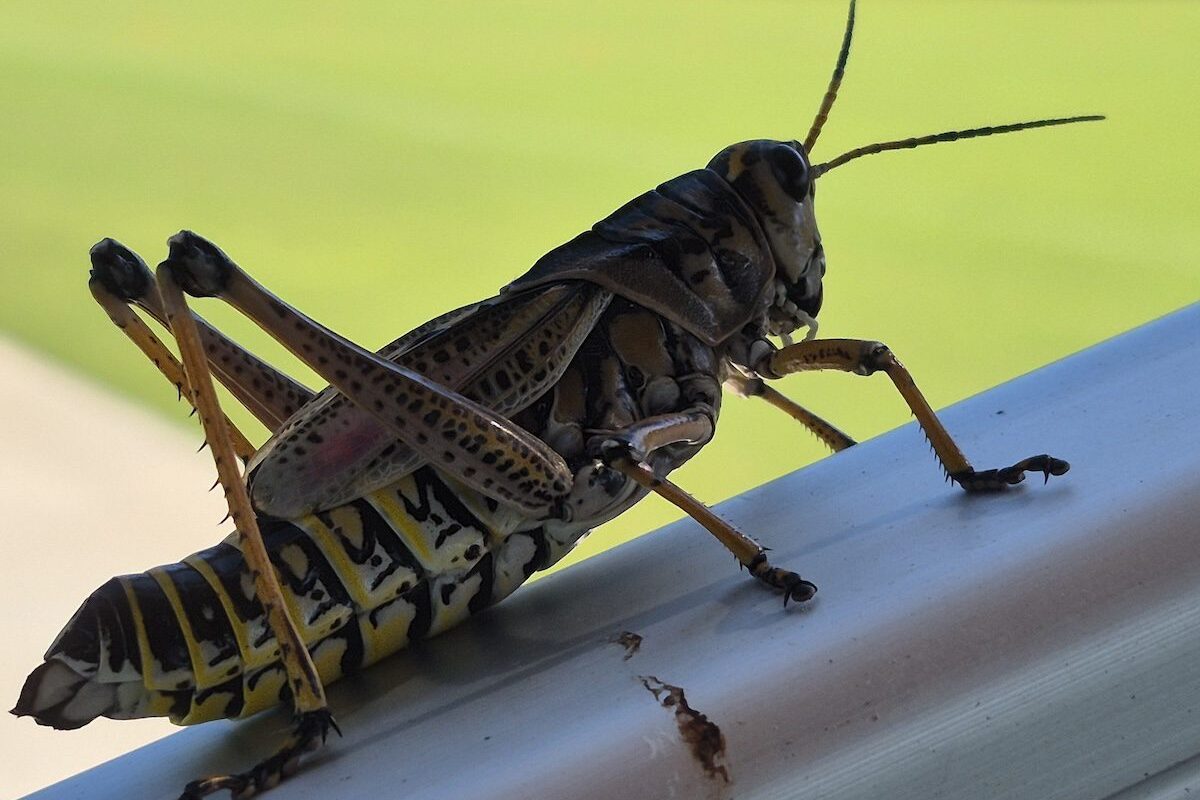
An Eastern lubber grasshopper looks on during Sporting Club Jacksonville women's soccer practice at Episcopal School of Jacksonville on July 28, 2025. (Clayton Freeman/Florida Times-Union via Reuters Connect)
You’ve probably seen them springing out of your path on a hot Arizona afternoon, and no this isn’t “A Bug’s Life.” Grasshoppers are a common sight across Arizona, but why does it seem like there’s an excess of them right now?
Certain species, like the migratory grasshopper, thrive in Arizona’s warmer months, particularly after seasonal rains that boost plant growth. Plus, during population booms, they can appear in large clusters, hopping and flying around yards, gardens and homes.
The quickest way to reduce grasshoppers around your home is to make your yard less attractive to them. Grasshoppers are drawn to food and moisture, so trimming your grass, removing weeds and cutting back overgrown plants can make a big difference.
Natural repellents like neem oil or garlic spray can help keep them off plants and Lighting can also play a role, so turning off unnecessary lighting or switching to less attractive bulbs can reduce how many gather around your house.
Here’s why there are so many grasshoppers in Arizona.
Why are there so many grasshoppers in Arizona right now?
The recent surge in grasshoppers across Arizona is driven by weather conditions. When the region experiences a wetter-than-normal winter or a strong monsoon season, plant growth increases significantly. This creates an abundant food supply, allowing more grasshoppers to survive and reproduce than usual.
Moist soil also plays a major role in their population boom. According to the University of Arizona, grasshoppers lay their eggs in the ground, and those eggs depend on adequate moisture to hatch successfully. In dry years, many eggs fail to develop. However, after a rainy season, large numbers can hatch all at once. This leads to a sudden and noticeable increase in their population.
Arizona’s warm temperatures further accelerate this process. Due to the random heat surge we are having so early in the year, it helps grasshoppers grow quickly from nymphs into adults, and in some cases, it allows overlapping generations within a single season. This rapid development contributes to the feeling that their numbers have exploded almost overnight.
Grasshopper populations also follow natural boom-and-bust cycles. Every few years, environmental conditions line up in a way that supports rapid growth, leading to a “boom” like the one we’re seeing now. However, these spikes are usually short-lived. As food becomes scarcer and predators and disease catch up, the population typically declines again.
Reporting by Tiffany Acosta, Arizona Republic
MORE: Don’t leave these 12 things in your hot car, Arizona. Here’s why
Author


These adorable Arizona animals will turn your day around
From the furry to the feathered, Arizona is home to extraordinary animals that have captured hearts and minds. The Grand Canyon State is full of...
It’s roof rat season in Arizona. Here’s what to know about the rodents
In Arizona, we have it all, scorpions, snakes and yes, even rats. Specifically, roof rats and before you panic, no, they aren’t your typical New...

This woman cares for 200 pigs at a Phoenix animal rescue. Here’s how she does it
Nestled between Cave Creek and New River is a piggy paradise, complete with wallows, kiddie pools, insulated "houses" and medical resources. Better...

We checked out St. Vincent de Paul’s new vet clinic helping pets of unhoused Arizonans
Take a closer look at the brand new St. Vincent de Paul Marion and Bob Auray Companion Animal Hospital in Phoenix, which offers free pet care. In...