Reporting by Arlyssa D. Becenti, Arizona Republic
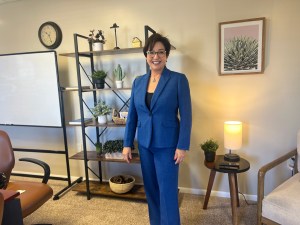
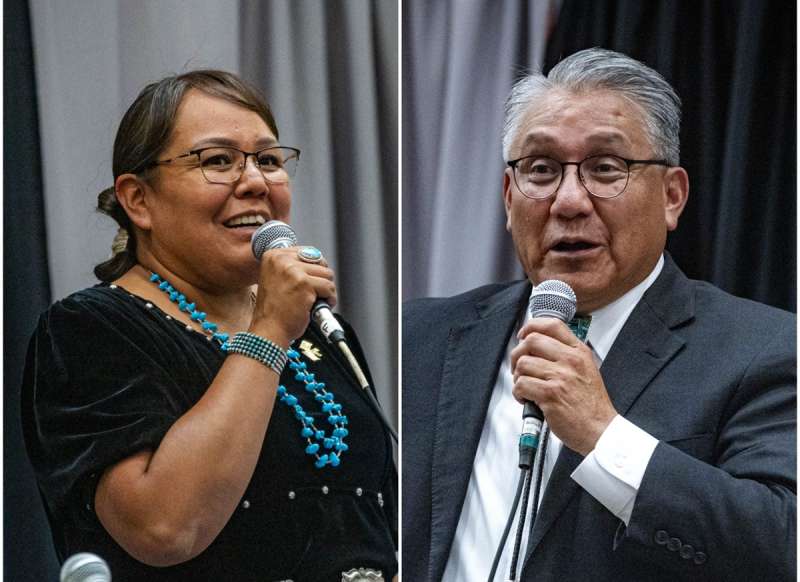
More than a week after Navajo voters made history by electing Speaker Crystalyne Curley as the first woman to serve as Navajo president, her opponent has challenged the results and requested a recount.
Farmington attorney Justin Jones refused to concede to Curley and said he would contest the results. On Nov. 10, Jones requested a recount, claiming the original vote count was “inaccurate and incorrect.” The request was sent to the Navajo Board of Election Supervisors and Navajo Election Administration.
“It was expected,” Curley told The Arizona Republic. “I already expected something similar to 2014. I didn’t think he would concede, but I’m okay with that because the votes were taken to the people, and the people have spoken.”
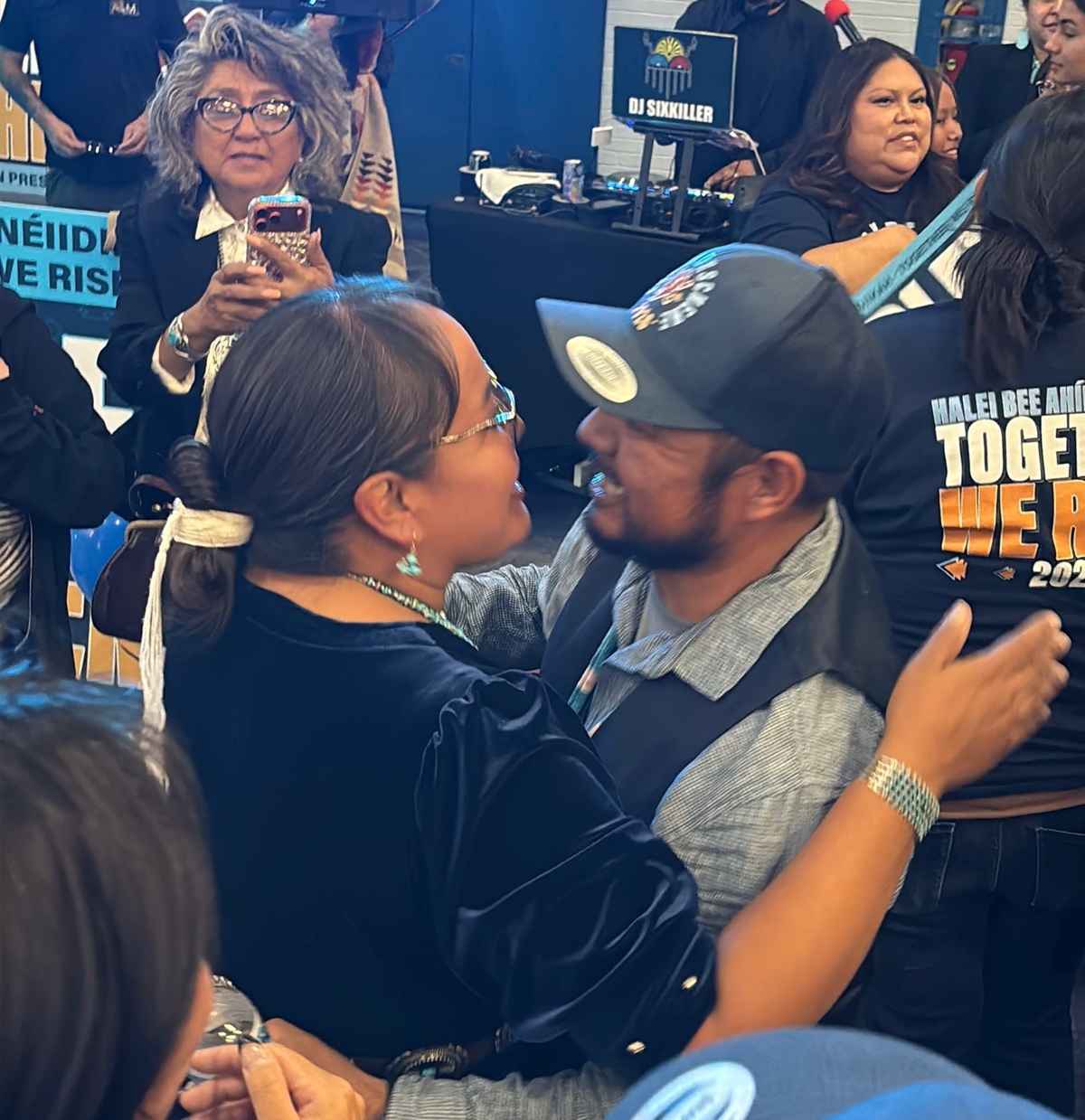
The elections board voted unanimously on Nov. 12 to approve a resolution that would allow for a recount. In their request, Jones and his vice presidential candidate, Emily Ellison, sought hand and machine recounts for all 110 Navajo Chapters.
“We wish to have a representative from our respective campaign team present as a witness for each poll location recount,” the candidates said.
They said the request is fitting because they claim to have been denied the right granted that “every candidate whose name appears on the ballot in the election to have one poll watcher present at all times during the balloting and during the counting of the votes,” on the same exact voting machines used in each chapter on Nov. 3.
Curley says election shows ‘anything is possible’
Curley is no stranger to breaking barriers and making history in leadership, as well as facing obstacles. She became the first woman elected as council delegate to represent her communities of Tachee/Blue Gap, Many Farms, Nazlini, Tselani/Cottonwood and Low Mountain, after two attempts. She later made history as the first woman elected Navajo Nation Speaker.
On Nov. 3, she broke another barrier by becoming the first Navajo woman elected president, 16 years after Lynda Lovejoy’s historic presidential bid against the late President Ben Shelly, which ended in defeat.
Becoming Navajo Nation president was never something the former Miss Navajo had envisioned for herself. Even the possibility of being nominated and elected by her peers to serve as Speaker once seemed beyond her reach once she became council delegate, which also came with a challenge from the incumbent.
“I just thought that my journey would just be there as a council delegate, Curley told The Republic. “I did not ever imagine running for president. When the nomination for the speakership came, that was something that was against the odds as well, because no other female has been a part of that. I was very fortunate enough to have many of our male council delegates that…supported woman leadership at the time.”
Curley said it was not until the final months leading up to the filing period for candidates seeking public office that she decided to take the gamble of foregoing a re-election bid as council delegate and submitting her application to run for president.
She described it as a difficult decision, knowing that her chances of becoming president would be uncertain, particularly given the Navajo Nation’s history of not electing a woman to its highest office.
The notion that women should not hold leadership positions is often rooted in cultural beliefs, despite the Navajo Nation’s matriarchal traditions and the longstanding presence of women serving as delegates. The election of a woman as vice president in 2022 marked another milestone in women’s representation in Navajo Nation leadership.
“And to the little girls that are out there: Anything is possible,” said Curley on election night. “Our daughters, our granddaughters, anything is possible.”
Curley said her decision to run for president came through prayer, conversations with her family and strong encouragement from her daughter, who turns 13 this month. Her daughter, a wrestler competing in a traditionally male-dominated sport, reminded her that if she could compete in wrestling, her mother could run for president.
“She was like, ‘You have to do this. You work really hard, I see you work really hard,’” said Curley. And she said, “Win or lose…when you’re, like, 100 years old, at least you know you’ve done it.’”
Curley credited her more than 500 volunteers with helping drive her campaign, which centered on a message of unity. But Navajo Nation politics can be unforgiving. Candidates often face intense online scrutiny, with personal attacks that extend beyond questions about their leadership abilities. Curley was no exception.
One of her concerns was the growing use of AI-generated illustrations that became popular throughout the campaign. Still, public scrutiny was not new to her, having experienced it before as a former Miss Navajo.
“We seen AI now being a part of our election process,” said Curley. “That is a new threat that we do see in our democracy, not only on local level. (Scrutiny) was nothing new. I went through the same scrutiny…I have firsthand felt that from my own people, at a very young age, as a Miss Navajo. Just building that tough skin from there.”
No recount date set yet in Navajo president race
The recount date hasn’t been set, but an upcoming meeting was scheduled to present a plan to the board of supervisors along with the budget that is needed. Curley is still considered the president-elect.
Although by law, a candidate requesting the recount has to pay $50 per precinct, and since there were approximately 110 precincts involved, the initial cost of $5,500 was presented, said Veronica Curley Interim director for the Navajo Election Administration.
However, the actual cost of conducting the recount is a completely separate matter. The overall expense can be significantly higher. In fact, the last recount of 2022 reportedly cost more than $100,000.
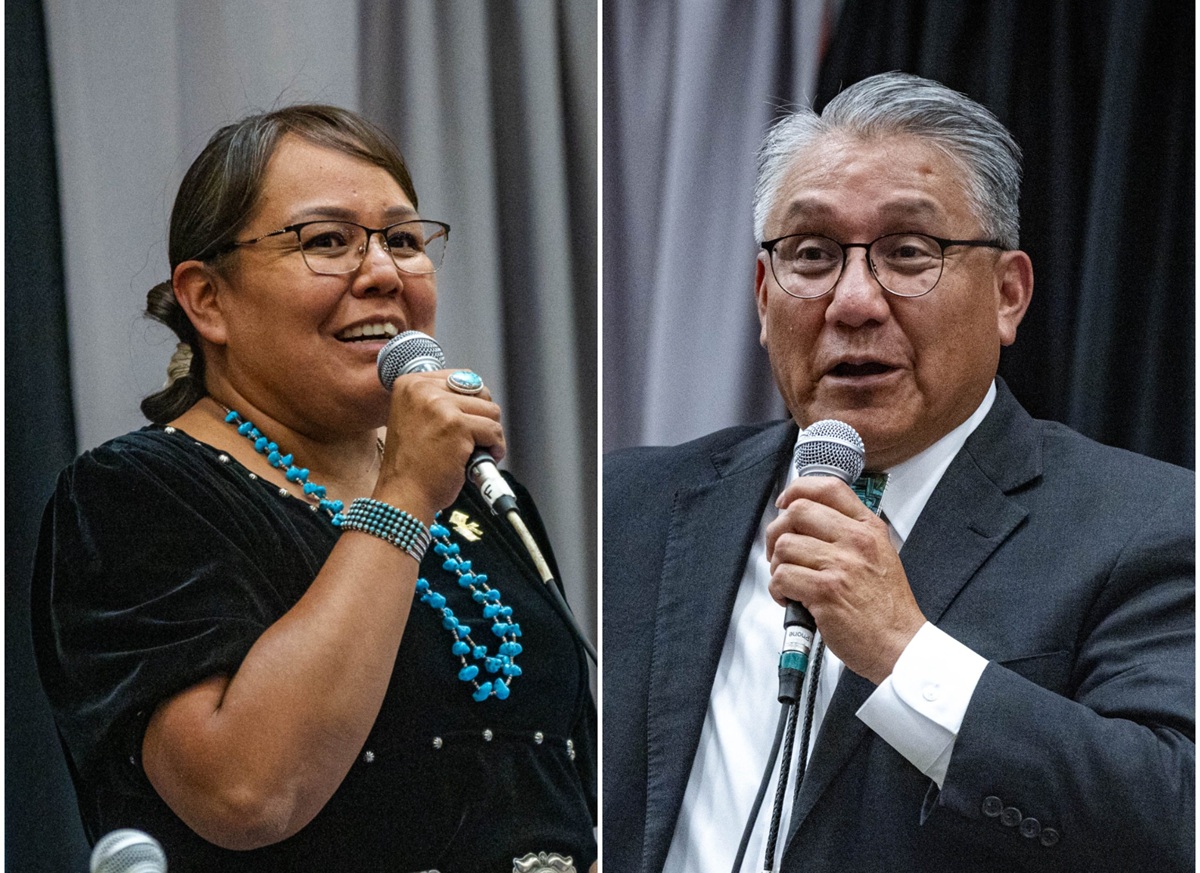
Jones and Ellison also included several additional requests in their letter. They are asking that a mutually agreed-upon, neutral third-party observer from an organization dedicated to protecting voting rights be allowed to attend the recount.
They also want confirmation that every ballot counted was cast by a properly registered and legally eligible Navajo Nation voter, and that election officials consistently followed the identity-verification procedures required under Navajo Nation election law.
Additionally, they are requesting a thorough examination of the contents of ballot boxes from all 110 chapters, including used ballot stubs, unused ballots, and early and absentee ballot envelopes.
“A complete accounting of early and absentee unused ballots and used ballots stubs for all of the five agencies and a reconciliation between the total number of ballots counted for each chapter and the signatures and notations in the chapter ballot books showing how many people voted in the 2026 General Election,” stated Jones and Ellison.
Arlyssa D. Becenti covers Indigenous affairs for The Arizona Republic and azcentral.com. Send ideas and tips to arlyssa.becenti@arizonarepublic.com. Follow her on Bluesky at @abecenti.bsky.social.
This article originally appeared on Arizona Republic.
Related: Hopi residents confront flood devastation in Arizona