Reporting by Arlyssa D. Becenti, Arizona Republic
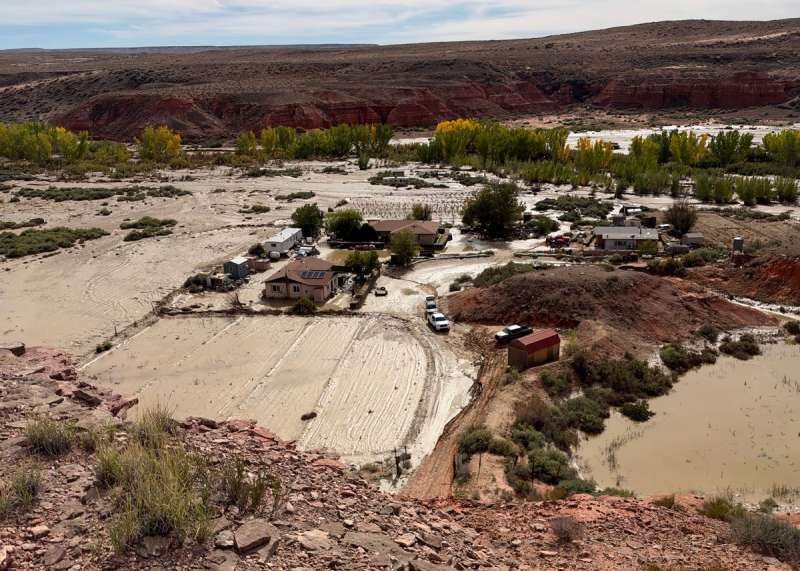
Standing above his home in Lower Moencopi on the Hopi Reservation, Leonard Selestewa became emotional as he surveyed the devastation left behind by flooding in Arizona from a late October storm.
The devastation extended beyond his ancestral farmland to include the home his father had built, where Selestewa had lived with and cared for his mother. She had passed away shortly before the flooding damaged their home.
The loss of his mother, his family home, and his ancestral farmland within such a short period was enough to break anyone. Yet, as a village leader, he felt compelled to remain strong for the community, even as he faced unimaginable personal grief.
“I live in that home now, that my mother left me, and we plant here … we are off the grid, we use solar,” said Selestewa as he pointed toward his home. “My dad died when he was 89 years old, and nothing like this happened. My father used to always tell me, you can never really control water because it moves like a snake.”
Lower Moencopi is a low-lying village just outside the Navajo Nation community of Tuba City. It sits alongside the Moenkopi Wash, a tributary of the Little Colorado River. The wash stretches 90 miles across the Moenkopi Plateau in northern Arizona, following the boundary between the Navajo and Hopi reservations.
As travelers enter the Hopi Reservation along Highway 264, they pass through the village, established as an extension of the Hopi village of Oraibi, as they drive over a bridge that sits above the Moenkopi Wash.
Lower Moencopi is surrounded by cornfields and other produce that Selestewa and other residents call subsistence farming, grown for themselves and their families. The scene is so picturesque it caught the eye of Ansel Adams, in his photo, “Corn Field, Indian Farm near Tuba City, Arizona, in Rain, 1941.”
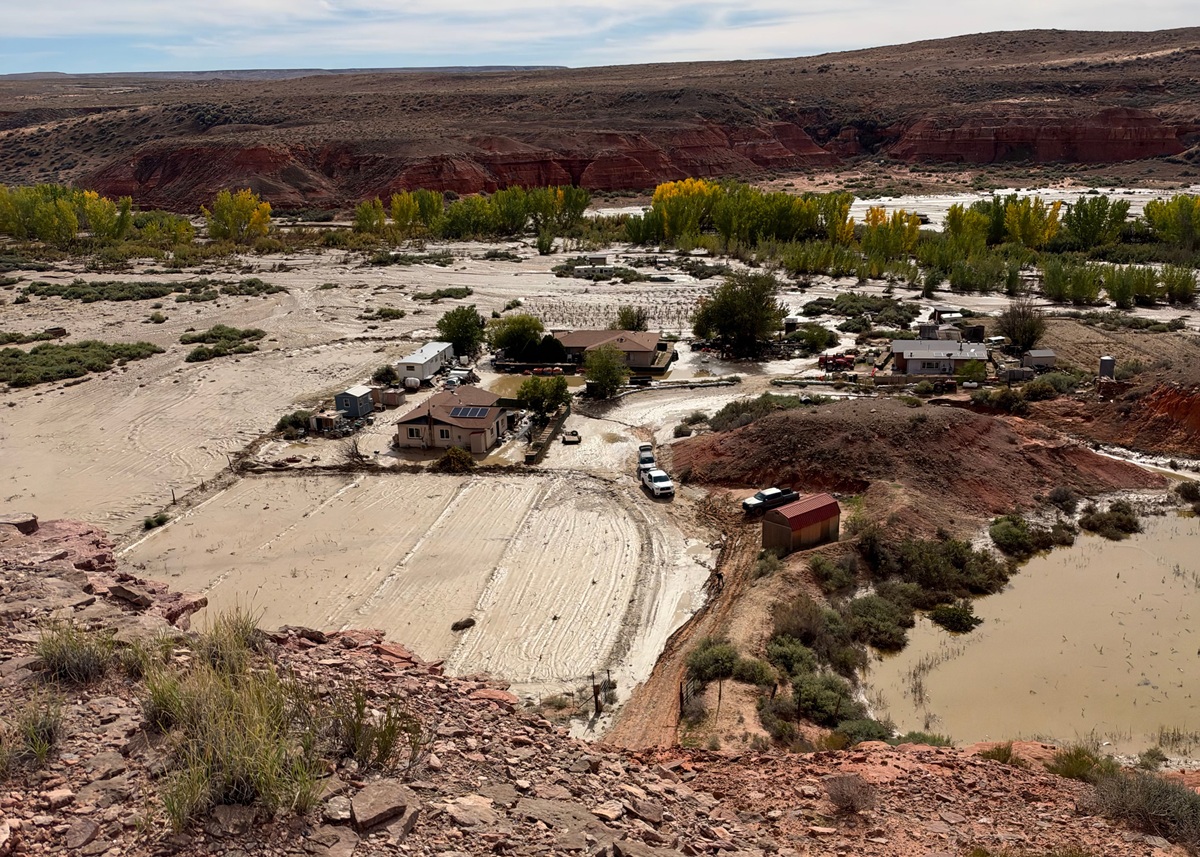
But only a few days after the heavy rains, the fields lie devastated by flooding. Homes have been damaged or destroyed, and large pools of standing water surrounded the remaining structures. Roads leading into that area of the village have been reduced to thick layers of clay and mud, leaving little resemblance to the familiar landscape residents once knew.
“The day after, it resembled a river as big as the Rio Grande, only spread out,” said Selestewa, describing how the village looked after the rain ended. “Come December, I will be 64 years old. I grew up here, I saw my mom’s home get built, as well as my aunt’s home, but now I am faced with this real dilemma of change. We must seek high ground. That’s a hard choice.”
Soil turns to heavy, dense clay
The devastation did not stop with Selestewa’s property. His neighbors’ homes had also been damaged or destroyed, while the farmlands belonging to his relatives and neighbors along Moenkopi Wash suffered extensive damage. Due to the drought, some farmers were already unable to plant this year.
“My house got flooded out,” said Ronald Honyumptewa. “We can’t go back. We can’t rebuild. There’s really no point to rebuild just because of how the wash is running. I grew up here, and this last one (flood) is the biggest one I’d ever seen in my lifetime.”
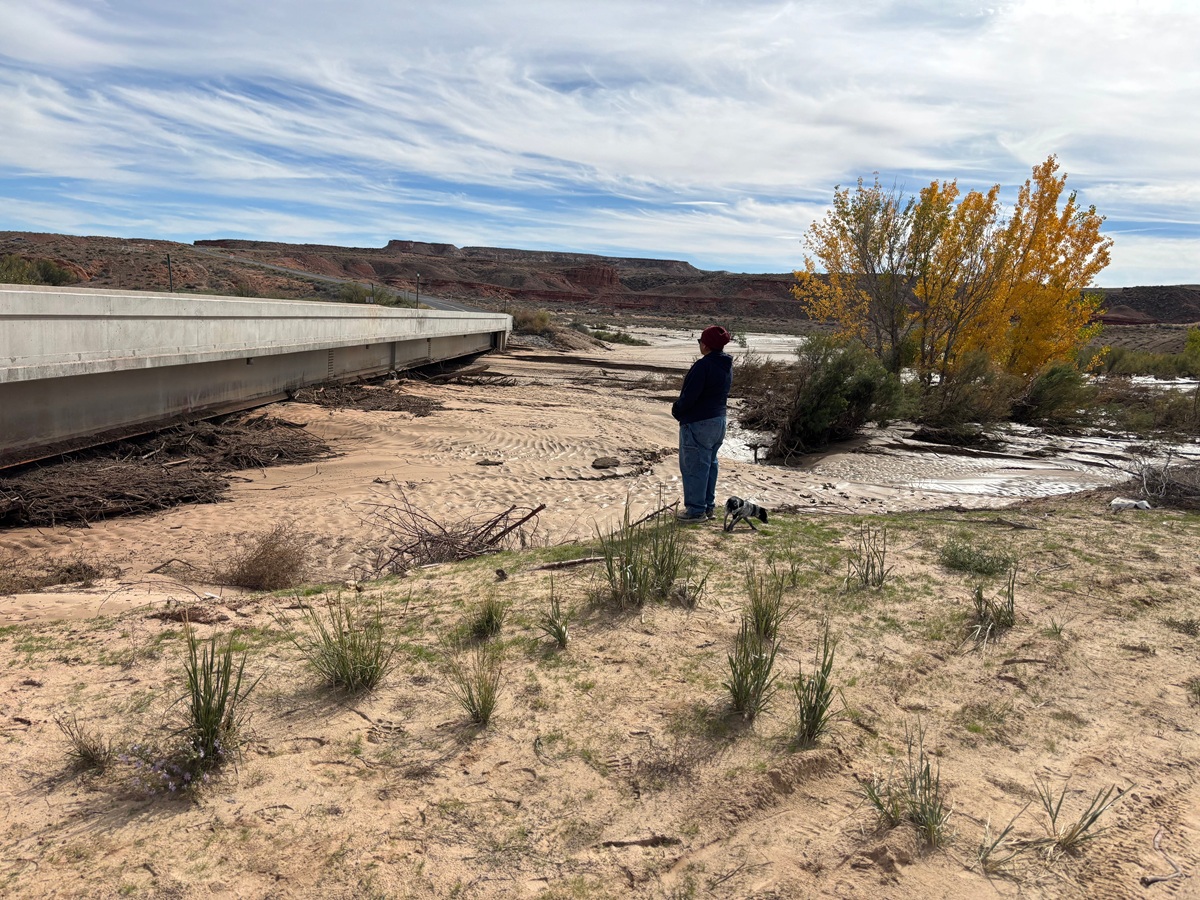
Soil that had only recently been affected by drought was suddenly saturated and transformed into heavy, dense clay as relentless rainfall continued to pour down.
As Selestewa, community members and local leaders worked to assess the full extent of the destruction, they were also preparing for the possibility of further damage, bracing themselves for a second storm expected to arrive in the coming days.
Hopi leaders declared a state of emergency through Nov. 27 following days of heavy rain that caused severe flash flooding across the reservation. Since Oct. 21, flooding damaged roads, bridges, homes, utilities and other infrastructure, while mud and rockslides threatened public safety and disrupted essential services, communications and travel.
The Village of Lower Moencopi also issued its own emergency declaration based on the damage within its community.”This has become an annual thing and it’s only gotten worse,” said Selestewa about the floods.
Honyumptewa’s home is just a few feet from Selestewa’s, as the two are cousins. Farther down the road, Jolinda Tsavadawa has a home, including the house her father built and later passed down to her.
She said her family practically lost everything in the flood. Despite having Hesco barriers surrounding the property, the water rose above them and inundated the home.
Tsavadawa said she was at work when she received word of the heavy rain and the impending flood. She immediately texted her husband, warning him to prepare to evacuate and gather their animals and belongings. The family had sheep, along with dogs, cats, chickens and roosters. They were able to move the animals to safety before the flooding intensified.
“This flood has devastated me this time,” said Tsavadawa as her dog, Itchy, playfully ran around the dirt. “I lost my home, my dad’s home that we’ve lived in since childhood. I’m glad we’re out, we are all safe. We are alive. We can always rebuild. It’s going to take a long process this time.”
Floods spread through other tribal communities
The floods affected not only the Hopi Tribe but other tribal communities across Arizona, including the White Mountain Apache Tribe. On Sept. 29, the tribe’s executive office issued an emergency declaration following extreme rainfall and concerns of imminent flooding on the Fort Apache Indian Reservation.
Additional storms followed amid an atmospheric river on Oct. 31 causing widespread flooding, evacuations and significant damage.
On Nov. 1, the White Mountain Apache Tribe issued a shelter-in-place order for others on the reservation. Floodwaters damaged homes, roads, bridges, dams and other infrastructure, washed out forest roads and culverts, and created sinkholes, leaving some areas unsafe for travel pending damage assessments and repairs.
The Navajo Nation also has been reeling from flood damage for much of October. Floodwaters damaged homes and roads across the Navajo Nation, and compromised wastewater treatment facilities in Shiprock, New Mexico, and Montezuma Creek, Utah, caused untreated wastewater to spill into the San Juan River. The floods hampered efforts by some residents to vote on Nov. 3.
Navajo President Buu Nygren signed a resolution approved by the council establishing a $20 million Navajo Nation State of Emergency Response Fund to strengthen the Nation’s ability to respond immediately to natural disasters and other declared emergencies without waiting for additional appropriations.
“This measure addresses the lack of a standing emergency response fund as a significant challenge for the Nation. Currently, additional funding for natural disasters depends on appropriations made after an emergency occurs, delaying the availability of resources needed for immediate response,” said legislation sponsor Council Delegate Eugenia Charles-Newton. “Federal disaster assistance, when available, may take months to arrive and generally reimburses eligible expenses only after the Nation has paid those costs.”
Arizona Gov. Katie Hobbs declared an emergency to support response and recovery efforts on Nov. 2. The announcement immediately unlocked $200,000 in emergency funding for local communities. The emergency declaration covers affected areas across the state.
‘We have to take care of the earth’
As they drove through the mud to assess their family farm and neighboring properties, Verrin Kewenvoyouma and his dad, Thorson Kewenvoyouma, briefly shared part of the Hopi creation story.
Verrin explained that Masauwu, one of the Hopi deities known as the fire god, allowed the people to settle on this land and provided instructions for how to live upon it and serve as its caretakers.
“We’re always supposed to do things like farm. That’s our responsibility,” said Verrin. “So from that perspective, there’s a lot of Hopis who believe we shouldn’t be mining … we have to take care of the Earth, not dredging, polluting, contaminating, pulling things out.”
Verrin said once Peabody began mining for coal at the Black Mesa and Kayenta mine complex, impoundment dams were constructed upstream. He said there are approximately 168 of these impoundments along the Moenkopi Wash and the Dennehotso Wash, designed to keep coal sediment from entering the waterways in compliance with the Clean Water Act. Those dams have also altered the natural hydrology.
“Now that the dams are in place … we have to capitalize when that water does flow to irrigate our crops and right now this wash only runs whenever there is heavy rainfall,” said Verrin.
Thorson agrees the impoundments have contributed to the aftermath of the floods, but he also believes the invasive tamarisk is to share in the blame. Looking at the Moenkopi Wash, Thorson said in years past, it did not have tamarisk; now it is abundant and “choking the wash.”
“That is part of the issue, all this tamarisk hasn’t been cleaned out by the wash in order for the water to run freely,” said Thorson, who said their family farm has been around for “about 100 years now.”
The fast-flowing water carried large pieces of debris, creating significant issues at the Moenkopi Wash Bridge on State Route 264 near Milepost 324 in Moenkopi. The sight concerned the group of farmers inspecting the area.
Debris had accumulated to the top of the bridge opening, completely blocking the flow and leaving no clear path for water to pass through. Thorson said the next flood would cause water to go over the bridge if the debris wasn’t cleared.
The debris clog can worsen flooding and cause structural damage to bridges. The Arizona Department of Transportation has assisted in unclogging the debris.
Flooding in Arizona takes ‘an emotional and mental toll’
Selestewa said he can’t get to his home without putting on rubber boots, and he is concerned about the devastating toll the situation is taking on farmers. He emphasized the need for counseling and emotional support as the community continues to grapple with the significant impact of the devastation and its aftermath.
“There’s a whole core group of farmers, representing 150-plus, they’re going to feel this,” said Selestewa. “They have yet to really venture from the village. People are in a really emotional state because this is a one big event. My understanding of what’s going on in the world in terms of climate, this is becoming the norm.”
Beyond the physical impacts on the farming community, the emotional trauma may go unseen or unexpressed, as Hopi men often have difficulty expressing these feelings, he said.
Farming is more than growing corn; it represents years of hard work, providing for their families, and sustaining their way of life. Corn is deeply connected to Hopi identity, culture and traditions, from baby-naming ceremonies to sacred ceremonies, dances, and other cultural practices.
“We have a great deal of knowledge since the very beginning. We came into this area knowing where we were from and why we were here,” said Selestewa.
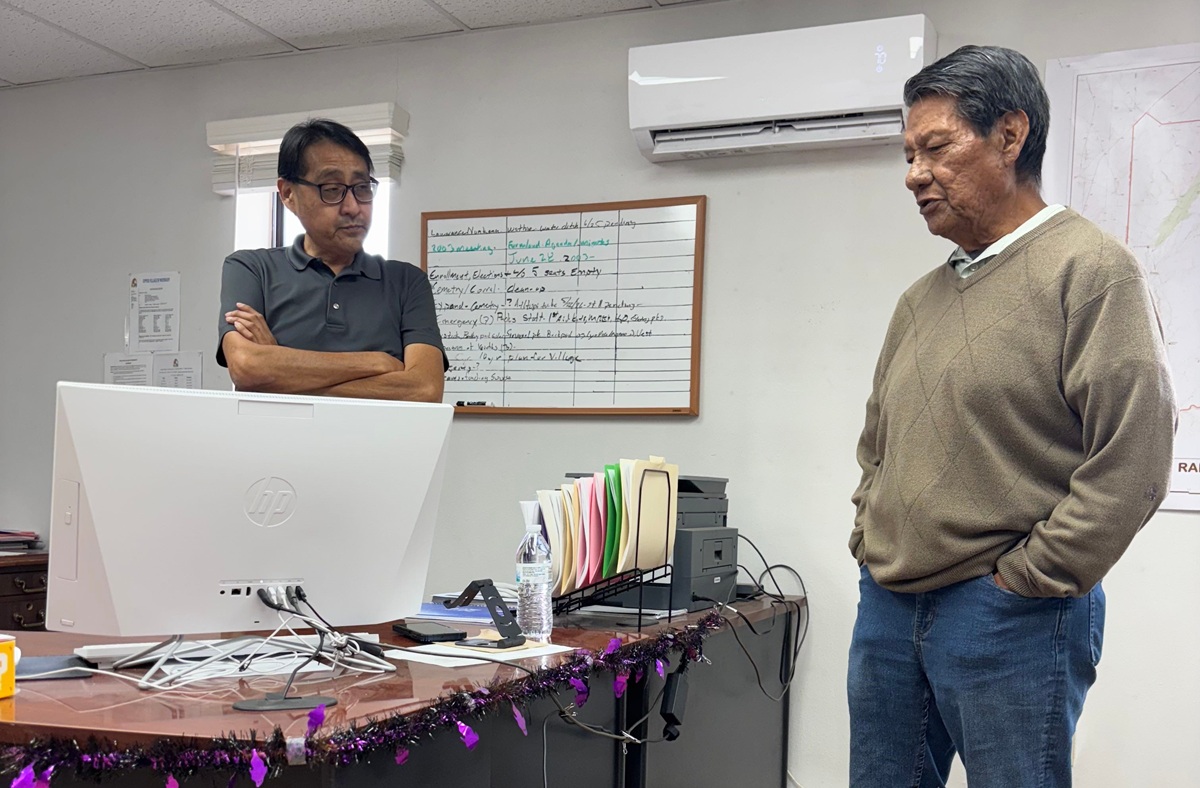
The Upper Village of Moenkopi’s governor, Dale Lucero, and William Charley, who is the Community Service administrator, have been assessing the damages and trying to do what they can to help those in need, but there is only so much that they are able to help with.
“There’s not a whole lot anyone can do — the tribe, us, or either village. We’re going into each home and taking pictures. Most of these houses were built in the 1920s and 1930s,” Charley said. “Right now, all we can do is just Band-Aid. I wish we had the funds to help people.”
Charley explained that homes damaged by the floods require additional consideration because of their age and construction. Unlike modern homes, older structures may require more extensive repairs, making these factors important when assessing the damage and determining what assistance is needed.
“It’s taking an emotional and mental toll,” said Lucero, who was out driving around to survey the damage and visit with community members. “I’m just pushing myself to my limits right now. I’m just doing the best I can, with the great staff I have working by my side.”
The storms and floods have gotten worse gradually over the years, and figuring out how to mitigate the next flood is something tribal leaders and community members are trying to do.
But the impact of these floods seems to be more severe because of multiple federal agencies involved. This includes the Army Corps of Engineers, which issued permits for upstream dams, and the Office of Surface Mining, which oversees Peabody’s mining permits.
The 168 impoundment dams have significantly altered natural water flow, raising concerns about government accountability and long-term solutions. The community was worried that the J7 Peabody Dam was breached, but they were notified it was still intact.
Peabody also has an environmental bond intended to help the tribe address and mitigate these impacts, said community members.
The Army Corps of Engineers met with the tribe and community awhile back to discuss these concerns, Charley said. Although some work was completed on Hopi’s First Mesa, there was little to no follow-up afterward.
The community has expressed interest in doing its own work in the Moenkopi Wash but they cannot proceed without the necessary permits and approvals from the Army Corps of Engineers.
“We want to do work in the wash … go down the middle of the wash … figure it out, but then we find out you can’t do anything because you got to get the permits and everything from the Corps,” said Charley.
Lucero said they want to prepare themselves for the next flood and have a stockpile ready of emergency supplies such as blankets, cots, bottled water, toilet paper, solar-powered lamps and phone chargers, extra batteries, ready-to-eat meals, canned foods and other nonperishable food items.
Supplies for families would include diapers, baby wipes, baby formula, clothing, hygiene kits with shampoo and body wash, hand warmers and other essential items for children and infants. But this is in preparation and should not be seen as something long term.
The wash is a separate issue that will require its own solutions, including replacing the homes located in the affected areas. Addressing the wash will likely be a multimillion-dollar effort involving extensive studies, engineering assessments, and planning. Each layer of the problem brings additional costs, making this a complex, long-term undertaking.
There is also a broader connection to the history of development in the region. Coal mining and the creation of these impoundment dams have contributed to the challenges communities are facing today. The coal mined in the area fueled the Mohave Generating Station, generating electricity to pump water and support the growth and development of surrounding cities, like Phoenix, said community members.
The challenges are immense, and the tribe should not have to navigate them alone or struggle to secure federal funding and assistance, leaders say. There needs to be greater recognition at the federal level of the severity of the flooding and its impacts on both Hopi and Navajo communities.
The group said the assistant secretary for Indian Affairs at the U.S. Department of the Interior, William “Billy” Kirkland, is Navajo, and although not raised on Navajo, “he should have some appreciation of the magnitude of issues both here and the flooding that’s happening at Navajo.”
“The state of Arizona profited very well, especially metropolitan Phoenix,” said Selestewa. “All we’re asking for from them now is, ‘Help us.’ They benefited from our coal and using our water. Our area provided much growth to Arizona. I do hope they remember.”
Arlyssa D. Becenti covers Indigenous affairs for The Arizona Republic and azcentral.com. Send ideas and tips to arlyssa.becenti@arizonarepublic.com. Follow her on Bluesky at @abecenti.bsky.social.
This article originally appeared on Arizona Republic.
Related: ICE center in Surprise needs to find water, affects policing, report says