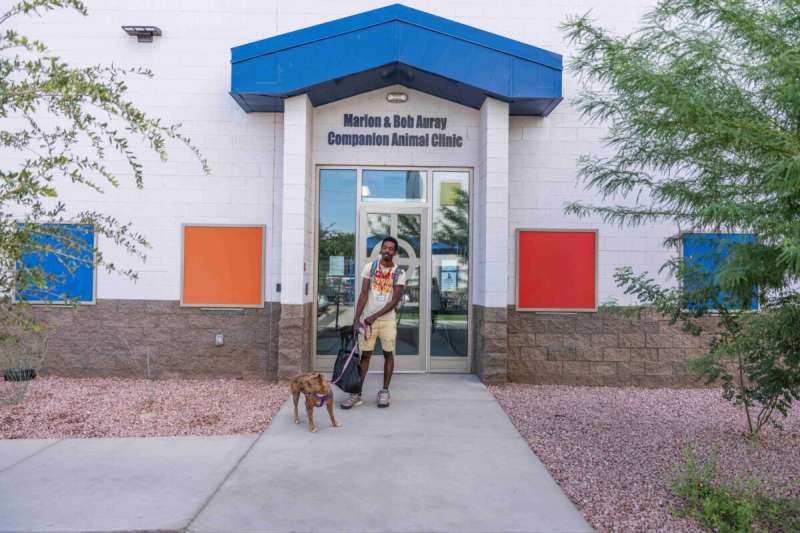
Take a closer look at the brand new St. Vincent de Paul Marion and Bob Auray Companion Animal Hospital in Phoenix, which offers free pet care.
In early July, St. Vincent de Paul (SVdP) opened the Marion and Bob Auray Animal Companion Clinic in its downtown Phoenix campus to better serve the needs of its residents. Opening the 3,000-square-foot clinic to help serve pets of the unhoused was a natural fit.
St. Vincent de Paul (SVdP) offers shelter to those who are unhoused, and about 1 in 5 of the organization’s residents has a dog. At any given moment, about 450 people reside under the umbrella of SVdP.
“We have wonderful organizations in the Valley that were trying to serve [the unhoused]. They didn’t necessarily have access to the people to get to the pets, so they didn’t have a means to get to their services,” says Marion Auray, co-founder of the St. Vincent de Paul Companion Animal Clinic. “Here, we already have access to people in need and their pets as well.”
Auray has volunteered for animal welfare organizations and was tapped to lead the program. The clinic currently operates by appointment only and is staffed by a team of volunteer veterinarians. The clinic is a part of SVdP’s Companion Animal Program (CAP), which offers free food, supplies, wellness checkups, vaccinations, and spay/neuter procedures. Since its beginning in 2021, CAP has served 2,640 companion animals.
Here’s what we saw when we toured the facility
The facility smelled brand new—like fresh paint—when we toured. If you’ve ever been to a vet’s office, you’d know that they almost always smell a little (or a lot) like bleach and animal odors. It was a refreshing change.
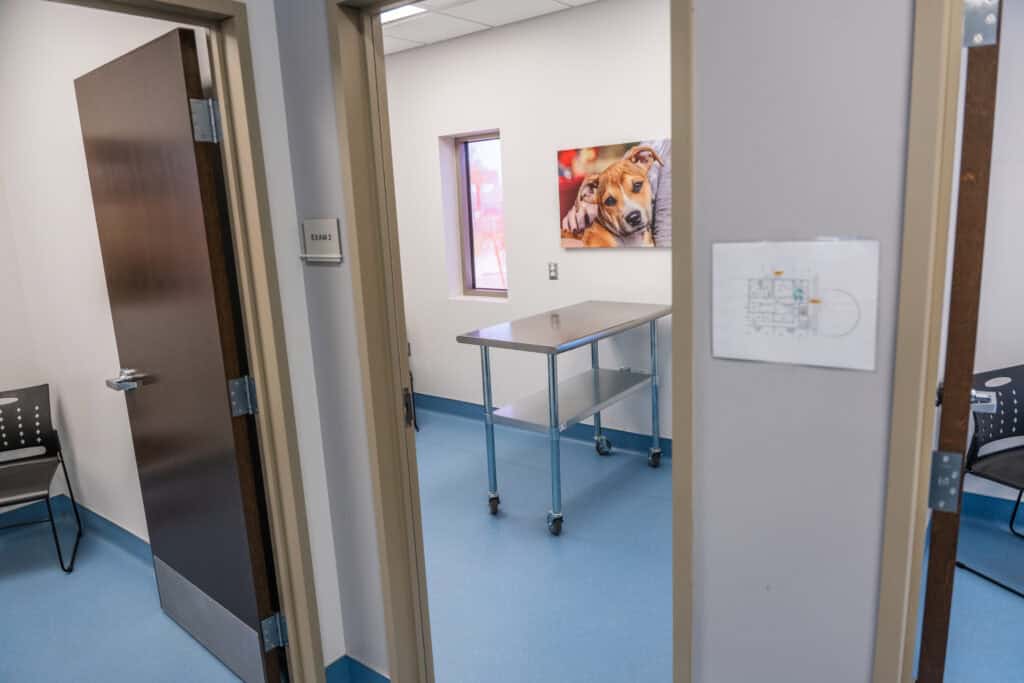
There are three exam rooms, a cat ward complete with a TV, a dog ward, cages, a grooming space, a laundry room, a pet pantry, and an area where surgeries will eventually be performed. There’s also an area for recovery after surgery, and an X-ray room is also slated to come to fruition.
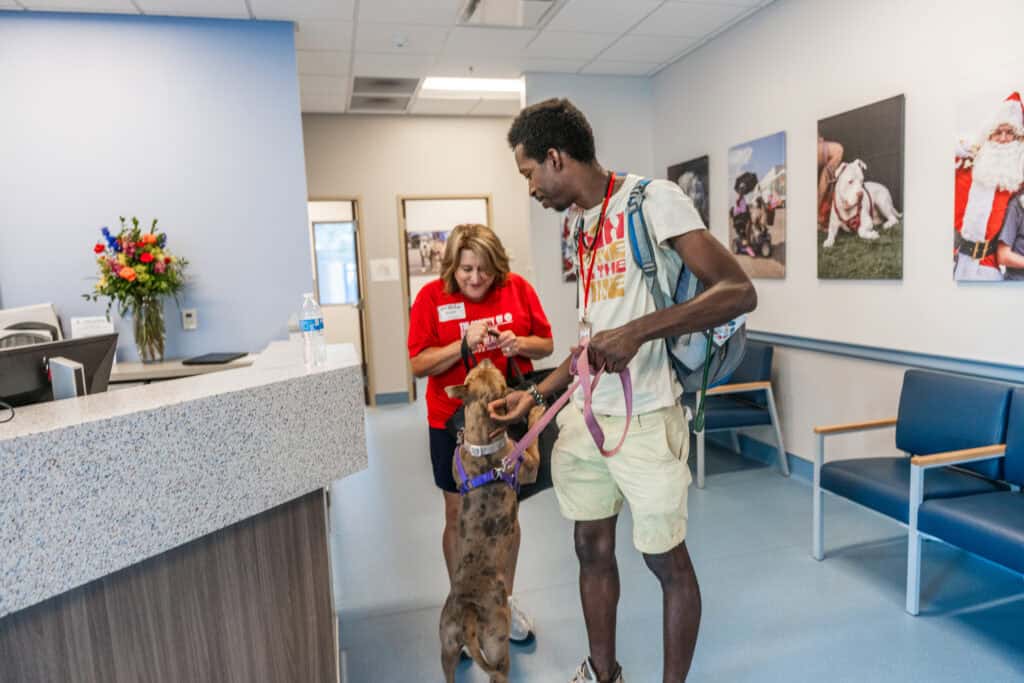
The building also features a reception area with a few chairs. In that opening room, you’ll spot photos of actual pets owned by SVdP residents. Currently, the clinic is administering vaccines and providing basic animal care, including attention to the health of the animal’s skin, ears, and eyes. Residents can also pick up supplies like food and leashes. Auray informed us that, over time, the clinic plans to expand its services.
Outside, there’s a play area that’s divided up into one area for small dogs and another for larger dogs. Although it was a sweltering day when we visited, the area was covered so dogs could go out there even in the hot Arizona sun.
The ultimate goal is for the clinic to operate full-time, five days a week. The clinic has been in development for approximately four years. During our tour, Auray stopped to look at floor plans that were hung up on a wall, recalling seeing them for the first time years ago. The clinic might also be the site of future classes, like how to care for a puppy, or even days where pets are groomed.
“Number one, the significance is in how we’re helping the population that is in most need,” says Auray. “The few people that we’ve met today included a gentleman that was just here with his little puppy. He was tearing up because he was treated with such respect and dignity. The dog got the care that she needed and all at no cost.”
Vet bills can be costly, and prices have risen drastically since the pandemic. A clinic like this one can help others in need.
Why companion animals are so important to the unhoused
Anyone who has a companion animal knows the importance pets can have in their lives. Pets give us unconditional love and support. The unhoused and their pets often play significant roles in each other’s lives.
“It’s so important, because this could be their only link to love and companionship, to both give it and receive it,” says Auray.
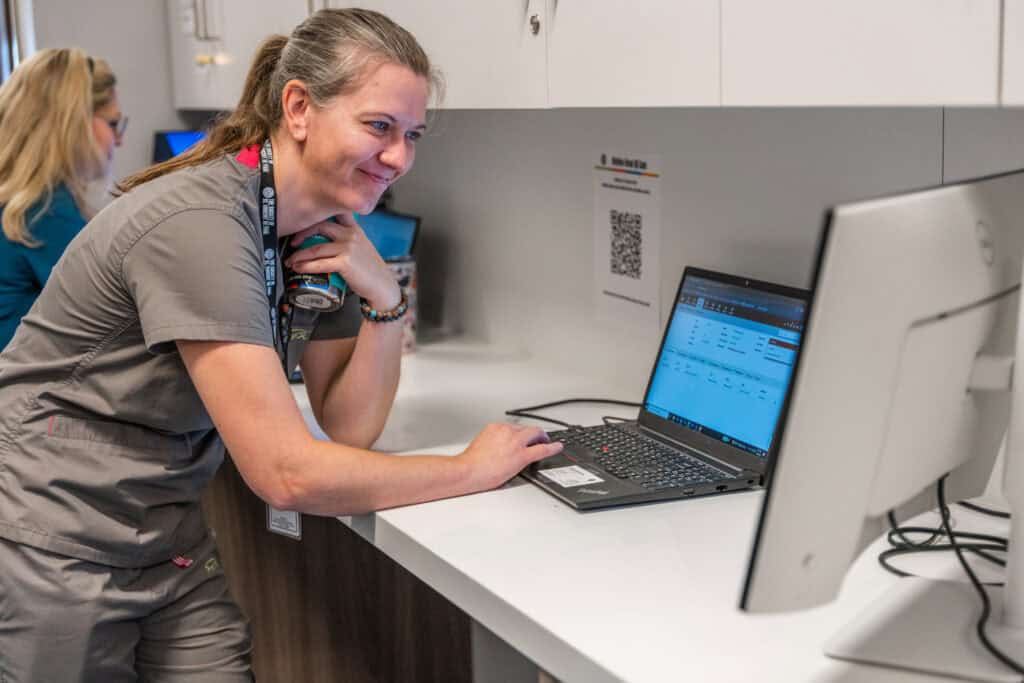
Cassie Boyle, the coordinator of the Companion Animal Clinic, has seen firsthand how important pets are to the unhoused. Boyle is a veterinary technician with over two decades of experience, and she assists veterinarians with tasks such as preparing vaccines and handling pets, among other responsibilities. She was working in the clinic on the day we toured.
“We take so much for granted that we have these pets for the normal population. We have a house we put them in. We’re providing them food and water. We’re able to provide those things for them ourselves,” says Boyle. “We leave our pets when we go to work. This population is with their pets 24/7. Their pets are their everything. I’ve seen them feed their pets before they feed themselves. That connection is a deeper level, and they’ve gone through some of those big struggles together. So that bond is a lot tighter, and you can see it in their interaction.”
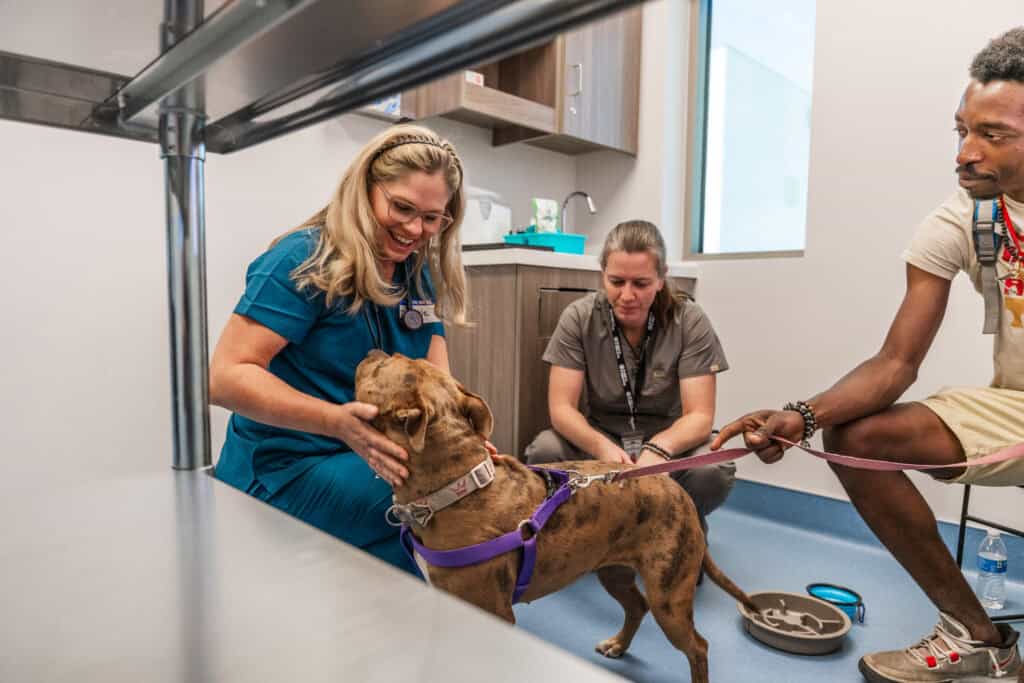
Boyle says it’s important not to hold judgment when you see an unhoused person with a pet.
“The biggest thing is just remembering, when you see people in whatever circumstances they are in, that you don’t get the full story. You’re getting a snapshot in time,” Boyle says. “If you see a pet that might look underweight, they may have found that dog on the side of the street and just started taking care of it. It’s not that they’re neglecting them. Maybe they are actually the ones who are trying to get them better. Again, they may not have eaten for three days, but they probably fed the dog with something. We forget so easily to not pass that quick judgment on that very quick snapshot of time, but most of us are one step away from ending up in such a bad experience,” says Boyle.
“We quickly snap to that judgment. And I think just taking that moment to say, ‘That’s not a great situation they’re in. They must have had something hard happen to get them where they are,’ and just knowing that there are resources out there—we’re trying to help that and getting people back on their feet.”
This article first appeared on Good Info News Wire and is republished here under a Creative Commons license.