Arizona voters rejected Proposition 320, the measure that would have required larger school districts to spend at least 60% of their operating budgets on direct instruction without an increase to school budgets.
The Associated Press called the race on Nov. 7. But the margins were close, with 51.9% of voters selecting “no.” Republicans, like Rep. Matt Gress, who sponsored the House version of the bill and lost his reelection bid, had said the goal of Prop 320 was to raise teacher pay.
The Beam analyzed data from the Arizona Department of Education and Arizona Auditor General and found that 87 school districts would have to reallocate money because of Prop 320 or risk losing $173 million in classroom site funding.
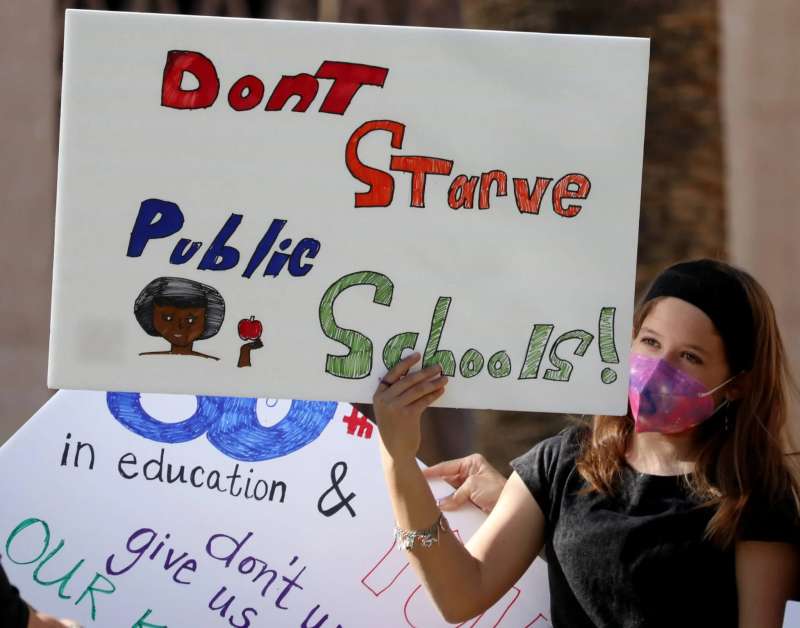
Many educators spotted the flaws in the bill, too. Before the election, a teacher, a school counselor, and the president of the state’s school nurses organization told The Copper Courier why they opposed the ballot measure: It added no new money, so districts would likely have had to cut positions like counselors, school nurses, special education staff, and even cafeteria workers to reach the 60% target, they said.
We went back to two of them—Will Graham, president of the School Nurses Organization of Arizona, and Kristin Roberts, a teacher at Carl Hayden Community High School—to get their thoughts now that the bill failed. Here’s how they felt as the results rolled in.
Cautious optimism on election night
Early returns on the morning after Election Day showed “No” winning by just over seven points. That gap narrowed as more ballots were counted. On Nov. 6, “No” was leading by about 3.5%, and the race was still too close to call.
Roberts said she felt cautiously hopeful as the first numbers came in.
“I was too nervous to get excited yet because it was close, and I knew more results were coming in,” she said.
RELATED: Arizona educators fear Prop 320 could mean fewer nurses, counselors in schools
“I was cautiously optimistic,” Graham said.
“The race was closer than I would have liked, and early on, we didn’t know where the outstanding ballots were, so it was hard to predict how the remaining votes would trend,” Graham said. “Still, I stayed hopeful that Arizona voters would stand up for public education.”
Relief and frustration when the call came
“Above all, I felt grateful,” Graham said. “Arizonans did their research. They looked past the deliberately confusing wording of the initiative and recognized that this proposition did nothing to increase funding for public education or raise teacher pay.”
“I think my first emotion was relief that this huge threat was gone,” Roberts said. “Then I felt proud of all the work that went into advocating against this measure.”
She pointed to teachers who spent evenings and weekends knocking on doors, making phone calls, and talking with friends and neighbors about the measure.
“Their advocacy paid off,” she said. “I felt proud and excited, but it was tinged with a little bit of bitterness that we even had to do any of this. We should not have to work so hard, serving our students and families all day, and then fight for the existence of our neighborhood schools on evenings and weekends.”
What comes next?
Prop 320’s defeat leaves Arizona’s school funding system exactly where it was, and lawmakers will return to the Capitol in January, this time with Democrats in the majority in both chambers of the Arizona Legislature.
Before the election, Roberts said she wanted the Legislature to raise base per-student funding and let local school boards decide how to spend it.
Graham said he’d like to see the Arizona Legislature make a “real investment” in public education.
“School districts are still adjusting to the post-COVID reality and feeling the loss of federal funding during the pandemic,” Graham said. “Our students are capable of brilliant things, and our school staff work incredibly hard. We need the Legislature to work just as hard to increase funding, which directly increases opportunities for our next generation.”
Roberts noted the opportunities public education has in the next legislative session. She wants to see the new Democratic majorities in the Arizona House and Senate rein in the universal voucher program, invest in repairs to school facilities, and allocate more funding to public education.
Arizona’s next legislative session begins Jan. 11.