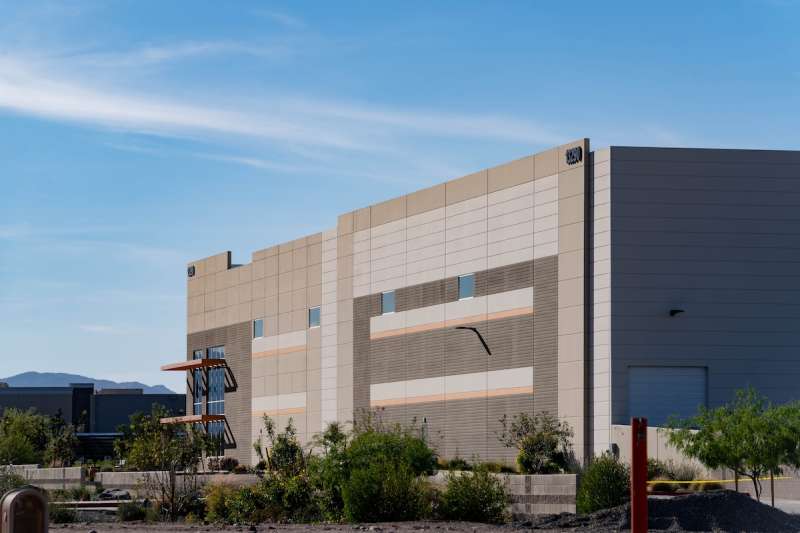
The federal government has agreed to hold off on converting a warehouse in Surprise into an immigration detention center until it completes an environmental review, according to federal court records.
The process will further delay the facility’s opening by several months, after it was already pushed from September to later in 2026.
No physical work to convert the warehouse, such as construction, demolition, or retrofit, is allowed under the agreement filed in federal court on June 30 between lawyers for the Department of Homeland Security, Immigration and Customs Enforcement and Arizona Attorney General Kris Mayes. A judge still needs to sign off on it.
But the government, which has contracted with a private security firm to prepare the warehouse, could still perform inspections, install security measures, repair and maintain parts of the building, among other things, according to the filing.
MORE: No citizenship ceremonies in Phoenix this Fourth of July. Why not?
The lack of an environmental analysis was a key component in the lawsuit that Mayes filed against DHS and ICE in April.
She said the Department of Homeland Security did not comply with the National Environmental Policy Act before proceeding with plans to convert the 418,400-square-foot building off Dysart Road and Sweetwater Avenue. That law requires the government to review and consult the community about the impacts of the project, which goes beyond concerns about pollution and water use to include how it would affect traffic and noise.
“This agreement is a significant win for the people of Surprise and for the rule of law,” said Mayes in a statement. “Federal agencies must complete the environmental review process required by federal law before moving forward with these types of projects. My office will keep fighting to ensure the law is followed.”
An unidentified DHS spokesperson did not answer questions about exactly how long the review would set the agency’s plans back or how long the assessment was expected to take.
The spokesperson said in an email that DHS was moving “swiftly to utilize existing detention space with our state and county partners.” The “worst of the worst criminal illegal aliens” should be “removed at lightning speed, not housed on American soil at the taxpayer’s expense,” the spokesperson said. The spokesperson did not answer who the statement should be attributed to.
The warehouse was one of several that DHS purchased across the nation under its former head, Kristi Noem, to expand detention space. Now, months after repeated community backlash for the large-scale detention plans and the removal and replacement of Noem with Markwayne Mullin, DHS is abandoning its plans for some of the warehouses.
But not in Surprise, where residents and activists have criticized the proposed facility, especially because of its proximity to a hazardous chemical warehouse and what would happen to all of the detainees in the building if a chemical release occurred.
They have repeatedly called on Surprise leaders to act on community concerns and publicly oppose the facility. Some are so frustrated that they want Maricopa County to take over Surprise because they feel city leadership has failed to address issues regarding the ICE facility.
A spokesperson for Surprise did not respond to an inquiry regarding the city or Mayor Kevin Sartor’s reaction to the agreement. City leaders have previously said there was little they could do about the facility because it was the federal government’s property. One councilmember said Mayes had more resources to fight it.
Brent Peak, co-chair of Northwest Valley Indivisible, said that the proposed legal agreement was a win, but it wasn’t the end of the fight. The activist group wasn’t going to stop until the “prison camp” was officially shut down, he said.
“DHS didn’t do this because they wanted to,” said Peak in a statement. “They did it because a Surprise resident dug up the hazard data they didn’t bother to look for, because Attorney General Kris Mayes took action and sued them, and because thousands of people in this community showed up and made this too loud to ignore.”
The June 30 court filing said Mayes intended to ask a judge for an injunction ordering the federal government not to convert the facility or detain people there, based in part on the allegation that an environmental review had not been completed.
Lawyers for Mayes and the federal government agreed to temporarily pause the lawsuit until the review was conducted because “it will promote judicial economy and conserve judicial resources,” the filing said. Mayes, in her statement, said she would have the right to challenge the quality of the review.
Once a judge signs off on the agreement, the government would provide a status update every 60 days until the review is completed.
Reporting by Elena Santa Cruz, Arizona Republic