A federal appeals court has sided with Native American tribes in their fight against the federal government over a $10 billion energy transmission line designed to carry wind-generated electricity from New Mexico to customers as far away as California.
The Tohono O’odham Nation — along with the San Carlos Apache Tribe, the Center for Biological Diversity and Archaeology Southwest — sued the U.S. Interior Department and then-Interior Secretary Deb Haaland in 2024. They argued that the agency failed to properly consult with the tribes on a historic property designation for southern Arizona’s San Pedro Valley.
A three-judge panel of the 9th U.S. Circuit Court of Appeals ruledTuesday that a lower court erred in dismissing the case last year and ordered the matter to be reconsidered.
The panel concluded the plaintiffs raised a plausible claim that a proper consultation would have resulted in the valley being designated as a historic property and that the agency was required to identify historic properties that would be affected and ensure any adverse effects would be avoided, minimized or mitigated before authorizing construction.
RELATED: $14 billion in clean energy projects have been canceled in the US this year, analysis says
The Tohono O’odham Nation had vowed when the case was dismissed to pursue all legal avenues for protecting land that it and other tribes consider sacred. Tribal Chairman Verlon Jose reiterated that the tribe will continue to fight for its rights and that Tuesday’s ruling marked an important victory in the long-running dispute.
“The Tohono O’odham Nation supports clean, renewable energy — when it is done the right way,” Jose said in a statement. “With the SunZia project, the federal government failed to work with tribes to protect our cultural resources as required by law.”
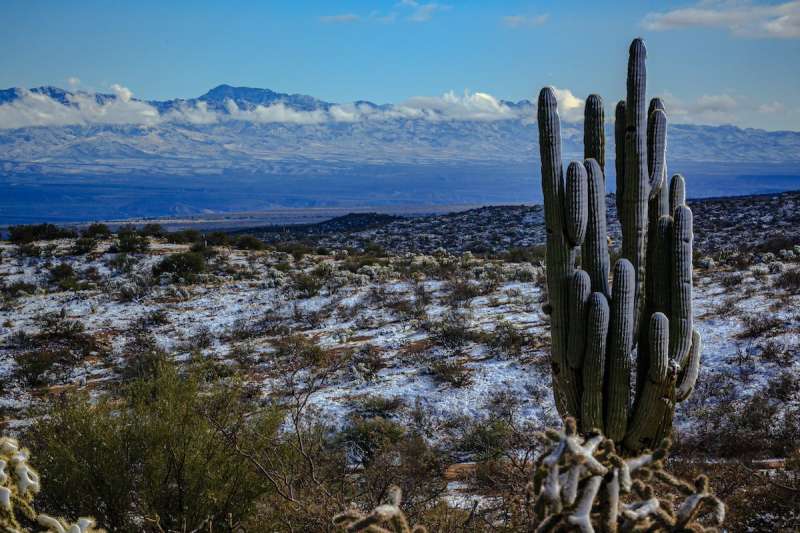
The valley represents a 50-mile stretch of the planned 550-mile conduit. The route is expected to carry electricity from wind farms in central New Mexico to existing transmission lines in Arizona to serve populated areas as far away as California. The project was among those touted as an important part of former President Joe Biden’s goal for a carbon pollution-free power sector by 2035.
Construction in the San Pedro Valley already is complete, said Matt Dallas, a SunZia spokesperson.
“We are reviewing the opinion, and SunZia remains on track for commercial operation in 2026.” Dallas said.
In response to questions about the latest ruling and whether the federal government was in discussions with the tribes, Interior spokeswoman J. Elizabeth Peace said the department doesn’t comment on pending litigation.
Peace did say the agency “remains committed to stewarding our natural and cultural resources, honoring tribal trust responsibilities and managing public lands for all Americans.”
President Donald Trump in recent weeks has signed a number of executive orders promoting domestic energy production and has cited the need for reliability of the nation’s electric grid amid growing demand driven partly by data centers and artificial intelligence.