Reporting by Shi En Kim, Arizona Republic
Many Arizonans are probably familiar with the signs of dangerous heat, and have possibly felt them too — dizziness, exhaustion and, on the more severe end, nausea and cramps.
We hurry indoors, chug a cold drink, turn up the AC and wait for the body to pull itself together. If we act early enough, in a few hours or so we’ll feel like we’ve bounced back from that dangerous dance with extreme heat. We move on and try to survive another hot day.
But that heat has left its mark on the body in ways that will only come to bear later. And season after season of the same tango with unbearable temperatures, what doesn’t kill us may make us age faster.
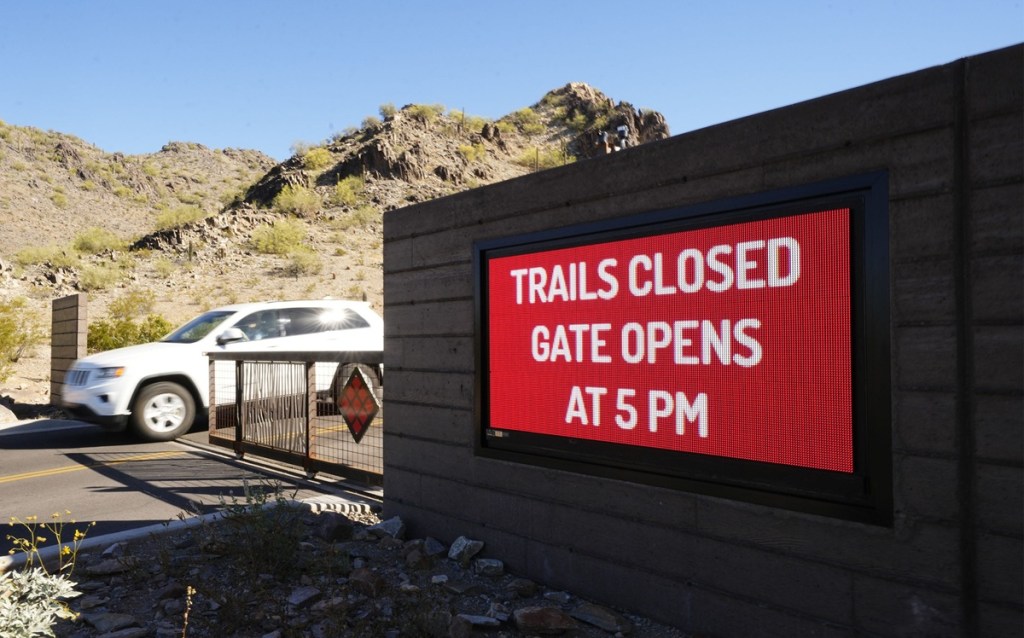
When people consider heat as a public health hazard, they’re most likely thinking of the acute effects, such as heat stroke and death. But the long-term consequences of chronic exposure to heat can also be devastating.
A growing body of research has explored the various ways warm climes can wreck the brain. Now two new studies have added evidence that extreme heat can precipitate age-related cognitive decline. People who regularly experience dangerous doses of heat — like Arizonans — may be at a greater risk of dementia.
“There is a direct association with outdoor temperatures,” said Eun Young Choi, a gerontologist at Arizona State University and the lead author of both studies. “My whole point is that, if the heat doesn’t kill you, it doesn’t mean that you’re safe.”
The link between extreme heat and dementia
In a nationwide population survey of 28,000 people 50 years and older, Choi’s team analyzed 20 years of data to tease out the link between outdoor temperatures and brain health.
More dangerous heat days in a year seemed to contribute to the onset of dementia. When outdoor temperatures exceeded 103 degrees for more than seven days in a year, the risk of dementia was 23% higher compared with people who didn’t experience any such hot days. The risk was 14% higher for those suffering through one to two hot days every year.
This year, Phoenix experienced 47 heat warning days.
This is the first such study in the U.S., but research abroad echoes these findings. A cohort study in Taiwan found that patients who were hospitalized with heat-related illnesses were more likely to develop dementia. Heat stroke, in particular, was a strike against the brain. In China, every year with a heat wave might have led to a 2.3% jump in the risk of cognitive decline among middle-aged adults and older, according to one study there.
Scientists are still connecting the dots for how heat may trigger cognitive decline, but they have several leads.
First are the cellular clues: Increased sweating can lead to reduced blood flow, which can stymie oxygen delivery to the brain. Laboratory experiments also found that rats with heat exhaustion had toxic buildup in their brain and damage in the part involved in memory and learning.
Perhaps the expression “my brain is fried” isn’t hyperbole.
As anyone with a malfunctioning air conditioning unit knows, it’s hard to sleep during warm nights, and that might add to the burden and translate to cognitive impairments down the line.
As people try to duck the outdoors during the summers, behavioral changes from the heat can also add to the dementia risk. Curtailed socialization, insufficient hydration and reduced physical activity, all from hunkering indoors, may contribute to dementia down the line.
Does that mean someone who lives in Phoenix has higher chances of dementia than someone living in the north, such as in Seattle?
The messy world provides a far-from-perfect experiment, so researchers say it’s challenging to draw a direct line between heat and dementia out of the tangle of other contributors, including genetic history, socioeconomic and lifestyle factors. No one can predict the risk for an individual, but at the population level, heat’s invisible hand becomes more apparent.
When asked, Choi responded with a begrudging, “yes.”
Women are more vulnerable
Women are more susceptible than men to the dangers of extreme heat. A previous study of heat wave mortality found that the rate was 15% higher among older women, compared with men of the same age bracket. In the 2022 heat wave that swept across Europe, the mortality rate of women was 56% higher than among men.
Heat’s disparate effects also manifest more drastically in women long before the acute effects arise.
Alzheimer’s disease is the most common form of dementia, and its progression can speed up under chronic heat exposure. Choi’s second study found that long-term heat exposure raised blood biomarker levels associated with Alzheimer’s — but only in women.
Over a five-year period, women living in places that saw hot summers grew more neuron-damaging tangles and toxic proteins called amyloid-beta in their brains. These were biochemical signs that Alzheimer’s was brewing in the brain, even before outward symptoms were present.
“The main message here is that, if you live in a hotter environment and if you are a woman, your neuro-biomarkers specific to Alzheimer’s disease have a worse profile,” Choi said.
No such correlation was observed in men.
Women’s bodies are generally less adaptable than men’s to heat. One reason is that they sweat less. But after menopause, the body becomes even more intransigent. With the loss of estrogen, blood vessels start losing elasticity, and communication between neurons goes sluggish.
All these would have helped the body increase blood flow and sweat more when the environment starts baking. And when the body struggles to cool down, the brain eventually starts to feel the heat.
Choi’s study uses outdoor temperatures as a proxy for a subject’s heat exposure, but the two aren’t necessarily the same thing, cautions Peter S. Larson, an environmental epidemiologist at the University of Michigan, who wasn’t involved in the study. A more accurate measure would be to track the environment all day long as a person moves in and out of buildings and their cars.
But Choi notes that having access to AC doesn’t solve the problem, since socioeconomic factors often get in the way of people using it. Case in point, 88% of indoor heat deaths in Maricopa County this year occurred in homes with the AC malfunctioning or turned off, eight times the mortality in buildings not equipped with AC.
Though the studies offer a tantalizing glimpse of how extreme heat cooks up molecular mischief in the brain, Choi and Larson are still reluctant to conclude that heat directly causes Alzheimer’s, or any other neurodegenerative disease. Correlation doesn’t equal causation, they caution.
The best way to nail down the mechanism is to place people in a climate-controlled laboratory setting — in other words, a heated room — and monitor whether they develop dementia, an experiment researchers acknowledge would be unethical. Unraveling the physiological impacts of heat is a tough nut to crack, because of the sweeping changes it induces in the body.
“Any exposure to extreme heat affects the body as a system, and so it’s not just one thing; it’s everything all at once,” Larson said. “That makes it really, really, really difficult to tease out what the actual mechanics of these links between heat and cognition would be.”
With rising temperatures come rising risks
There’s no good news when it comes to extreme heat on health. Other scientists have linked extreme heat with higher likelihood of getting diabetes, kidney injury and cardiovascular disease.
Choi released a study last year revealing that heat also ages the body at the molecular level. In blood samples of people from across the country — including Phoenix, as one of the most telling data points — Choi’s team found that the genes of people living in the hottest climes looked like they had aged an extra 14 months. The fallout was similar to those of smoking and drinking.
Climate change is making Phoenix warmer. According to Climate Central, the American Southwest is one of the fastest warming places in the country. Since the 1970s, the city has warmed by 5 degrees on average, and the number of extreme-heat days has nearly tripled. This summer was also the city’s second warmest on record, averaging 97 degrees daily. As another tell, this year Maricopa County is on track to reach a new high in the tally of heat deaths.
Studies like these point to a new public health danger concerning the heat: the soaring burden of population-wide neurodegenerative diseases.
“We’re going to see more and more people are at risk for these kinds of outcomes moving into the future,” Larson said. “That’s something we need to think about now — not 20 years from now.”
Around the world, 2.4 billion people are grappling with extreme heat, whether in the form of summers like Arizona’s or from heat waves that catch entire populations off guard. The number of people vulnerable to extreme heat is set to double by 2050.
An estimated 5.7 million Americans are living with dementia, costing the U.S. economy $818 billion in caregiving labor and a shrunken workforce. It’s unknown how many of these cases may be related to heat.
Warding off a future of skyrocketing heat-induced dementia cases boils down to reducing people’s exposure to extreme temperatures. That includes adding more cooling centers, improving affordable housing, enhancing access to air conditioning and boosting financial assistance programs to make sure people can afford to run the units in the first place.
There’s a growing call to treat extreme heat as any natural disaster on par with hurricanes and floods. Heat is the number one weather-related killer in the country and the world.
But there’s one thing in heat’s favor: “If there is a huge earthquake, then we can’t really prevent it,” Choi said. “But then, in terms of heat, I think that’s preventable hazard to some extent.”
Whether that’s strengthening the social safety net or curbing greenhouse emissions to rein in global warming, she said, year after year, heat doesn’t have to be the serial killer — or, at least, the brain’s secret saboteur — that it presently is.
Shi En Kim covers environmental issues for The Arizona Republic and azcentral. Send tips or questions to shien.kim@arizonarepublic.com. Follow The Republic environmental reporting team at environment.azcentral.com and @azcenvironment on Facebook and Instagram.
Environmental coverage on azcentral.com and in The Arizona Republic is supported by a grant from the Nina Mason Pulliam Charitable Trust.
This article originally appeared on Arizona Republic.
Related: New Mexico voters want environmental resources protected