Families receiving federal housing assistance must soon make an agonizing choice if a member is undocumented: Ask that person to leave the home or lose the household’s subsidies.
The choice will be driven by an upcoming federal rule that affects not just undocumented immigrants, but also U.S. citizens, children, and eligible immigrants who are part of mixed-status families. Mixed families can receive the subsidies now, but receive less money the more ineligible members are in the household.
A 2025 study by the Center on Budget and Policy Priorities estimated the rule would affect 420 households statewide out of about 36,000 households subject to the new documentation requirements.
MORE: Metro Phoenix renters have the upper hand. Here’s why
The state’s largest city houses more than a third of the study’s total. Officials at Phoenix’s Housing Department, which distributes the subsidies to city residents, told The Arizona Republic it would impact 156 households in the city, or about 600 people.
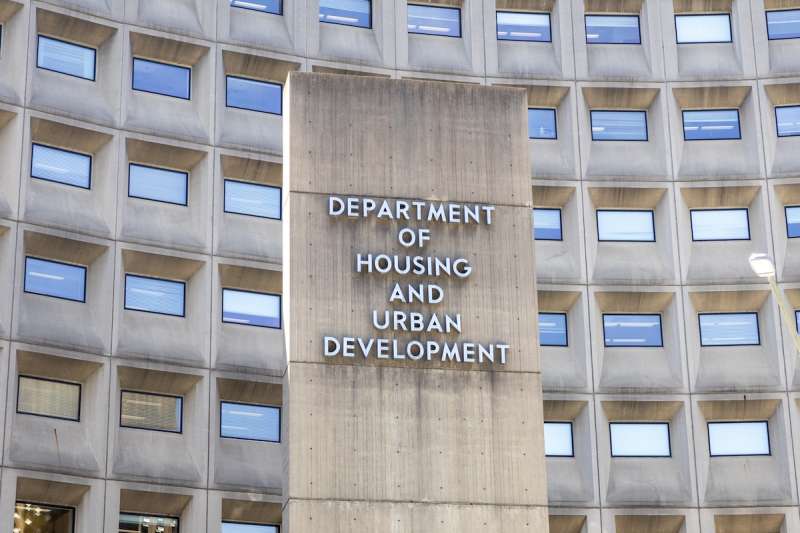
The rule from the Trump administration’s Department of Housing and Urban Development, commonly known as HUD, takes effect on Dec. 14.
After that, households have 90 days to prove everyone living in the home covered by the program is either a U.S. citizen or an immigrant eligible for the government assistance. The rule covers Section 8 subsidies and other housing assistance under the federal Housing and Community Development Act of 1980, which included restrictions on immigrant status.
Household members who haven’t shown proof of eligibility within 90 days may be granted up to 60 extra days to provide it. Without the proof or exceptional mitigating circumstances, the government will cut the subsidy for the entire household. A household would receive notification of a subsidy denial, with a chance for review of its case and an appeal hearing.
The rule “ends the exploitation of taxpayer dollars,” HUD Secretary Scott Turner said in a comment provided to The Republic. “This rule guarantees ONLY AMERICAN citizens and certain eligible noncitizens will reside in HUD-funded housing. This change represents a reallocation of up to $218 million, which will now go to eligible Americans that are currently on a waitlist.”
A recent HUD news release on the rule included a video of an appearance by Turner on Fox Business.
Who will be affected by the HUD rule?
Phoenix couldn’t provide the exact makeup of the households affected, but Julia Gelatt of the Migration Policy Institute, a left-leaning think tank in Washington, D.C., said the rule “is likely to affect large numbers of U.S. children.”
In many cases, the HUD subsidies go to households with undocumented parents and U.S.-born children, she said.
“It’s really difficult if we accept that birthright citizenship is part of our country,” she added.
Gelatt acknowledged it’s a “difficult” issue because of the lengthy waitlists to obtain housing subsidies and the general lack of affordable housing in the country.
Federal government rules allow both citizens and eligible immigrants to receive housing subsidies. That includes green-card holders and people granted asylum.
But the rule will touch families directly and affect undocumented spouses of citizens, parents, children and other relatives.
Undocumented immigrants who crossed the border illegally or overstayed their visas may qualify for a green card. In many cases, those found to have spent a year or more in the country while unauthorized first must spend 10 years outside of the United States unless they can get a waiver. Gelatt noted that provision drives many undocumented people to stay in the country without trying to obtain a green card. People married to a U.S. citizen but not eligible for the subsidy may be able to avoid leaving the country, though the process to become eligible may take many months.
The timeframe of the new rule means mixed families could lose their HUD subsidies or ask a family member to leave the household as soon as the spring of 2027.
“This is certainly the most anti-family, anti-Christian move that I can see from this administration,” said Phoenix lawyer Ray Ybarra Maldonado about the new HUD rule. “Attacking the poorest of the poor, the ones that need help.”
Mixed-status families have received HUD assistance for years
HUD rules have previously allowed undocumented immigrants to benefit from HUD housing subsidies as part of mixed-status households even as they are barred from obtaining them directly.
The government calculates the subsidy payment by examining the household’s total income and determining how much the household should contribute to the rent. The government pays more than half the rent each month in examples shown on HUD’s website.
Under the current rule that will change Dec. 14, an applicant for the subsidy must give a name and other information about household members, including income. That includes ineligible members of the household. But the government doesn’t require a Social Security number or any other confirmation of the identity of the ineligible members.
The household would be allowed to skip turning in proof-of-eligibility documentation for ineligible members, but HUD downsizes the subsidy by the share of eligible household members. In a HUD example, if a four-person household has three eligible and one ineligible member, that would be 75% of the household; therefore, the household receives only 75% of the subsidy. But the ineligible member still benefits from the reduction in rent.
Under the new rules, proof of eligibility must be shown for every covered member of the household to receive the subsidy. President Donald Trump’s administration proposed a version of the new rule in 2019. It was withdrawn by President Joe Biden’s administration in 2021. The final rule was published on Nov. 12, 2026, in the Federal Register.
HUD statistics show Arizona HUD-subsidized households have an annual average income of $16,816, and most fall into the “very low income” category. About 35% of the households have children.
Twenty-two Arizona municipalities and other government entities are each in charge of distributing the HUD subsidies.
Maricopa County has 39 families and 56 total individuals who reside in properties managed by the county’s Housing Authority “and will be affected” by the verification rule, said the county department’s executive director, Gerald Minott. Yavapai County has no affected households, according to Arizona Department of Housing spokesperson Dave Cherry.
Immigrant advocates have filed lawsuits in Massachusetts and California in an attempt to block the rule.
Newly reelected Arizona Attorney General Kris Mayes, who filed or joined in 49 lawsuits against the Trump administration in her first term, will be “taking a closer look at this,” said Mayes’ chief of staff, Richie Taylor.
“When HUD’s actions have violated laws in the past, we have sued and won,” Taylor said, adding the office is “always prepared to hold the administration accountable under the law when necessary.”
Reporting by Ray Stern, Arizona Republic