Laura Carter has lived in Flagstaff long enough to see more than just the leaves change—she’s seen the population size grow, the streets change, and all the new housing units built over the years.
She’s also seen prices continue to rise under President Donald Trump’s administration over the past two years, she said.
A retired public school teacher, Carter doesn’t spend much. She buys groceries, pays the mortgage on her childhood home, and fills her gas tank. But as prices continue to increase, she’s found herself cutting back on things she doesn’t absolutely need to make ends meet. That includes canceling her annual trip to see her three children on the East Coast, a trip she said she can no longer afford.
“I miss my kids. I wish that they lived closer or that it was easier to get there,” Carter said. “It’s just always on my heart.”
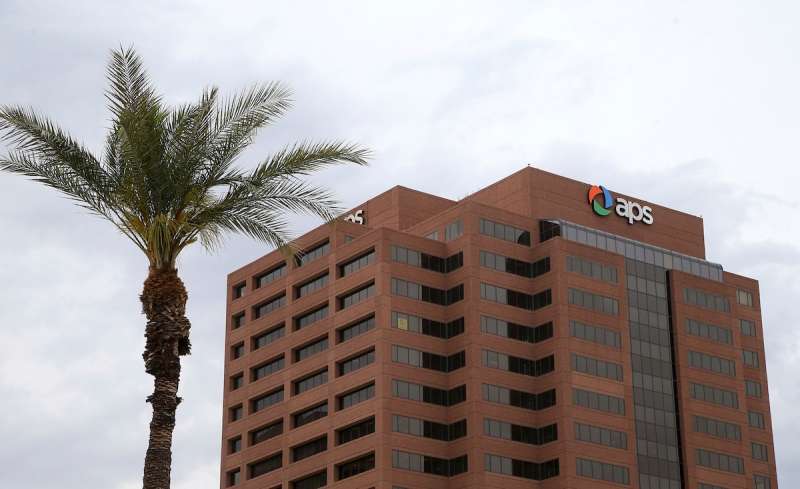
Carter’s utility bill has been steady, she said. But as Arizona Public Service (APS) seeks a 14% rate hike, Carter, who lives on a fixed income from the pension she earned teaching in Maryland public schools for more than 20 years, worries what it will mean for her. While she gets some cost-of-living adjustments, major economic changes could throw off her routine and force her to cut costs further around the house to make ends meet.
If approved by the Arizona Corporation Commission later this year, the rate hike would add about $240 a year to the average Arizona household’s bill. An administrative law judge will consider the evidence and testimonies before offering a recommendation by November, and residents can leave a public comment through the ACC’s online portal before the commissioners make a final vote by the end of the year.
The deadline for the commission to vote is Dec. 31. If approved by the commission, the new rates are expected to go into effect sometime in early 2027, affecting electric appliances, space heaters, summer fans, and more devices that use electricity.
Why is APS asking to raise electricity rates?
A new report by the Center for American Progress (CAP), a left-leaning think tank, argues that APS’s rate hike request stems in part from actions taken by the Trump administration. One of the most commonly cited reasons is the tariffs Trump imposed in 2025: one APS witness testified that tariffs are likely to drive up inflation and interest rates, raising APS’s costs of debt and equity.
Despite the Supreme Court reversing some tariffs, an APS witness testified that the ruling itself stirred economic uncertainty. The report also says the One Big Beautiful Bill Act, which passed in July 2025 with the support of Arizona’s Republican delegation, is driving up costs by curbing new energy capacity even as demand continues to rise.
Arizona Attorney General Kris Mayes, a Democrat, has filed testimony arguing APS could increase rates by 3% rather than 14% and said her office plans to fight the rate hike request.
“Arizonans are already stretched thin. They shouldn’t be paying a premium on their electric bills so APS can deliver outsized returns to its investors,” Mayes said in a March press release.
Did Trump keep his promise to lower utility bills?
Lucero Marquez, associate director for federal climate policy at CAP, who worked on the research, said the rising costs from Trump policies show that the president is failing to keep campaign promises to Arizona voters.
As part of then-President Joe Biden’s Inflation Reduction Act (IRA), APS received a loan guarantee of up to $1.81 billion through the law’s Energy Infrastructure Reinvestment program. The financing would have helped APS pay for new transmission lines, renewable power, and energy storage. But a year later, in Jan. 2026, the US Department of Energy confirmed that the loan commitment was canceled, and the state lost an approximately $250 million in total savings over the life of the loan.
“Trump ran on the campaign promise to cut energy bills by 50% during the first 12 months of his term, and we are seeing across the country so many requests for rate increases,” Marquez said. “At the end of the day, it’s Americans who are struggling to make ends meet already. This administration is just making the problem much worse.”
At a campaign event in 2024, Trump said his goal was “to cut your energy costs in half within 12 months after taking office.”
“We can do that,” Trump said.
Two years later, Carter is waiting to see it.
While the report ties the increases to Trump administration policies, the commission has the final ability to approve or deny a rate hike request. The board has five commissioners, all of whom are Republicans, with two commissioners, Kevin Thompson and Nick Myers, up for reelection this November.
How are rising costs impacting seniors on fixed incomes?
An extra $240 a year might not be much to someone like Trump, Carter said, but for her, it’s the difference between living comfortably and cutting back even more.
“They don’t care about the everyday average American who’s thinking about their bills,” Carter said. “They are billionaires. $250 a year is nothing to them. $250 a minute would be nothing to them, so they don’t care.”
Carter fears what the increase would mean for her and her family. Immediately, she said, it would mean no Christmas gifts for her loved ones, more cuts at the grocery store, and figuring out how to make ends meet as the bills stack up.
She’s already made a handful of changes. Most notably, she’s more mindful of what she spends and how. While she doesn’t struggle financially right now, one small change in her bills could make all the difference on a fixed income.
“It’s like this daily little bit of stress, the pinch that I’m experiencing because everything’s more expensive,” Carter said. “But if I’m feeling the pinch in my comfortable life, it makes me think all the time about my neighbors for whom that is way more than a pinch.”
Most older homes in Flagstaff—those built before the 2000s, like Carter’s—don’t have air conditioning. In the summer, Carter opens the windows at night to let the hot air out and the cool air in. In the morning, she rushes to close them to keep the house cool. But come winter, when temperatures can drop well below freezing, warmth is nonnegotiable.
Still, Carter is already planning to use less heat this winter. Her gas service comes from a separate utility, but with the fear her APS bill will climb, she said she’s trimming wherever she can. She’s considering closing off two rooms, covering their vents, and avoiding her gas furnace.
“I will just wear another sweater, pair of socks, and I have a little gas fireplace, but I will not be using my gas fireplace this winter,” Carter said.
It’s one way to keep the bills low.
“These little cost increases,” Carter said. “It’s like death by 1,000 paper cuts.”