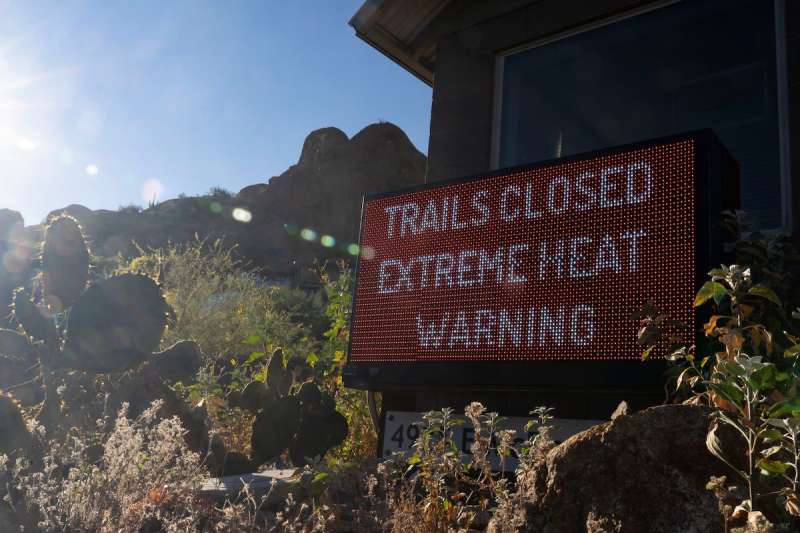
PHOENIX (AP) — Arizona’s largest utility has agreed not to cut off electrical service to customers for nonpayment while forecasted high temperatures are 95 degrees Fahrenheit or above as part of a $7 million settlement of a lawsuit prompted in part by the 2024 death of an 82-year-old woman whose power was disconnected, Attorney General Kris Mayes said Wednesday.
The state’s settlement with Arizona Public Service (APS), which previously prohibited shutoffs because of nonpayment between June 1 and Oct. 15, also called for the utility to pay $2.7 million that will be deposited into a state consumer protection fund and another $3.4 million to improve a program that lets customers designate family members or friends as emergency contacts who can receive notices in a bid to help prevent shutoffs, including sending text messages to inform customers of delinquent bills and disconnection notices.
RELATED: How to tell if someone needs help in extreme heat—and what to do
Mayes’ office said the lawsuit grew out of concerns about disconnection practices during extreme heat, including the death of Katherine Korman at her Sun City West home.
Her service was cut off in mid-May 2024 because of nonpayment on a day when the daily high temperature in her area reached about 99 degrees Fahrenheit. She was found dead six days after her power was disconnected.
APS said it made 10 attempts to contact Korman by phone, email, door hanger and monthly bills to let her know the status of her bill and offer help. The utility said regulators who examined the case determined APS had followed the rules on customer outreach and disconnection.
“No Arizonan should be at risk because they cannot afford their electric bill,” Mayes said in a statement. “This settlement ensures that APS will no longer disconnect power based on the date on the calendar alone – if temperatures are dangerous, the power stays on.”
APS, which didn’t acknowledge any wrongdoing as part of the settlement, said in a statement that it already met or exceeded state laws and regulations in its disconnection policies and customer communications. “Our entire team at APS prioritizes customer safety and cares deeply about the well-being of our customers and community,” the utility said. The agreement specifies the payments from the settlement must come APS shareholder funds and that they can’t be recovered through future rate cases or surcharges.
“If APS wants to spend additional shareholder funds, it is free to do so,” Douglas Clark, executive director of the Arizona Corporation Commission, said in a statement. “The consent agreement makes it clear that this payment is outside the regulatory framework and will not be passed on to ratepayers.”
Maricopa County, which includes the city of Phoenix, confirmed 430 heat-related deaths last year, a decrease from 608 in 2024 and 645 in 2023. The county’s first confirmed heat-related death in 2026 was announced last week.