Some of Arizona’s most dangerous floods do not start with rain. They start with a wildfire. As the summer monsoon settles in, forecasters and the Arizona Department of Water Resources warned that storms falling on fresh wildfire burn scars could unleash flash floods.
Wildfires cause an increase of debris on burn scars that flow across the state, and human-caused climate change is intensifying both ends of that equation. It’s making wildfires and the damage from flooding worse.
Typically, a healthy ground and the flora on it would soak up rainfall. The roots, leaves, and soil sponge up Arizona’s limited rainfall. A wildfire, however, burns off vegetation and bakes the ground, making it harder and water-repellant.
MORE: Failing grades: What the ‘State of the Air’ report says about Arizona
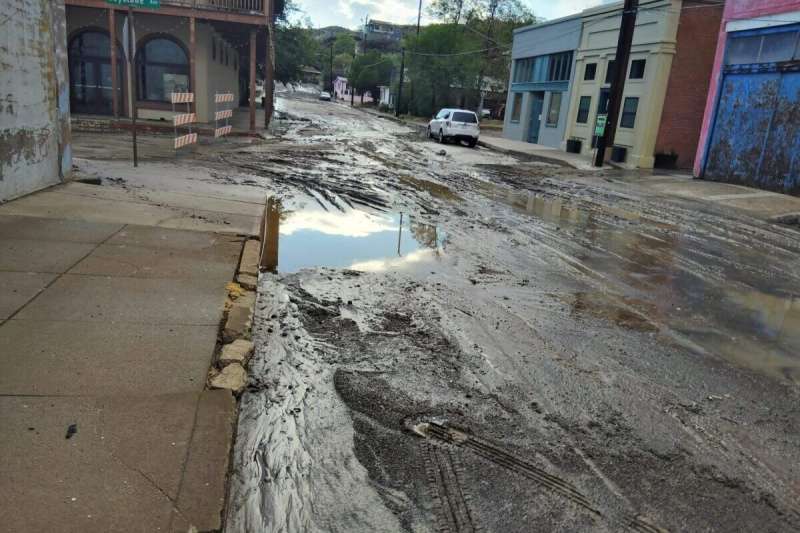
That means when monsoon storms, which can drop several inches of rain in a short amount of time, hit that wildfire burn scar, the rain isn’t sinking into the ground. The rain collects and gathers ash, dirt, rock, and mud into a flash flood.
A debris-filled flood moves quickly. Up in Coconino County in 2022, the Coconino County Flood Control District reported 45 floods that closed roads. On sloped terrain, flooding gets even worse because there’s nothing to stop the water as it rolls down.
Two years after the 2019 Museum Fire near Flagstaff, monsoon storms sent debris flows two to four feet deep into neighborhoods, according to the National Weather Service. Those floods caused a state of emergency.
The 2022 Pipeline Fire was worse. Floods that followed that fire destroyed flood corridors and swamped homes. Azfamily reported that Coconino County has spent $100 million in rebuilding the area’s flood defenses.
This year, fresh burn scars from the Pocket Fire in Oak Creek Canyon and the Dragon Bravo Fire on the Grand Canyon’s North Rim put new areas on watch for the short and medium-term future.
Climate change contributes to this problem—twice over.
First, it makes the fires bigger and more frequent. Rising temperatures and a drier atmosphere pull moisture out of soils and vegetation, leaving areas drier and more flammable. The National Oceanic and Atmospheric Administration noted that human-caused climate change has been responsible for more than half the increase in fuel aridity in western US forest fires since the 1970s.
It’s also roughly doubled the forest area burned since 1974. In the southwest, climate scientists reported that drought and rising aridity are driving larger and more severe fires. More fire means more burn scars susceptible to flooding. The US Forest Service expects post-fire sediment flows to double in about a third of the western watersheds by 2050.
Second, climate change is loading the atmosphere for heavier rain. Warmer air holds more moisture, which fuels more intense downpours. According to meteorologists, the air holds roughly 7% more moisture per degree Celsius of warming.
That combination is why the reprieve from the heat can be even more dangerous as climate change worsens. Post-fire floods can hit homes, roads, drinking-water supplies, and treatment plans far downstream of the burn. And that danger remains years and years after a fire.