About 200,000 children in Arizona have lost SNAP (Supplemental Nutrition Assistance Program) benefits since last year, and many students will not receive free lunches this coming school year following the passage of President Donald Trump’s One Big Beautiful Bill last summer.
States are making sweeping changes to their staffing and budgets for the program while bracing for the full impact of the OBBB’s changes to its households, but no state has been harder hit than Arizona, which has seen a 53.2% drop in its enrollment since new rules have made it harder for low-income households to stay in the program. Roughly 470,000 of the state’s recipients have lost SNAP—including those 200,000 children. And early estimates show the Grand Canyon State will have to come up with as much as $300 million a year to continue SNAP.
“To understand why Arizona has made some of those changes, it’s important to understand that historically, SNAP benefits had been 100% funded by the federal government for the entire history of the program, and then states and the federal government split the cost of operating the program 50/50 and HR-1 (also known as the One Big Beautiful Bill) changes both,” said Katie Bergh, Senior Policy Analyst focusing on food assistance for the Center on Budget and Policy Priorities in DC.
In the meantime, changes to eligibility requirements mean about 4.9 million recipients nationwide lost SNAP benefits from March 2025 to March 2026, according to the most recent data available—that’s about 11.6% of recipients across the country. That means hungry kids and families will experience the ripple effects of these changes in other, less tangible ways.
“Some of these impacts aren’t going to be captured by data,” said Ashley St. Thomas, the director of Public Policy for the Arizona Food Bank Network, “and they’re not even going to be felt for a while in terms of the impact to children, food-insecure households, growing up with scarcity and lack of dignity and choices.”
What happened in Arizona
Changes began when the One Big Beautiful Bill passed last summer, and feds announced they would no longer fund the entirety of the program.
“Starting this coming October, the federal government’s contribution to the cost of administrative programs gets cut in half, and starting October of 2027, most states will be required to start paying a share of that benefit cost for the first time,” Bergh said.
To determine how much each state will have to pay toward its benefits, the bill looks at each state’s “error rate” for the program. That’s a measure of the number of overpayments and underpayments to qualified households that the state made for a fiscal year ending in September. It’s important to point out that that’s a red-tape issue, perpetrated not by the people in the program but by the system running it. It’s the people, however, who will be punished.
“The states had a very limited window of time to get their error rate down, so that is driving a lot of states’ decisions about how they administer the program and how much documentation they’re requiring from families who are seeking benefits,” Bergh said.
States such as Arizona began looking for ways to improve their error rate, by putting additional screening requirements in place for households. At the same time, many states reduced their administrative workforce in anticipation of cuts, meaning they increased processing times for families as they were trying to improve efficiency.
And while the error rate does not reflect fraud, states quickly learned that refusing benefits even to eligible households does not negatively impact that rate.
“It’s created a really harmful incentive for states to erect bureaucratic obstacles and make it much more difficult for families to get the benefits that they need,” Bergh said.
In Arizona, at the same time the OBBB passed, a key grant funding administrative positions for the state’s workforce programs expired, eliminating 500 positions. These staffing changes led to long wait times to call centers and delays in paperwork processing. Meanwhile, unemployment increased in the state and gas prices surged.
“I hope that we will not see what we’ve seen in Arizona replicated in other states,” Bergh said.
Filling the gaps
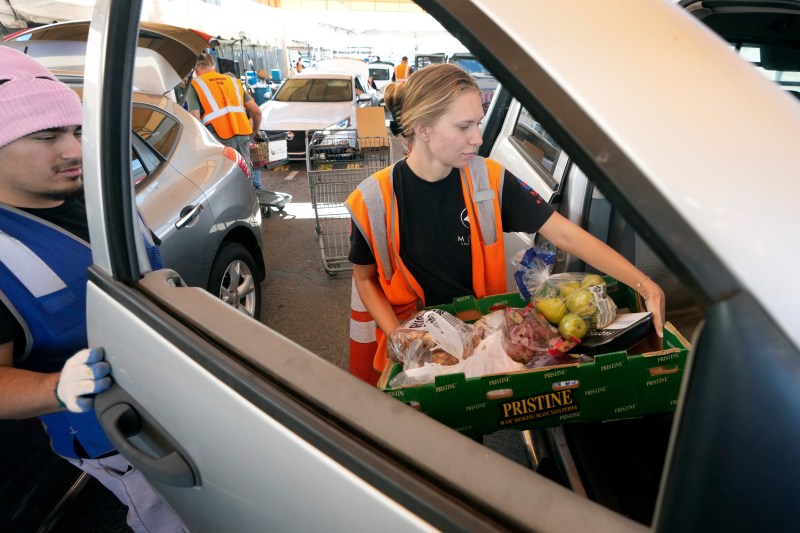
As Arizonans begin to lose benefits, food pantries are stepping in, but there’s only so much they can do.
“For the first time in the past 10 years, when we started recording data, visits to food banks are outpacing the number of people that receive SNAP in our state, which is astounding,” St. Thomas said.
The Arizona Food Bank Network is a coalition of member food banks, including four regional food banks that serve as large warehouses, distributing emergency food assistance across the state’s 15 counties. Yet even with the increase in the network’s visits, St. Thomas said food banks cannot fill the gap left by the SNAP changes.
“Just for scale, the annual budget for our organization would maybe cover one month of SNAP benefits in Arizona,” she said.
At the same time, while food pantries can provide actual sustenance, they don’t directly add a financial boost to families’ pocketbooks.
“SNAP is about purchasing power, and SNAP benefits are somewhat fungible,” said Joseph Palomino, director of the Arizona Center for Economic Progress. “They’re almost like cash. They free up those dollars that a family would spend on groceries that maybe they are now able to spend on rent or healthcare or needs.”
In the meantime, some say the learning curve for new eligibility requirements accounts for a large part of the decline, and that education can go a long way toward helping families regain lost benefits.
“More recently, SNAP participation picked up slightly between April and May, which is an encouraging sign that some changes in the state can abate the massive decline,” Bergh said.
Monitoring the impact
Some students already have families that have been kicked off SNAP—but others won’t feel the impact until next school year. That’s because eligibility is determined at the start of each school year.
This academic year will offer a better picture of the total number of students affected at the K-12 level.
“In communities with high SNAP rates, are we seeing a decline in reading, math scores when we look at SAT and ACT scores?” Palomino said.
The full effects of food scarcity are more difficult to measure, Palomino added. The center will continue to monitor test scores for students, as well as eviction rates for the state—two figures that point to a broader impact of the loss of food funding on families.
Debt delinquency rates are another factor that points to financial struggles linked to SNAP benefits, Palomino said. And grocery stores often report SNAP sales during quarterly earnings calls, which can paint the picture of how much families are able to use.
Palomino expects rural communities in the state to be the hardest hit.
“Most SNAP households are already in the red, even when you have SNAP,” he said. “And so when you lose SNAP, it’s just a crisis.”