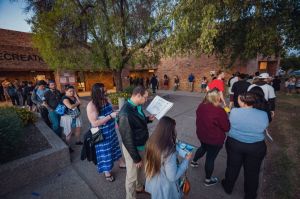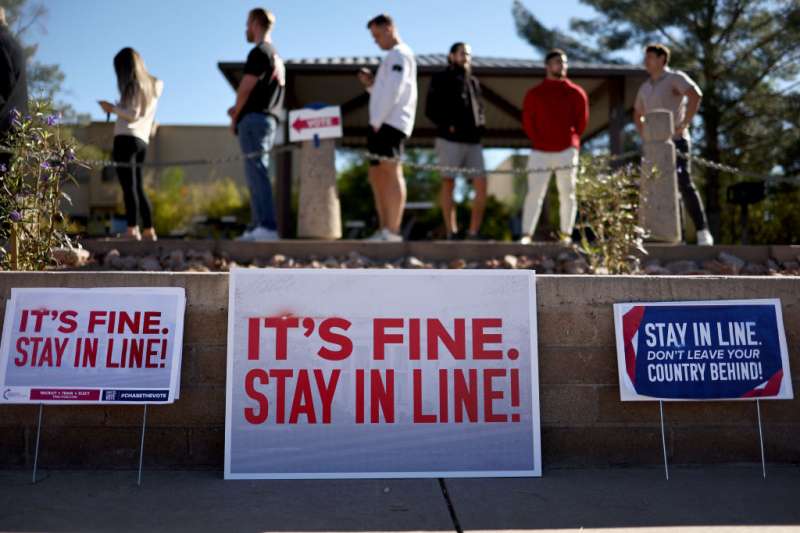
Early voting in Arizona runs Oct. 7-30, and Election Day is Nov. 3. Knowing your rights before you go can make it easier to recognize a problem at the polls and know where to turn for help.
The American Civil Liberties Union, or ACLU, publishes a national Know Your Rights guide covering voting access, assistance, accessibility, and voter intimidation. There’s what it says about several situations voters may encounter at the polls.
Know your rights at the polls
The ACLU highlights several rights that can matter if you run into a problem at the polls:
- If the polls close while you’re still in line, stay in line. You have the right to vote. In Arizona, polls close at 7 p.m. on Election Day.
- If you make a mistake on your ballot, you can ask for a new one.
- If voting machines are down, you can ask for a paper ballot.
- If a poll worker can’t find your name on the list of registered voters, ask them to check again and confirm you’re at the right location. If your name still doesn’t come up, you’re entitled to a provisional ballot. Election officials then check whether you’re qualified and registered, and count your ballot if you are.
If you have a disability
Under federal law, polling places for federal elections must be accessible to older adults and voters with disabilities. Each one must have at least one voting system that lets voters with disabilities vote privately and independently, according to the ACLU.
Voters with disabilities can bring someone of their choice to help them vote, as long as that person isn’t their employer or someone acting for their employer or union. Poll workers must also make reasonable accommodations, such as offering a place to sit if standing in line is difficult. If you can’t get into a polling place because the path isn’t accessible, you can ask for curbside assistance.
A voter also can’t be turned away because a poll worker thinks a mental disability makes them unqualified to vote.
If you need language assistance
Voters who have difficulty reading or writing English can also bring a person of their choice to help them at the polls, with the same exceptions for employers and unions.
Some counties are required under Section 203 of the federal Voting Rights Act to provide bilingual poll workers and election materials in specific languages. If your county is covered for a language you speak, you can ask for help from a bilingual poll worker and request voting materials, including your ballot, in that language.
If you experience intimidation or interference
Voter intimidation is illegal, and it’s a federal crime to intimidate, threaten, or coerce someone in order to interfere with their right to vote. The ACLU lists examples including:
- Aggressively questioning voters about their citizenship, criminal record, or qualifications to vote.
- Falsely claiming to be an election official.
- Posting false or misleading signs about voter fraud and criminal penalties.
- Spreading false information about voting requirements.
- Harassment, particularly targeting non-English speakers and voters of color.
You don’t need to speak English or pass a test to vote, in any state. If you experience intimidation, report it to the Election Protection Hotline and to your local election officials.
Where to get help
For help at the polls, the ACLU directs voters to the nonpartisan Election Protection Hotline:
- English: 1-866-OUR-VOTE (1-866-687-8683)
- Spanish: 1-888-VE-Y-VOTA (1-888-839-8682)
- Arabic: 1-844-YALLA-US (1-844-925-5287)
- Bengali, Cantonese, Hindi, Urdu, Korean, Mandarin, Tagalog or Vietnamese: 1-888-API-VOTE (1-888-274-8683)
For Arizona-specific election information, check the Arizona Secretary of State’s Arizona.Vote site or contact your county election officials.
Check your voter registration
Want to make sure your voter registration is current? Use the tool below to check your registration status.