Hundreds of unhoused people who need services and temporary shelter from the heat can expect ongoing help as downtown Phoenix’s shaded outdoor campground looks set to remain open for another four years.
That’s if the Office of Homeless Solutions’ request to continue running the Safe Outdoor Space, or SOS, is approved by city leaders this fall.
Under a temporary permit that expires in October, Homeless Solutions launched the site at 15th Avenue and Jackson Street in November 2023 — when the city finished clearing out the large homeless encampment known as “The Zone.”
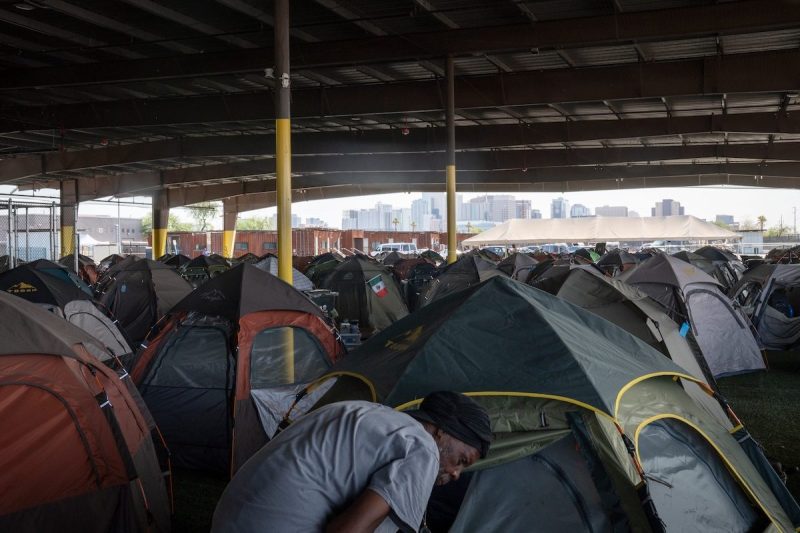
Surrounded by industrial buildings and warehouses, SOS features a mass of tents huddled under a roof, along with indoor facilities and other resources for the unsheltered.
MORE: What you need to know about Arizona’s home shortage problem
Nightly, it’s home to nearly 300 people who aren’t comfortable staying at an indoor shelter but still need services and don’t want to sleep on the street.
Homeless Solutions recently cleared its first hurdle to extend the special permit and zoning at SOS for four more years.
Phoenix’s Central City Village Planning Committee, a 15-member advisory board made up of residents in and around downtown, met on June 8 to unanimously recommend that the City Council approve the request.
Next, the city’s Planning Commission will weigh in. Members are scheduled to decide on Aug. 6 whether they too should recommend the council’s approval this fall.
Homeless Solutions wants to continue maintaining the nearly 6-acre lot after demonstrating that it’s done so without negatively affecting the area, Kristin Couturier, a Homeless Solutions spokesperson, said in an email.
The initial temporary permit to operate Phoenix’s campground was effectively a compromise between the city and the surrounding community, which had opposed the project at the time, she explained.
“The first three years of operation allowed the city to build trust with the community, the result of which is evidenced in the support we have received from our neighbors on the current request,” Couturier stated.
The Arizona Republic phoned multiple neighboring businesses, but none were immediately available to speak or didn’t respond to requests seeking comment.
Since SOS opened, Phoenix police have recorded 334 service calls for things like trespassing, fights and domestic violence along the 1500 block of West Jackson Street. About 130 of those were in 2024, and 138 were in 2025.
There were two incidents recorded in 2023, both before the lot became a campground.
Keys to Change is the city’s charitable partner that operates SOS and the nearby Key Campus, Phoenix’s largest homeless services hub. In 2020, the nonprofit operated similar campground spaces that Maricopa County opened to promote social distancing.
“As the operator of the county version of an SOS in the pandemic, we knew the SOS was an option appreciated by people who are homeless and were supportive of the city’s idea to create the SOS,” Keys to Change CEO Amy Schwabenlender stated in an email.
For Phoenix, the goal of its outdoor space has been to transition people into housing and indoor shelters.
Officials touted last fall that about a third of the people it had served moved to some form of indoor space. They also said the city was looking to the project as a model for a new way to tackle homelessness, with guests as far as Australia coming to tour the site.
Despite the space’s reported success, though, Homeless Solutions doesn’t have plans to open additional campgrounds, Couturier said.
The city’s current plans for SOS come at a time when it’s shifting its homelessness strategy, largely by focusing on prevention and housing, a root cause of the ongoing crisis.
It also follows the release of the Valley’s latest homelessness data, which shows that the unhoused population across Maricopa County remained relatively flat compared with last year.
The same tally — which is generally regarded as an undercount — also found that more than half of those people had a shelter bed to sleep in this past January, a dramatic improvement from the year prior.
At SOS, 201 people were recorded there the morning of the annual point-in-time count, down from the 220 tallied in 2025.
The overall numbers have given city officials, like Homeless Solutions Director Rachel Milne, hope that local policies are helping to combat the crisis.
“When we see more people coming indoors, we’re talking about individuals and families who now have a safe place to rest, connect with services, and begin rebuilding their stability,” Milne stated in a May 18 press release. “Our progress comes from listening, problem-solving, and showing up when and where people need us most.”
Reporting by Shawn Raymundo, Arizona Republic