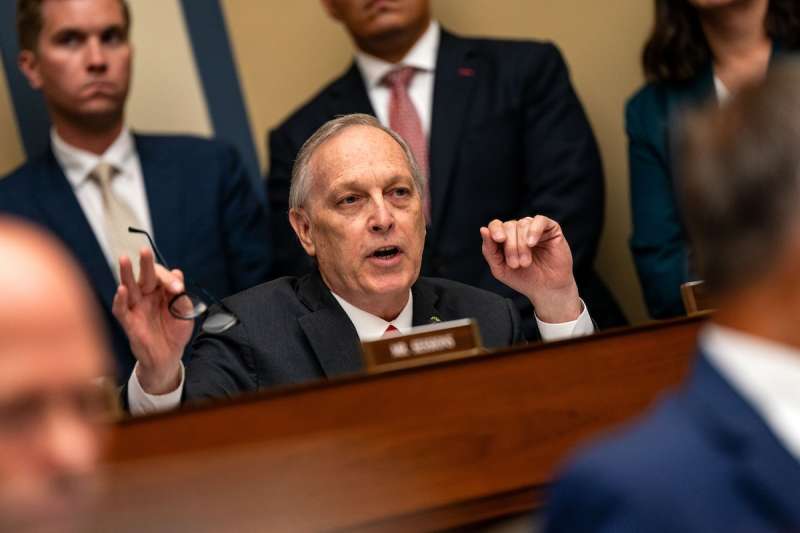
US Rep. Andy Biggs (R-Gilbert) says he is running for Arizona governor to bring costs down, but two new reports show his votes have directly cost Arizona families an extra $3,200 so far.
On his campaign website, Biggs said his top priority is to “Bring down costs for Arizona families and businesses.” But reporting by the Washington Post shows that Moody’s Analytics chief economist Mark Zandi estimates that President Donald Trump’s policies, notably the Iran war, have cost the typical household an extra $1,000 so far—most of which is attributed to the cost of gasoline. Biggs has been a supporter of the war and Trump’s other policies.
The war has complicated Biggs’ messaging. Once a critic of “endless wars,” Biggs has repeatedly voted in support of the Iran war, despite criticizing then-President Joe Biden for 2024 airstrikes in Yemen that some lawmakers argued lacked congressional authorization.
“Biden’s airstrikes in Yemen blatantly violate Article 1 of our Constitution,” Biggs said in a post on X. “He can’t unilaterally pull us into another war. Why does he want so many wars?”
But two years later, Biggs abandoned that stance to vote in favor of Trump’s military operation in Iran. He then voted against a resolution to limit Trump’s war powers in Iran, worried it would “embarrass” the president.
“I think that was a Democrat gotcha vote where they wanted to embarrass the president. I’m not into embarrassing the president,” Biggs told Arizona’s Family.
Biggs’ votes have had a direct impact on the lives of Arizonans. Since Trump launched a military conflict with Iran in February, gas prices have risen sharply after Iran responded by preventing most oil tankers from passing through the Strait of Hormuz, disrupting global oil supplies.
Arizona has seen a steep increase in gas prices due to the war. In 2025, the average cost of a gallon of gasoline was $3.51, according to AAA. Today, the average cost of a gallon of gas is $4.54 in Arizona, roughly 40 cents above the national average. One Arizona gas station already hit the $6 mark earlier this year, charging $6.49 per gallon for regular gas. It’s not just affecting Arizonans, either. Nationwide, 80% of Americans are struggling with higher costs, according to a poll by NPR, PBS News, and Marist.
Biggs has attempted to shift the blame elsewhere, however. In May, his campaign released an ad accusing Democratic Gov. Katie Hobbs of driving up gas and housing costs, while making no mention of the policies largely responsible for the increase in prices, including Trump’s tariff policies and the war. Roughly two out of three Americans primarily blame the Trump administration for rising costs.
The war isn’t the only financial strain Biggs has defended. Earlier this year, a report citing government data from the Joint Economic Committee’s Democratic minority, a congressional panel that reviews economic conditions and advises lawmakers, found that Arizonans have paid an extra $2,200 for goods and services due to Trump’s tariff policies—policies Biggs repeatedly defended.
In April 2025, Trump announced a sweeping new tariff policy. While Trump has argued companies pay the tariffs, economists argue that the costs end up being passed to consumers instead. In 2025, House Democrats sought to rein in Trump’s tariff policies, terminating his “national emergency” executive order. But Biggs—and all Arizona Republicans—voted to maintain the order, and Arizona small businesses have struggled to stay afloat due to the rising costs.
Biggs did not respond to a request for comment by the time of publication.
Food banks have been struggling to pick up the pieces after Biggs and other Republicans voted in support of Trump’s One Big Beautiful Bill Act, which kicked more than 400,000 Arizonans, including 180,000 children, off SNAP food assistance. State officials attribute the decline to an underfunded state agency attempting to comply with the stringent new rules.
Arizona food banks across the state have said they’ve seen some families choose between buying groceries or paying the high costs of fuel.
“Gas is so expensive, so they can’t even get to the resource where we provide the food,” Andrea Ariza, public relations manager at St. Vincent de Paul said. “We’re receiving a lot more calls from people wanting a food box delivery because transportation is such a huge barrier now. It’s a snowball effect.”