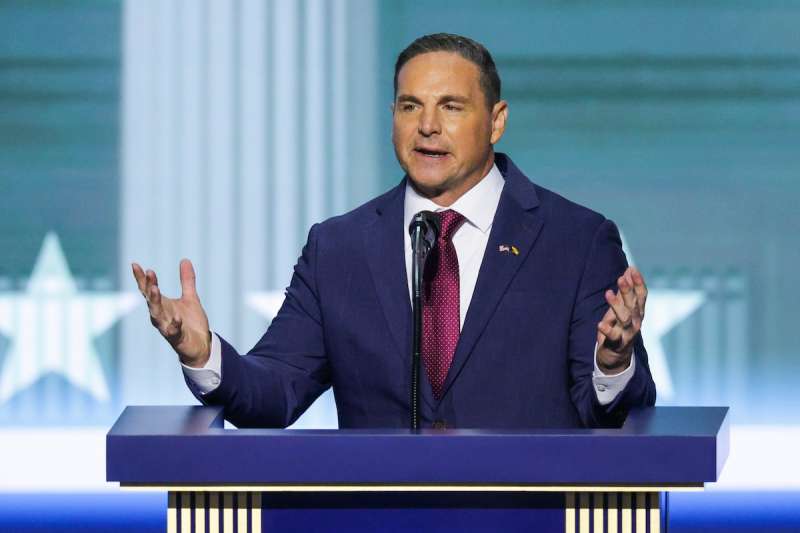
In one of Arizona’s most competitive House races, an AI accountability group is dropping $750,000 to stop Republican nominee Jay Feely from winning a seat in the US House in November.
Arizona’s 1st Congressional District—spanning Scottsdale, Paradise Valley, Fountain Hills, Cave Creek and parts of Phoenix—is wide open after US Rep. David Schweikert (R-Scottsdale) gave up the seat for an unsuccessful bid for governor. Vying to replace Schweikert are Democrat Amish Shah, a former state lawmaker and emergency room doctor, and Feely, a former CBS Sports analyst and ex-NFL kicker.
Guardrails Alliance, a super PAC that pushes for stricter AI rules, told the Copper Courier exclusively that it will pour $350,000 into a new ad buy in the district against Feely. The new buy comes on top of a $400,000 buy on Oct. 7, bringing the group’s total to $750,000.
The group also put money against Republican Aaron Flint in Montana’s 1st Congressional District and Rep. Jimmy Gomez, a Democrat who faces democratic socialist Angela Gonzales-Torres in California’s 34th Congressional District, according to Axios.
The group is targeting Feely for receiving $600,000 in support from Leading the Future, an AI industry super PAC.
“AI oligarchs are supporting Jay Feely because they know he’ll let them continue to build data centers in order to develop AI that will take our jobs and prey on our kids,” said Shaunna Thomas, executive director of Guardrails Alliance.
Leading the Future has raised more than $140 million in contributions and commitments since launching in August 2025, according to Politico, and its backers include OpenAI President Greg Brockman, Palantir co-founder Joe Lonsdale, and Andreessen Horowitz co-founder Marc Andreessen. The PAC opposes AI regulation “unduly constrain or delay AI development” in the US, according to Reuters.
“Americans are sick and tired of corrupt, pay-to-play politics where corporations and special interests spend millions trying to elect candidates who will let industry do what they please and enrich themselves at the expense of the American public,” Thomas added.
Why target Feely?
Feely has backed AI development and data centers on the campaign trail. At the June primary debate, he argued that data centers can benefit Arizona communities, sparking pushback from GOP rival and former state Rep. Joe Chaplik (R-Scottsdale), who said he’d oppose building data centers in the district.
Arizona is home to more than 150 data centers, according to Data Center Map. Across the state, Arizonans have protested against the construction of new data centers, citing their impacts on local utility bills and water consumption. Arizona Attorney General Kris Mayes called for a moratorium in August, pointing to the Trump administration’s Colorado River cuts that will reduce Arizona’s water supply over the next two years.
“Arizona may be one of the most exposed states in the country to the negative impacts of excessive data center development,” Mayes said in a press release. “The Colorado river is in serious distress. We owe it to our communities, homeowners, and future generations of Arizonans to better manage our water and power needs before any new data center approvals are issued.”
As many Democrats call for AI regulation, President Donald Trump and other Republicans have argued against it—even after the National Republican Senatorial Committee warned AI companies in August that data centers had become deeply unpopular, Axios reported.
“The only control or ‘guardrails’ that AI needs is a STRONG AND SMART (High IQ!) PRESIDENT, and the U.S.A. has that, in spades,” Trump said in a Sept. 14 post on Truth Social. “We are leading China, and all others, and will continue to do so.”
Beating China in advancement is a position that Feely seems to share. In an August appearance on “The Sean Spicer Show,” he said the US must prioritize development to win the global AI race.
“We are in a race with China to win the AI generation that’s coming. It will define who wins the world’s economy and controls the world economy,” Feely said. “It’s gonna define who controls the world’s security. So we don’t have a choice if we’re gonna win, we have to win it. We can’t let China win.”
Shah, on the other hand, told the Copper Courier he’d oppose new data centers in the district and called for AI regulation.
“I’m squarely on the side of AI safety. Human dignity and human safety is non-negotiable, as far as I’m concerned,” Shah said. “AI has the potential in the future to provide benefits, but we have to make sure that any technology that we use has to be used responsibly.”
At the Oct. 7 debate, Feely called Shah’s position “really hypocritical” and pointed to Shah’s 2021 vote for data center tax breaks. House Bill 2649, which passed the state Legislature and was signed by Republican Gov. Doug Ducey, extended a data center tax incentive for equipment until 2033. Shah said his position has evolved since then, noting he’s listened to voters who’ve expressed concerns and that his vote came before the AI boom.
Feely and Shah will face off in the Nov. 3 general election in a race the Cook Political Report rates a “toss-up”. Early voting is underway and election officials recommend mailing ballots back by Oct. 27. After that, drop them off at a voting location or drop box in your county by 7 p.m. on Election Day.