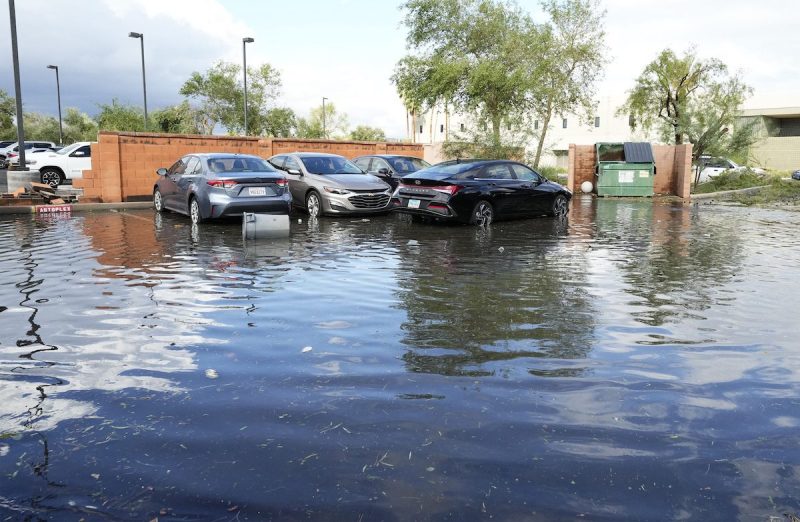
After several downpours fueled by tropical moisture from the Pacific Ocean, Arizona’s short-term drought has finally eased, at least a little. The latest U.S. Drought Monitor update shows the state’s dry areas shrinking for the first time since January.
While any improvement in the monitor is good news, drought across the state is still far from over.
A wetter-than-usual monsoon and the remnants of Pacific tropical storms helped chip away at months of dryness, but most of Arizona remains in some level of drought or “abnormally dry” condition.
“In the Southwest, there’s been a pretty serious drought we’ve been assessing for quite a long time,” said Richard Tinker, a meteorologist and drought expert for the National Weather Service’s Climate Prediction Center, who authored the latest drought maps. “We’re still seeing a lot of areas in drought, but we have seen a pretty broad improvement over the last few weeks, and Arizona is no exception.”
MORE: What will Arizona weather be like this winter? Here’s what we know
The Southwest has been in a long-term drought since 1994, with drier-than-normal conditions putting pressure on water supplies across the region. Short-term droughts are common, characterized by a few weeks to a couple of months of below-average precipitation.
For the first time in months, Arizona’s drought map is showing progress, but the gains are modest and they may not last. Short-term rainfall from tropical storms has helped ease surface dryness, while deeper, long-term deficits remain. With another La Niña winter on the horizon, the coming season could bring dry weather once again.
Pacific moisture fueled Arizona’s soggy fall weather
Arizona saw uncharacteristically rainy fall days fueled by tropical moisture in September and October.
A low-pressure system off Southern California at the end of September drenched the desert. Storms unleashed a 1.64-inch downpour at Phoenix Sky Harbor International Airport on Sept. 26.
That storm alone pushed the 2025 monsoon season total to 2.76 inches, slightly above the 2.43-inch seasonal average for Phoenix.
Then in October, Tropical Storms Priscilla and Raymond unleashed several rounds of rain, wind and flooding across the state.
Between Oct. 9 and 13, Sky Harbor picked up over 3 inches of rain, with other areas reaching over 4 inches. The storm system was so strong that it even triggered a microburst in Tempe on Oct. 13, dumping three-quarters of an inch of rain in just 15 minutes and damaging structures as winds surged up to 70 mph.
Flagstaff saw more than 3 inches of rain as moisture from both storm systems combined with a passing upper-level disturbance.
Drought monitor shows best improvement since January
The Drought Monitor update released on Oct. 23 reflects Arizona’s stormy weather.
At the start of September, nearly the entire state was in drought conditions, with 91% of Arizona in severe drought or worse. Just six weeks later, that number dropped to 67%, with the most extreme categories (D3 and D4, or “extreme” and “exceptional” drought) plunging from 35% of the state to just 10%.
For the first time since January, a small patch of central and southern Arizona has emerged from drought status altogether. While the improvement covers about 1 to 2% of the state, Tinker said, “It is still a step in the right direction.”
But he emphasized that most of Arizona remains in serious drought.
“We’ve seen some breaks in areas that are white, or out of drought, on the map, but they’re very small areas,” Tinker said. “Most of the state is still not in great shape.”
A dent in drought, but not a cure
While Arizona’s recent downpours have been impressive, experts say a few weeks of wet weather can’t erase years of drought.
Fall rain has improved short-term drought conditions that build up over weeks or months, often affecting soil moisture, vegetation and wildfire risk. Heavy rain can improve the short-term picture by replenishing topsoil and greening up vegetation.
But it won’t offset long-term drought, which develops over years and is tied to deeper water deficits. It takes several wet seasons to make a meaningful difference.
“Drought in Arizona has waxed and waned; the state has been affected by drought more than all the continental U.S.,” Tinker said. “About two-thirds of the state is still in the worst categories of drought. This has been an improvement, but it’s still a problem.”
Recent rainfall is a reflection of the sporadic nature of the weather in Arizona. Dry spells followed by torrential downpours in the short and long term are natural in desert life, although natural climatic patterns and extreme heat and other impacts from climate change can worsen conditions.
La Niña could dry things out again this winter
Fall rains brought some relief, but the coming winter may reverse some of those gains.
The Climate Prediction Center’s winter outlook favors below-normal precipitation across the Southwest, driven in part by a weak La Niña pattern.
La Niña is part of a natural climate cycle called the El Niño-Southern Oscillation, or ENSO. It occurs when shifts in ocean temperatures and atmospheric conditions across the Pacific Ocean impact global weather systems.
During a La Niña cycle, oceanic surface temperatures in the Pacific decrease, influencing storm tracks and rainfall around the world. It typically brings drier and warmer-than-normal conditions to the Southwest.
La Niña conditions were also present last winter, contributing to one of the worst short-term droughts in Arizona on record.
The seasonal drought outlook through January favors dry conditions to persist or worsen.
“If that forecast came to fruition, we’d see an end to these periods of improvement we’ve been seeing recently,” Tinker said. “We’re not looking at much of a big pickup at this point over the next few months.”
Reporting by Hayleigh Evans, Arizona Republic