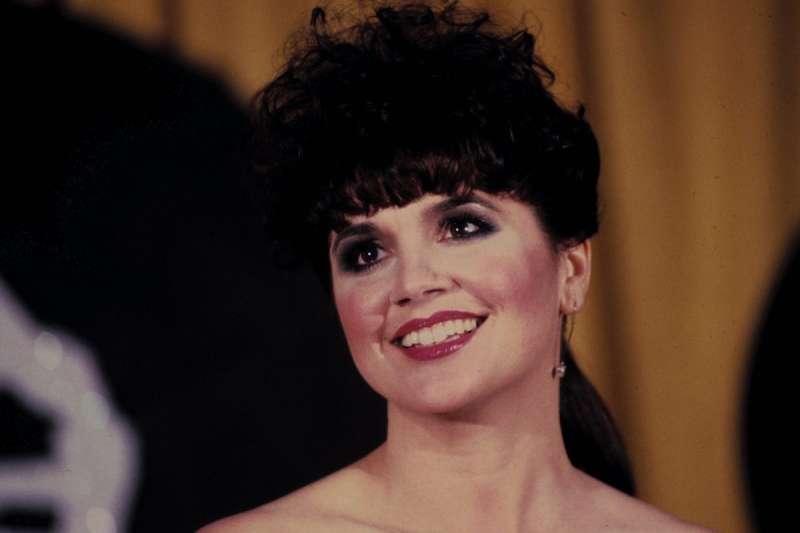
Linda Ronstadt is among the most successful singers of her generation, selling out “stupid” arenas, as she calls them, on the strength of hits as huge as “When Will I Be Loved” and “Blue Bayou” before using the leverage that success provided to follow her muse in a series of intriguing new directions.
The Arizona icon earned a Tony nomination for her starring role in “Pirates of Penzance” on Broadway, interpreted standards on a trilogy of albums tracked with famed arranger Nelson Riddle and honored the Mexican side of her heritage on mariachi albums sung in Spanish.
She also recorded two albums as part of a trio with Emmylou Harris and Dolly Parton.
The thread connecting all those very different projects is the strength of her vocal performances and her ability to get inside the essence of a song. And through it all, as Ronstadt’s friend and former bandmate Glenn Frey said while inducting Ronstadt to the Rock & Roll Hall of Fame in 2014, “she remains nothing but authentic.”
Ronstadt turned 80 on Wednesday, July 15, 2026.
To honor the occasion, here’s a countdown of her 40 best songs chosen by a longtime fan who fell in love with “Linda Ronstadt’s Greatest Hits” in grade school, going on to work his way back through her catalog while eagerly awaiting each new move like any other fan.
I have no doubt that everyone who reads this would have come up with a different list. It’s more a celebration of her artistry than anything, and if you are a Linda Ronstadt fan, I’m sure we can agree that it’s an artistry that’s well worth celebrating.
40. ‘All That You Dream’ (1978)
This is certainly a good bit dreamier than Little Feat’s much funkier original, venturing into something close to psychedelic territory, from the haunted chime of guitars on the intro to the ghostly keyboard accents and that woozy synthesizer solo. There’s some funk in there as well. It is still a Little Feat cover. But the trippiness suits the lyrics as she navigates the great divide between dreams and reality.
There’s a soulful quality to Rondstadt’s vocal, from the sleepy phrasing of lines at the top of the verse to the grit in her voice on the pre-chorus, practically growling “What else can you do?” and “Livin’ the life, lovin’ everyone.” The way the backing vocals blend with Ronstadt’s on the chorus is intoxicating. This track opened the second side of “Living in the USA” and although it was never a single, it did get some airplay on AOR stations at the time.
39. ‘Hay Unos Ojos’ (1987)
Ronstadt was among the biggest pop stars of the ’70s, with three chart-topping albums and a string of Top 10 singles. But it wasn’t until 1987 that she had the industry support to do her dream project, an album titled “Canciones de Mi Padre” honoring the Mexican side of her heritage with the support of Mariachi Vargas, Mariachi Los Camperos and Mariachi Los Galleros de Pedro Rey.
This song, composed by mariachi great Ruben Fuentes, is among the many highlights of that double-platinum triumph, which became the biggest selling non-English language album in U.S. history and earned the star another Grammy.
38. ‘All My Life’ (1989)
This was Ronstadt’s second hit duet with Aaron Neville, following “Don’t Know Much” to No. 1 on Billboard’s Easy Listening chart as the second single from “Cry Like a Rainstorm, Howl Like the Wind,” which featured the New Orleans soul great on four tracks.
This single didn’t do as well as “Don’t Know Much” on Billboard’s Hot 100, peaking at No. 11 where the previous hit had worked its way to No. 2. But it picked up the same Grammy (Best Pop Performance by a Duo or Group with Vocals) the following year.
This one was written and originally recorded by a songwriter who’d placed three songs on “Hasten Down the Wind” more than a decade earlier, Karla Bonoff, but the vibe is much more of its time than those earlier tracks, closer in spirit to the Bangles hit “Eternal Flame.”
37. ‘The Only Mama That’ll Walk the Line’ (1969)
This swaggering highlight of ‘Hand Sown… Home Grown,’ her non-charting solo debut, is a psychedelic rockabilly rewrite of a Jimmy Bryant song made popular just one year earlier by Waylon Jennings, who took the song to No. 2 on Billboard country charts. Not only does her version change the gender of the lyrics (Waylon was the only daddy to her only mama), it changes the riff, which is both swampier and trippier on Ronstadt’s version, which I much prefer.
The psychedelic lead guitar break is a trip, all fuzzed-out and elastic. And Ronstadt comes off as a fire-breathing force of nature. You can almost hear the scrunching of her face in that snarling delivery of “I’m gonna hit you on the head with a pan on cornbread/ If you had any sense you’d quit.” That line about attacking someone was not in the Waylon Jennings version. Perhaps that’s just as well.
36. ‘Keep Me From Blowing Away’ (1974)
This melancholy highlight of her first chart-topping album, the masterful “Heart Like a Wheel,” is an understated country waltz whose tasteful arrangement puts the spotlight where it should be — on her heartbreaking delivery of these world-weary lyrics. It’s a masterclass in heartache and one of the more vulnerable vocals Ronstadt ever laid to tape.
After setting the scene with “Well, I spent my whole lifetime in a world where the sunshine finds excuses for not hangin’ ’round,” she turns to prayer. “Oh, Lord, if you’re listenin’, I know I’m no Christian, and I ain’t got much coming to me,” she prays, accompanied by what appear to be a church choir after one too many funeral masses. “So send down some sunshine, throw out your lifeline and keep me from blowing away.”
35. ‘Heart Like A Wheel’ (1974)
The title track to the double-platinum triumph that announced Linda Ronstadt’s arrival as a full-blown pop sensation on the strength of two career-defining singles (“You’re No Good” and “When Will I Loved”), “Heart Like A Wheel” was never in much danger of becoming one of Ronstadt’s biggest hits. It’s not that kind of song.
It’s more the kind that makes you glad you brought the album home, where tracks as deeply moving as this Anna McGarrigle ballad have a chance to work their magic on your soul. Hailed by Rolling Stone’s Paul Holden at the time as “a masterpiece of writing and arrangement,” “Heart Like A Wheel” is a heartbreaking gem of a ballad with a haunting string arrangement underscoring Ronstadt’s vocal as she leans into the bleakness.
“Some say the heart is just like a wheel,” is how she sets the scene. “When you bend it, you can’t mend it/ But my love for you is like a sinking ship/ And my heart is on that ship out in mid-ocean.”
34. ‘Love is a Rose’ (1975)
Neil Young wrote this for the “Homegrown” album, which he subsequently shelved for more than 40 years (although his acoustic-guitar-and-harmonica version of this song was included on 1977’s “Decade” compilation album).
It’s hard to imagine anybody hearing the potential for a country hit in Young’s original recording, but that’s exactly what it was for Ronstadt, who took her thorough reimagining to No. 5 on Billboard’s country chart over Thanksgiving weekend in 1975. It’s a stunning transformation, with prominent use of banjo, fiddle and harmonica. There’s also an attention-grabbing vocal-and-percussion break with airtight country harmonies.
Lyrically, there’s not much going on. And yet, there’s not much else to say: “Love is a rose but you better not pick it/ Only grows when it’s on the vine/ Handful of thorns and you’ll know you’ve missed it/ Lose your love when you say the word mine.”
33. ‘Maybe I’m Right’ (1978)
This understated gem of a ballad was written by a member of the Ronstadt inner circle, Waddy Wachtel, whose finger-picked acoustic carries Ronstadt through the first two verses, at times recalling Paul McCartney’s handiwork on “Blackbird.”
And when the song does open up a bit going into the pillowy softness of a bridge in which the only word required is a deeply wounded “Why?,” the way the song transitions out of sparseness only make that moment much more angelic. I’m pretty sure that’s JD Souther fleshing out the final verse on harmonies coming out of a beautifully minimalistic instrumental interlude to breathtaking effect.
This whole arrangement is an airtight argument in favor of the “less is more” school of music production, much to Peter Asher’s credit.
32. ‘Poor Poor Pitiful Me’ (1978)
I would’ve rated this one higher but those syndrums sound like someone playing with a new toy on a track whose gritty rock ‘n’ roll aesthetic wasn’t necessarily crying out for syndrums. It’s an effect that didn’t sound good in the ‘70s and time has not been kind to the idea.
Having said that, it’s a brilliant Warren Zevon song and Ronstadt’s vocal is fantastic, surviving the switch to a female perspective unscathed while oozing charm and personality, from the opening verse, in which she spins the darkly comic tale of a botched suicide attempt. “Well I lay my head on the railroad track, waiting on the Double E,” she sings. “But the train don’t run by here no more, poor poor pitiful me.”
Zevon was clearly a genius at finding humor in the darkest places. The third of four hits from the excellent “Simple Dreams” album, this one peaked at No. 31 on Billboard’s Hot 100, hitting No. 27 on the Easy Listening charts.
31. ‘Carmelita’ (1978)
The other Warren Zevon song on “Simple Dreams” also finds producer Peter Asher reaching for the syndrums but they’re slightly more subdued on “Carmelita” if still miles aways from inobtrusive. The song itself is more subdued as well.
First recorded by Murray McLauchlan in 1972, “Carmelita” had also been recorded by Zevon himself for a self-titled album that also included his version of “Poor Poor Pitiful Me” before it made its way to “Simple Dreams,” where Ronstadt mines the soft-rock gold you never would’ve known existed in those other versions (as great as Zevon’s version is).
As hard as it is to imagine Linda Ronstadt “all strung out on heroin on the outskirts of town,” as Zevon’s pathos-laden chorus hook requires, Ronstadt manages to bring those words to life with such conviction, there’s really not much choice but to accept her as that character, refusing to be typecast.
30. ‘Someone to Lay Down Beside Me’ (1976)
“Hasten Down the Wind” goes heavy on the Karla Bonoff. This is one of three songs Ronstadt tackles on that album by the up-and-coming singer-songwriter. And one of two released as singles — “Lose Again” and this dramatic ballad, which hit No. 42 on Billboard’s Hot 100.
It’s possible the subject matter — hooking up for casual sex “even though it’s not real” as a cure for loneliness — is what kept it from charting much higher. But those lyrics are what gives the song its soul. Years later, Bonoff told The Arizona Republic that Ronstadt choosing to include three of her songs on the album “was just a huge, huge break for me. I went from having absolutely no money to being able to buy a house.”
29. ‘What’s New’ (1983)
There’s a reason Ronstadt chose this torch song first recorded by Bob Crosby and His Orchestra in 1939 as both the title track and lead single when she hit us with the first installment in a trilogy of albums exploring the Great American Songbook with the Nelson Riddle Orchestra.
It’s a stunning performance of a classic song that added new dimensions to her vocal range against the backdrop of Riddle’s lush yet tasteful orchestration. “I needed to learn about phrasing,” Ronstadt told The Arizona Republic in 2018. “And those songs were my teachers. I found my authentic voice singing them.”
A bold departure for a rock performer of the early ’80s, Ronstadt’s first album of standards hit the charts at No. 3 along the way to going triple platinum.
28. ‘Just One Look’ (1978)
A Top 10 hit for Doris Troy in 1963, this oft-recorded R&B gem would become a relatively minor hit for Ronstadt, losing steam at No. 44 on Billboard’s Hot 100 in 1979 as the third single from “Living in the USA” while doing better on the Easy Listening chart, where it hit No. 5.
The groove and arrangement are truer to Troy’s original than earlier covers by Martha Reeves & the Vandellas and the Hollies. But it’s Ronstadt’s vocal that ultimately earns this song a spot here, especially on that feisty outro. The way she tosses off the words “Hey” and “Wow!” (or maybe “Whoa!”) could not be more contagious. And that’s before her upper register takes over on the way to a glorious ending.
27. ‘Lose Again’ (1976)
The third of three singles from one of Ronstadt’s strongest albums, “Hasten Down the Wind,” this Karla Bonoff ballad failed to set the charts on fire, losing steam on Billboard’s Hot 100 at No. 76 while falling just shy of the Easy Listening Top 40 when it peaked at No. 43.
And that’s a shame, because the song itself is beautiful, cut from the same cloth as a number of her greatest early hits, and the vulnerability she brings to Bonoff’s tale of a dead-end relationship she’s too in love to walk away from speaks directly to another of her many vocal strengths. Beyond the purity and power of her voice itself, she’s an uncommonly expressive vocalist, able to cut to the lyrics’ emotional core with her wounded delivery.
26. ‘I Never Will Marry’ (1977)
Ronstadt’s future Trio partner Dolly Parton supplies unmistakably Parton-esque harmonies on this wonderfully sparse and beautiful rendition of a traditional ballad about a woman who vows she never will marry “for the only man I ever loved has gone on the morning train.”
She’d previously sung this song on Johnny Cash’s TV show in 1969, trading vocals with Cash. This version on 1977’s “Simple Dreams” feels much more hopeless — in a good way, especially when Parton chimes in on the mournful chorus. Released as the flip side of “Tumbling Dice,” her cover of a Rolling Stones song, “I Never Will Marry” became a Top 10 country hit in the summer of ’78.
25. ‘When I Fall In Love’ (1984)
Doris Day released the first hit version of this song in 1952. Ronstadt’s version appeared as the opening track on “Lush Life,” her second collection of jazz standards recorded with the Nelson Riddle Orchestra.
But there’s nothing especially lush about Riddle’s arrangement here. It opens with a lone guitarist accompanying Ronstadt’s understated vocal with gorgeous chord voicings and melodic flourishes. When the strings come in, they do so gently and with nuance. The restraint is the key, resulting in an intimate recording that perfectly underscores her wistful reading of the lyrics.
24. ‘Lo Siento Mi Vida’ (1976)
Years before she managed to convince the suits at Asylum to sign off on her “Canciones de Mi Padre” project, Ronstadt slipped this understated Spanish-language song into the mix on “Hasten Down the Wind.”
It’s a Mexican folk ballad written by Ronstadt with her father, Gilbert Ronstadt, and former bandmate, Stone Poneys guitarist Kenny Edwards, who plays acoustic guitar and adds beautiful harmonies on the track, whose mood is complemented by Dan Dugmore’s haunting steel guitar. “Lo Siento Mi Vida,” which translates as “I’m Sorry, My Love,” was Ronstadt’s first songwriting credit.
23. ‘Tumbling Dice’ (1977)
This was the fourth of her Top 40 hits from the chart-topping “Simple Dreams” album, hitting No. 32 on Billboard’s Hot 100 while no doubt helping the album achieve triple-platinum status, the first of three Ronstadt albums to do so. This song had already been a huge hit for the Rolling Stones, who took the original version from “Exile on Main Street” all the way to No. 7 on the Hot 100.
Ronstadt’s cover grew out of a backstage conversation with Mick Jagger. As Ronstadt recalled in an interview with Lisa Robinson for the Green Bay Press-Gazette, “He told me, ‘You do too many ballads. You should do more rock and roll.’
After teasing Mick that he should do more ballads, as Ronstadt told Robinson, “I made him write down the words to that song for me so we could do it.”
A grittier-than-usual Ronstadt definitely rises to the challenge on a cover that rocks with both conviction and authority, with Waddy Wacthel’s slide guitar and Don Grolnik’s constantly riffing acoustic piano adding to the raucous charm. I still would’ve loved to hear her sing “As Tears Go By,” though.
22. ‘Willin” (1974)
This song was written by Lowell George while still a member of Frank Zappa’s Mothers of Invention and subsequently cut by George’s own band, Little Feat, in a stark acoustic arrangement on their debut and again in a full-band arrangement on their second album, “Sailin’ Shoes.” Ronstadt’s version splits the difference between those arrangements with prettier vocals and more feeling.
For a certain demographic, hearing Ronstadt sing “And if you give me weed, whites and wine” would be enough to place this higher on a countdown of her finest hours. Either way, she manages to make the song her own without straying too far from the overall vibe of those earlier recordings just on the strength of her vocal.
21. ‘Desperado’ (1973)
This mournful cowboy ballad was the melancholy highlight of the second Eagles album, also titled “Desperado,” and remains one of their most beloved songs, despite the mystifying decision in 1973 not to make it a single.
This breathtaking cover, released the same year as the Eagles version on “Don’t Cry Now” was unfortunately relegated to a Ronstadt B-side, but no lesser an authority on all things “Desperado” than Don Henley once told Rolling Stone “that song didn’t get much attention until Linda Ronstadt recorded it.”
There’s no mistaking what it was about her heartfelt reading of the ballad, fleshed out here by understated string and horn arrangements that build to a dramatic finish, that delivered on the promise of a song that went on to be featured on both artists’ multiplatinum greatest hits collections.
20. ‘Silver Threads and Golden Needles’
There’s a video on YouTube of Ronstadt introducing this song — first recorded by the Queen of Rockabilly, Wanda Jackson — as “the first country-rock song I ever learned.” Even the version on 1969’s “Hand Sown… Home Grown,” with its oddly psychedelic fuzz-guitar lick, is closer to straight-up country, though, than country-rock.
And the version on 1973’s “Don’t Cry Now” album, where the fiddle player and steel guitarist share a solo, went Top 20 on the country charts. Regardless of how country-rock you think it is, she really gets inside the lyric, vowing, “You can’t buy my love with money ’cause I never was that kind.”
19. ‘Love Has No Pride’
Bonnie Raitt’s original recording of this melancholy torch song is an understated treasure. Ronstadt’s take is more impassioned.
She sings as though she’s overwhelmed with what she’s feeling, from the relative restraint of her delivery on “I’ve had bad dreams too many times to think that they don’t mean much any more” to the full-on desperation she invests in pleading “But if you want me to beg, I’ll fall down on my knees.”
Jimmie Haskell’s tasteful string arrangement underscores the power and pathos of a vocal that stands as one of her more nuanced shows of force. The single peaked at No. 67 on the Hot 100 but this song looms larger in her legacy than that suggests.
18. ‘I Can’t Let Go’
One of three hit singles from her “Mad Love” album, this one was originally done by Evie Sands but Ronstadt’s version is much closer to the Hollies’ 1966 recording. Pete Asher’s production just toughens it up a bit to make sense on an album widely seen as Ronstadt doing what she can to navigate the New Wave waters of the day.
The result is a record so relentlessly contagious that any skinny-tie power-pop band of the era that says they didn’t wish they’d done it first is either lying or unsuccessful for a reason. The most successful version of this song, it peaked at No. 31 on Billboard’s Hot 100.
17. ‘Ooh Baby Baby’ (1978)
Ronstadt had already found success with a Smokey Robinson classic originally recorded by The Miracles when “The Tracks of My Tears” hit No. 25 on Billboard’s Hot 100 two years prior to charting even higher with a second gem from the Miracles’ “Going to a Go-Go” album, perhaps inadvertently changing the spelling from “Ooo” to “Ooh.”
It’s a completely different type of record, though, with David Sanborn bringing a touch of smooth jazz to the mix on the alto saxophone solo that opens the record. Ronstadt’s vocal soon commands the spotlight, caressing one of Robinson’s most memorable melodies in that silky upper register of hers.
The highest-charting hit on “Living in the USA,” it peaked at No. 7 on the Hot 100, doing even better on the Easy Listening charts, where it hit No. 1. And to be honest, listening doesn’t get much easier than this.
16. ‘Don’t Know Much’ (1989)
This smoldering duet with Aaron Neville was the first of two hit singles from a triple-platinum album called “Cry Like a Rainstorm, Howl Like the Wind.” It peaked at No. 2 on Billboard’s Hot 100, topping the Adult Contemporary charts and picking up a 1990 Grammy for Best Pop Performance by a Duo or Group with Vocal.
She and Neville are, of course, amazing singers in their own right, Neville turning in the flashier performance. But what ultimately makes a record this romantic translate is the chemistry the singers bring to the proceedings. In this case, she and Neville sing “I know I love you” like they mean it. And that may be all we need to know.
15. ‘Heat Wave’ (1975)
One of two Motown classics Ronstadt covered on “Prisoner in Disguise,” her take on “Heat Wave” peaked at No. 5 on Billboard’s Hot 100, despite it being relegated to the B-side of “Love Is a Rose,” a Neil Young song that plays more to the country side of her aesthetic.
You can hear the debt to Martha Reeves, whose version topped the R&B charts, in the way she phrases certain lines, but Ronstadt manages to make the song her own, from the gritty exuberance she brings to every “Yeah yeah yeah yeah” to the falsetto bit she throws in at the end.
14. ‘The Tracks of My Tears’ (1975)
Just last year, the Miracles’ original recording of this soulful gem was singled out in Rolling Stone as no less than the Greatest Motown Song of All Time. No wonder, then, that Ronstadt’s version doesn’t stray as far from the original recording as she tends to go.
She does add steel guitar, which lends a bit of country flavor to the mix and may explain why this one charted higher on the country charts (No. 11) than the Hot 100 (No. 25). But the overall vibe? It’s remarkably Motown-esque, if a shade or two more melancholy in Ronstadt’s voice than Smokey Robinson’s.
13. ‘How Do I Make You’ (1980)
No “Mad Love” single felt more like an obvious attempt at carving out a spot for Linda Ronstadt in the punk and New Wave era than “How Do I Make You,” an electrifying shot of pure adrenaline that announces its arrival with an overcaffeinated snare roll.
It was written by Billy Steinberg, who has said it was “a little bit influenced” by “My Sharona,” and it does feel like a Knack song, from the jagged New Wave accents to the frantic lead guitar break.
Ronstadt is fully invested in making this work, demanding satisfaction from a lover who puts his head on the pillow and is fast asleep over chugging guitars, with Nicolette Larson joining in on harmonies. The single peaked at No. 10 on Billboard’s Hot 100.
12. ‘The Dark End of the Street’ (1974)
This heartbreaking cheater’s lament was originally done in 1967 by the great James Carr, who peaked at No. 10 on Billboard’s Hot Rhythm & Blues Singles charts with his gospel-tinged version. Many artists had recorded it, from Percy Sledge to the Flying Burrito Brothers and Aretha Franklin by the time it found its way to Ronstadt’s first chart-topping album, 1974’s “Heart Like a Wheel.”
Her version really leans into the sadness of “hiding in shadows where we don’t belong.” And she doesn’t shy from its roots on the gospel side of the street, Cissy Houston joining in on backing vocals as the song builds to a soulful climax where Ronstadt warns, “They’re gonna find us someday.”
11. ‘That’ll Be the Day’ (1976)
This doesn’t sound a thing like Buddy Holly’s million-selling hit recording of the song, which topped the charts in Billboard and the U.K. But it feels more like the sort of record Holly would’ve made than Ronstadt’s other hit recordings of his songs.
Which is to say it has the feel of an authentic rockabilly record, from the slapback of the echo to the twang of those guitar licks and the doo-wop flavor of those backing vocals. The rhythm even swaggers like a rockabilly classic.
Ronstadt’s version didn’t do as well as Holly’s, peaking at No. 11. But it was the biggest hit on one of Ronstadt’s most successful albums, “Hasten Down the Wind.”
10. ‘It’s So Easy’ (1977)
The most successful of the several Buddy Holly songs Ronstadt covered in the ’70s, it peaked at No. 5 on Billboard’s Hot 100. What makes that chart position all the more impressive is that Holly’s version, his final release at the helm of the Crickets, never even charted.
Ronstadt’s gritty reinvention puts a California country-rock spin on what was once a rockabilly song, from an opening riff that wasn’t on the Holly version to Ronstadt’s snarling delivery and the use of cowbell. The opening track on “Simple Dreams,” it couldn’t sound more like a record made in California in the ’70s. But in a good way. And those harmonies when everything drops out except the drummer playing hi-hat are sensational.
9. ‘I Can’t Help It (If I’m Still in Love With You)’ (1974)
Long before they got together on “Trio,” Emmylou Harris turned up singing harmonies on this highlight of “Heart Like a Wheel,” a melancholy take on a Hank Williams classic with pedal steel guitarist Sneaky Pete Kleinow underscoring the heartache.
The lead vocal is suitably wounded, picking up a Grammy — Ronstadt’s first! — for Best Country Vocal Performance, Female, and the vocal blend is country gold, especially on “It’s hard to know another’s lips have kissed you.” This one peaked at No. 2 on Billboard’s country chart, much like Williams’ original.
8. ‘Hurt So Bad’ (1980)
This soulful ballad was a Top 10 hit in 1965 for Little Anthony and the Imperials. Ronstadt’s version makes you feel the hurt with more conviction, from the trembling vulnerability of the opening lines to the full-throated pleas of “please don’t go” coming out of the bridge.
And speaking of that bridge, her final plea is met by the opening notes of Danny Kortchmar’s searing lead guitar break, mixed ridiculously high to outstanding effect. The second Top 10 hit from “Mad Love,” an exhilarating oddity that found the singer and producer Peter Asher meeting New Wave on their own terms, this one peaked at No. 8 on Billboard’s Hot 100, the highest-charting version ever of this classic song.
7. ‘Faithless Love’ (1974)
This mournful ballad is the handiwork of J.D. Souther and was first recorded and released by Ronstadt on “Heart Like a Wheel.” Her version really taps into the pathos at the heart of Souther’s lyrics as she sings of “raindrops falling on a broken rose down in some valley where nobody goes.”
She’s joined by Souther on the bridge, his harmonies doing much to underscore the ache in her delivery as she sings “I guess I’m standing in the hall of broken dreams.” It’s a brilliant arrangement, building from an understated banjo introduction to that richly orchestrated bridge without overindulging in the sweetening. The result is as restrained as Ronstadt’s vocal.
6. ‘When Will I Be Loved’ (1974)
When fellow Arizonan Stevie Nicks led a stage full of powerful women in saluting Ronstadt at her induction to the Rock and Roll Hall of Fame, this is the song they chose to bring that all-start tribute to a fitting close. And they did so for obvious reasons.
Written by Phil Everly, the Everly Brothers’ original recording peaked at No. 8 in 1960. And like all her greatest covers, Ronstadt’s version doesn’t sound a thing like the original.
The Everlys’ record doesn’t start with guitars sliding into a chord and just letting it ring at the top of each line. Nor does it have that instrumental break that adds so much to Ronstadt’s version, which hit No. 2 on Billboard’s Hot 100 and topped the country charts.
5. ‘It Doesn’t Matter Anymore’ (1974)
The most subdued of Ronstadt’s Buddy Holly covers (this one written by Paul Anka) takes its cue from the despair in Anka’s lyrics, not the skip in Holly’s step on the original recording. It moves at a much slower clip to dramatic effect.
After setting the tone with a finger-picking pattern on guitar and Ronstadt’s wistful reading of the lyrics, it builds into a more fleshed-out arrangement with tasteful strings and Sneaky Pete Kleinow on pedal steel guitar. Relegated to the B-side of the more commercial-sounding “When Will I Be Loved,” it peaked at No. 47 on the Hot 100, hitting No. 20 on the Adult Contemporary chart.
4. ‘Blue Bayou’ (1977)
Widely considered her signature song, this melancholy ballad was co-written by Roy Orbison, who had a minor U.S. hit with his original recording in the early ’60s. Ronstadt’s version is a good deal moodier than Orbison’s. Those syndrum accents haven’t aged well, but the rest of the recording does a brilliant job of underscoring Ronstadt’s melancholy vocal.
The opening verse is just her and a sleepwalking bass with a hint of percussion, the arrangement taking on more layers, from marimba and steel guitar to some really nice Don Henley backing vocals, as it goes. Ronstadt’s vocal is flawless, from the understated pining of those early verses to the unadulterated show of force that kicks in when she promises, “I’m goin’ back some day” and that high note on the last “bayou.”
3. ‘You’re No Good’ (1974)
Ronstadt’s initial reaction to Peter Asher’s guitar-driven production on her first chart-topping single, as revealed in the Grammy-winning documentary, “Linda Ronstadt: The Sound of My Voice”? “Oh, I don’t like it. It sounds like the Beatles.”
For the record, this sounds nothing like the Beatles. But it also doesn’t sound remotely like the horn-fueled R&B of Dee Dee Warwick’s original recording or Betty Everett’s first hit version, both from 1963.
That’s not too say it isn’t soulful. Ronstadt’s vocal and those backing vocals are extremely soulful. They’re just married to a brooding rock arrangement, an intriguing combination that made “You’re No Good” her biggest mainstream hit since 1967’s “Different Drum” hit No. 13 eight years earlier.
2. ‘Different Drum’ (1967)
This was the first we’d heard of Linda Ronstadt, a baroque-pop ballad written by Mike Nesmith of the Monkees. He was hoping his group would record it but the show’s producers turned him down, although they allowed him to rush through a version as part of a comedy bit on the show.
Although the track is credited to the Stone Poneys featuring Linda Ronstadt, she’s the only member of the group that actually appears on the recording, which features future Eagle Bernie Leadon, session ace Jim Gordon and jazz bassist Jimmy Bond.
The Stone Poneys had planned to record an acoustic version of the song, but producer Nick Venet had other plans: the perfect chamber-pop arrangement — complete with a harpsichord solo! — topped by Ronstadt vowing “All I’m sayin’ is I’m not ready for any person, place or thing tryin’ to pull the reins in on me” with total conviction. This one peaked at No. 13 on the Billboard Hot 100.
1. ‘Long, Long Time’ (1970)
Another baroque-pop ballad, this one has more gravitas than “Different Drum.” It opens with dramatic strings, pulling back to reveal an acoustic guitar and Ronstadt exercising pure restraint as sets the tone with a vulnerable reading of “Love will abide, take things in stride” before letting the full power of her voice be felt on “Sounds like good advice but there’s no one at my side.”
The strings return for an instrumental break coming out of the chorus and stay to underscore her vocal on much of what follows as she effortlessly taps into the desperation of the situation on that final chorus hook: “‘Cause I’ve done everything I know to try and make you mine. And I think I’m gonna love you for a long long time.”
If that line doesn’t make you feel, congratulations. You have clearly never known a broken heart. Released in 1970, it peaked at No. 25 on Billboard’s Hot 100, earning Ronstadt her first Grammy nomination in the bargain.
Reporting by Ed Masley, Arizona Republic