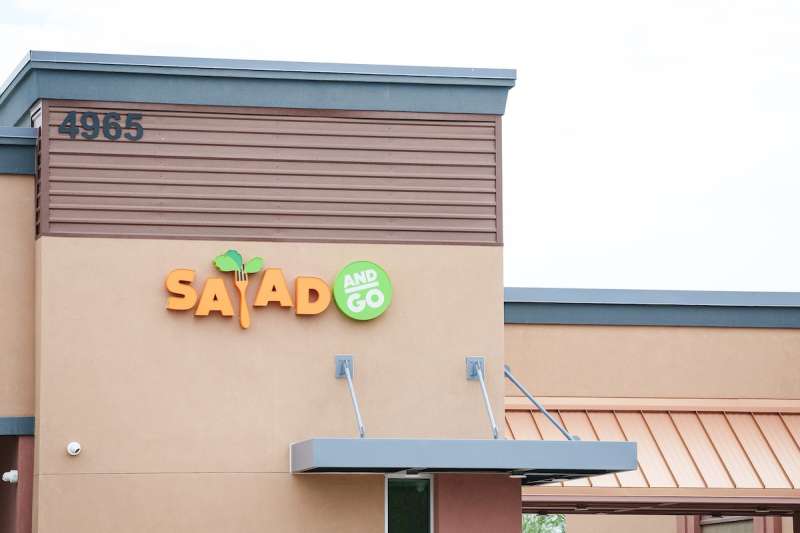
Tempe-based Dutch Bros has submitted documents to purchase the assets of the closing Salad and Go, according to documents filed in the Southern District of Texas Bankruptcy Court.
Boersma Bros, an entity of Dutch Bros, submitted a purchase agreement to assume the leases and contracts of Salad and Go, following the company’s announcement it would shutter all its locations. Salad and Go’s last day in operation is Aug. 5.
According to a court filing, the asset purchase agreement was approved by the bankruptcy court and will move forward.
MORE: Classic hot dog restaurant to return to Arizona. What we know so far
The purchase price for the assets will be $105 million, according to the filing, with a deposit of $10 million that has been put into an escrow account. Boersma Bros will also buy Salad and Go’s Texas and Oklahoma assets, which were already shuttered, for $50, according to the agreement. The locations are planned to be used for Dutch Bros operations of drive-thru coffee sales, according to the agreement.
Salad and Go announced August 4 that it was filing Chapter 11 bankruptcy and closing all its stores August 5. Salad and Go has 70 locations in Arizona and Nevada that were affected by the abrupt bankruptcy filing and closure.
Boersma Bros filed the purchase agreement using Dutch Bros-branded stationery, according to an exhibit filed in bankruptcy court. The agreement, between Boersma Bros and “And Go Concepts, LLC,” was submitted on Aug. 4, the day Salad and Go announced its bankruptcy.
According to the agreement, And Go Concepts had already “extensively marketed the assets,” and Boersma Bros was deemed the “successful bidder, providing the seller with the highest and best price for purchased assets,” indicating the deal was in the works prior to the abrupt announcement of Salad and Go’s closure.
The agreement was signed by Christine Barone, president and CEO of Dutch Bros, and Doug Brickley, chief restructuring officer at And Go Concepts.
According to a filing from Dutch Bros to the U.S. Securities and Exchange Commission, the company agreed to acquire up to 65 Salad and Go locations, and the sale is expected to close in the third quarter of 2026.
Unrelated to the Salad and Go acquisition, Dutch Bros opened 48 new shops nationwide in the second quarter of 2026.
Darrell Deshaw, a broker at Western Retail Advisors, said the deal “took the world by storm, but it makes total sense.”
Dutch Bros employed an aggressive expansion plans since moving its headquarters to Tempe, he said, adding he has seen planning proposals for new locations within one mile of an existing Dutch Bros.
“They’ve been redefining themselves and they really want to own this market,” he said. “It’s such great real estate.”
Deshaw said the move was “really smart” from Dutch Bros, because the store locations will likely be very easy to convert and share a similar footprint.
“I think it’s right in their playbook, it’s super smart, Class A real estate for their use,” he said.
It is yet to be seen what will happen in some cases where a Salad and Go was in the same retail development as an existing Dutch Bros, or next to a competitor drive-thru coffee location, Deshaw said.
In cases where it was right next to a competitor, Deshaw said the companies will have to examine their lease agreements to see if there is a clause that will block competing uses, which will likely be done on a case-by-case basis.
The sale agreement does allow for lease rejection of assumed leases if they meet certain conditions. One of those conditions is if there is a use restriction in the lease that is enforceable and if the landlord will not consent to a waiver or modification. For each rejected lease, the purchase price will be reduced by about $2 million, according to the agreement.
While Deshaw said the move was a good one for Dutch Bros, he will miss Salad and Go.
“It was a smart concept, a proven concept, I think they just got a little over their skis,” he said.
Chapter 11 bankruptcy is used for restructuring and allows the company that filed a chance to keep control of their assets, if they wish, Alan Meda, a bankruptcy attorney with Burch and Cracchiolo said.
“Apparently there was the determination made that keeping the ship afloat doesn’t make economic sense,” he said.
While Chapter 11 does not require liquidation, which Salad and Go chose to do, Meda said it is quite common as companies try to get the best value for their assets, like leases and real estate holdings.
While selling leases and property holdings are common, Meda said there is not much value in the branding and trademarks of a bankrupt company.
Reporting by Corina Vanek, Arizona Republic