An array of stars brighten the Phoenix nightlife, but Kevin McSweeny has possibly done so longer and with more luster than any other entertainer.
McSweeny has strutted across the Valley’s gay bar scene as a drag queen for 45 years and is likely Arizona’s longest-performing drag artist. The 65-year-old Phoenix resident is widely known as Pussy LeHoot, whose first name came by way of a signature cat-eye makeup.
But as of late, the spotlight has begun to dim on the stock of classic film and TV-inspired, campy drag queens LeHoot hails from. Going by he/him pronouns out of drag and she/her in drag, McSweeny expressed concern when talking with The Arizona Republic about the loss of a certain mystique within the craft.
MORE: A new concert venue is coming to this unexpected metro Phoenix city
“You really were like an illusion,” McSweeny said about drag between the 1980s and the 2000s.
Stage curtains would slide open as lights flashed on, shining on mirror balls dangling from the ceiling as everyone cast their gaze on the drag queen before them, McSweeny recalled. With the prominence of social media and reality TV, the art form has expanded into the mainstream and become more widely commodified.
“I just don’t know if it’s as special as it used to be. It used to be really special. You’d slip into this dark bar and it’d just be almost kind of magical,” McSweeny said.
Headliner hustles home bar duties
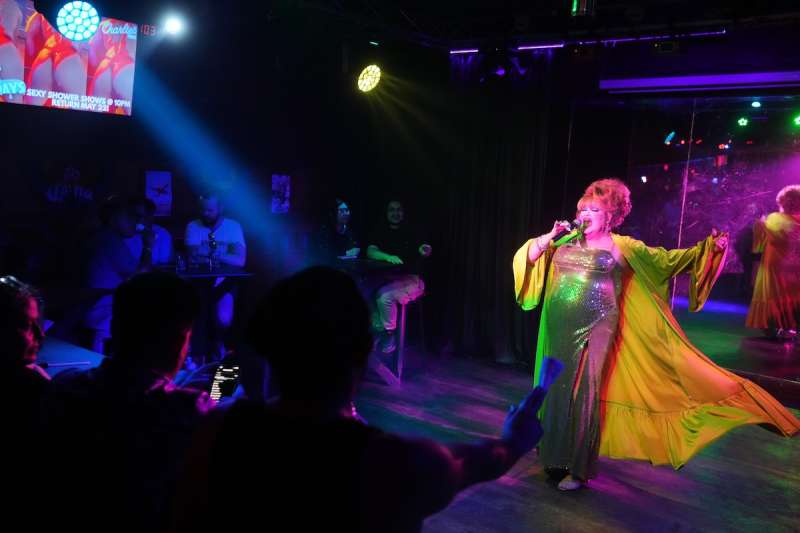
Many remained spellbound during LeHoot’s show the late evening of June 7 at Charlie’s Phoenix, situated on the corner of Seventh Avenue and Camelback Road.
Strobe lights pierced a fog machine-generated haze that barely concealed the thick fake lashes and layers of makeup LeHoot donned. She shimmied and twirled in an alternating set of five shiny outfits and about as many blond wigs while lip-syncing classic pop songs like ABBA’s “I Do, I Do, I Do, I Do, I Do” and Shirley Bassey’s “Kiss Me, Honey Honey, Kiss Me.”
A crowd that reached roughly three dozen watched as LeHoot worked the wooden dance floor-turned-stage and presented a rotation of five drag queens. In between songs, LeHoot cracked one-liners — a particularly bawdy joke ended with her purring the words, “love under the table.”
A golden, wolf cut wig accented LeHoot’s sparkling sea green fringe gown for one musical number she followed with a good-spirited exchange with the audience.
An insightful diss from a seasoned drag queen is known as “a read,” and LeHoot dished it out on two young men who were on a date at Charlie’s that evening. Commenting on their treated hair curls — trendy among Gen Z males — LeHoot quipped, “You gave each other a home perm.”
Charlie’s stands at the end of Melrose District’s so-called Gay Mile that starts north at Indian School Road and includes other beloved LGBTQ establishments. LeHoot has reigned as hostess at the saloon-style tavern for 25 years.
Since a 30-something-year-old John King opened Charlie’s in 1984, LeHoot has been entertaining at the dusky waterhole. King hired LeHoot after catching her impersonating, replete with platinum wig and cowboy hat, actress Vicki Gephart’s local car dealership TV spot character Carlotta Sales.
LeHoot headlined the Arizona Gay Rodeo Association’s first benefit in 1985, which collected $104. King cofounded the volunteer group he said has since raised some $525,000 to support LGBTQ charities, crediting LeHoot with wrangling fundraising ideas through the years.
“She would often take the lead,” King said, praising McSweeny as a drag artist for his “ability to refresh himself and renew himself again and again and again.”
Celeb culture led to character
McSweeny longed for Hollywood stardom as a youth, joining choir and the drama club in high school. He dabbled in drag for a school play — not unlike ancient Greek and Elizabethan-era actors, he pointed out. In 1978, he and a friend made the drive south from their piney hometown of Flagstaff to the urban desert of Phoenix.
The pair of 17-year-olds charmed their way out of being carded at the doors of Casa de Roma, a gay bar located north of 16th Street and Indian School Road. Within those long-since demolished walls, McSweeny was jolted with a sense of empowerment upon seeing a drag queen performance and thought to himself, “‘I can do that.’”
By October 1980, McSweeny was living in Phoenix had his first-paying gig as a drag queen. He would get a regular drag job within year. The nascent queen was taken an under the tutelage of Garry Rowland Mangum. The Lubbock, Texas, native performed as Tish Tanner.
“She was big, but she was really pretty. I thought she looked like (comedian Bertha Louise) ‘Lulu’ Roman from (the TV variety show) ‘Hee Haw.’ I just loved that look,” McSweeny said of Mangum as Tanner.
Drag was initially a way of financially getting by, McSweeny said, adding he started to enjoy the celebrity he began to amass. His early drag took cues from Mae West, Elizabeth Taylor, Dolly Parton and Marie Osmond, he mentioned.
Aiming to honor his trademark feline eye paint amid a saturation of kitty-related drag monikers in Phoenix, McSweeny opted for “Pussy” as a first name. The “LeHoot” part came in 1984 when he said a “wild, rowdy lesbian” at a bar one night kept shouting a variation of “That’s a hoot!”
Trade taught to next tide of talent
Just as Tanner mentored her, LeHoot has been what is known as a drag mother. Richard Stevens’ origin story as his celebrated drag alias, Barbra Seville, unfolded much like McSweeny’s as LeHoot.
Stevens first laid eyes on Ms. LeHoot, as he insists on calling her in public, in the early 1990s when he got into a local dive with a fake ID while under 21.
“I was kind of mesmerized and kind of shocked because she reminded me a little bit of my mom … if my mom was a stripper,” Stevens said, noting Ms. LeHoot, like his mother, was full-figured and partial to black eyeliner and high heels.
Like McSweeny with Tanner, Stevens said he saw a TV personality in LeHoot, namely Delta Burke as the “brassy broad” Suzanne Sugarbaker on the sitcom “Designing Women.” Stevens, who said he did not considered doing drag until he met McSweeny, likened drag training under the veteran queen to a pup replicating her mama’s actions.
Aside from drag queen skills Stevens picked up from LeHoot, he said McSweeny made him a better son to his mother during a period of estrangement.
“You need to call your mom, she’s worried about you,” Stevens said McSweeny would tell him. Before Stevens’ ailing mom died from cancer some years ago, McSweeny spoke to her, mother to mother, and said, “I’ll always look out for him.”
Standards shift but show goes on
There has been an emergence of new drag queens that often stray from the time-honored discipline of drag talents, like singing, dancing and comedy, McSweeny said.
“Anybody can get in drag, but that does not make you an entertainer,” he said.
He worries the artistry of up-and-coming drag queens is constrained by an overreliance on bodysuits, ponytail shakes and the so-called death drop. Popularized in recent years by the competitive reality TV series “RuPaul’s Drag Race,” the dance move involves the performer slamming their back against the floor after falling from their feet.
YouTube, Instagram and TikTok, McSweeny feels, have ebbed away the glamor that long characterized live drag queen acts. Someone applying drag makeup on social media has made the transformation commonplace, he argued. Audience etiquette has also declined as attendees scroll their phones while a drag queen performs, McSweeny added.
“The culture has gone down, and I’m sure every generation says this. And it’s not that I don’t enjoy performing, but it’s just sometimes you have to swallow a hard pill,” he said.
But on that early June night at Charlie’s, LeHoot held court as queen mother, schooling those who were being unruly.
“Alright, ladies,” she said, fixing her stare at a disruptive duo on the sidelines. “I’ve got a show to do.”
LeHoot then spun 90 degrees, took the mic to her lips and started mouthing the lyrics to her next song as the music blared on through the night.
Reporting by Jose R. Gonzalez, Arizona Republic