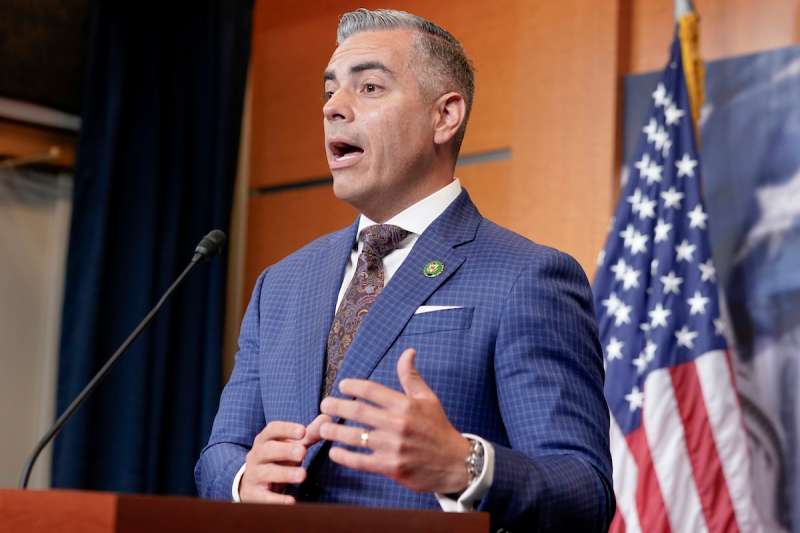
US Rep. Juan Ciscomani (R-Tucson) has run on a platform of accountability and taking on government corruption, but he appears to have broken his own rules by violating a 2012 law that requires members of Congress to promptly disclose certain financial transactions.
Members of Congress are required to file annual financial disclosures to the Clerk of the House of Representatives. In Ciscomani’s 2025 financial disclosure, filed last month, the congressman reported a new US Treasury bond worth between $15,001 and $50,000, purchased in August 2025.
But per the Stop Trading on Congressional Knowledge (STOCK) Act, a 2012 law designed to prevent insider trading by members of Congress and government employees, lawmakers are required to report stock trades via a Periodic Transaction Report (PTR) either 30 days from being made aware of the transaction or 45 days from the transaction date—whichever comes first—for transactions higher than $1,000.
The law also states that members must disclose a transaction on a PTR if it meets the reporting requirements, even if they did not personally conduct or direct the transaction. House Ethics Committee guidance states that the sale and purchase of a government security—including Treasury bonds—‘likely requires’ a PTR filing. The purpose is to ensure transparency and accountability within the federal government.
But Ciscomani, a longtime critic of insider trading, appears to have violated his own rules. No PTR for the August 2025 Treasury bond purchase appears in Ciscomani’s House filings. Instead, the transaction came to light in his yearly financial disclosure—filed on July 14 under an approved extension—approximately nine months after the STOCK Act’s deadline already passed.
Ciscomani did not respond to a request for comment by the time of publication.
The consequence for a late disclosure is relatively minor, with just a $200 fine for a first-time offender. Critics of the law argue the penalty is too small to deter the behavior it’s designed to prevent.
Maha Quadri, communications associate for the Campaign Legal Center, argued that the lack of penalties could make the trend worse amongst congressional leaders.
“Put simply, as elected officials craft laws that directly impact the lives of Americans, voters have a right to know whether their representatives are acting in the public’s interest or for their own financial gain,” Quadri wrote in a blog post on the organization’s website. “If elected officials are not held accountable for failing to promptly and properly disclose stock trades, this trend of members failing to comply may continue and worsen.”
The purchase of the bond appears to have taken place on Aug. 28, about a month after Ciscomani voted in favor of President Donald Trump’s “One Big Beautiful Bill Act” which cut Medicaid by around $1 trillion over a decade and includes $186 billion in cuts to SNAP, a program meant to prevent food insecurity for low-income families.
Ciscomani is seeking his third term. He will face Democratic challenger JoAnna Mendoza in the November general election. The Cook Political Report lists the 6th Congressional District as a “toss-up.”