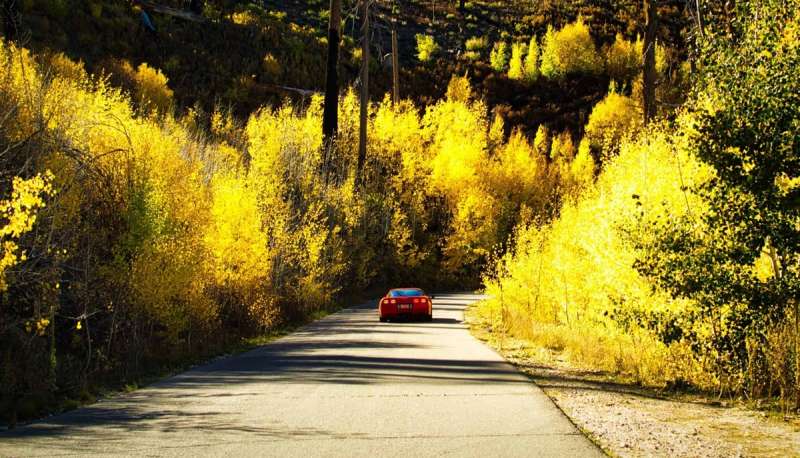
Mention Arizona and most people picture saguaros, red-rock landscapes, and relentless sun. Leaf peeping in Arizona isn’t the first thing that comes to mind—but head to the right parts of the Grand Canyon State in autumn, and you’ll find hillsides and canyons glowing with brilliant shades of gold, orange, and red.
The trick is knowing when and where to look. Arizona’s dramatic changes in elevation mean fall color arrives at different times across the state, giving leaf peepers plenty of opportunities to catch it at its peak.
Whether you want to cruise a scenic highway with the windows down or hike beneath a canopy of changing leaves, this guide highlights some of the best places for leaf peeping in Arizona in 2026. Keep reading to learn more.
When to go leaf peeping in Arizona
Peak leaf-peeping season in Arizona usually occurs from about Oct. 5-25, but you can see leaves start to change colors as early as mid-September in the mountains and into early December in high-desert regions.
If you’re in the Flagstaff area, you can use the city’s LEAF-ometer tool to track where the leaves are at in the color-changing process. You can also use this map to track fall foliage by inputting your ZIP code.
The trees behind Arizona’s best fall colors
Depending on where exactly in Arizona you’re doing your leaf peeping, you can expect to see a variety of different trees and colors. For example, in high-elevation areas like Flagstaff and the White Mountains, you’re most likely to see quaking aspens turn a striking golden-yellow.
Bigtooth and Rocky Mountain maples also thrive in higher elevations, though these trees’ leaves tend to explode into vibrant shades of fiery red and orange.
In mid-elevation forests, you’ll find plenty of gambel oaks with leaves in warm rust, amber, and deep red hues.
Cottonwood and sycamores boast leaves that glow in golden and yellow hues and are usually found along lower-elevation rivers, creeks, and riparian zones (areas where land and water meet).
Where to go leaf peeping in Arizona
There is no shortage of leaf-peeping spots in Arizona. Here are several worth exploring:
Aravaipa Canyon
For color without the crowds, head to Aravaipa Canyon, where access is limited to just 50 permitted hikers a day. The red-walled gorge—located between Tucson and Phoenix—stretches about 12 miles along Aravaipa Creek, past pools and small rapids, with bright yellow cottonwood groves lighting up the route.
Note: Permits typically sell out fast for peak periods, so plan ahead as much as possible.
Arizona Snowbowl Resort
For a view without the legwork, Arizona Snowbowl Resort’s scenic gondola climbs to nearly 11,500 feet above sea level, giving riders a sweeping look at the turning peaks below. On a clear day, views can include Sedona’s red rocks and even the Grand Canyon.
Aspen Corner
If you prefer a quick stop rather than an hours-long hike, drive up Snowbowl Road in Flagstaff until you reach Aspen Corner, a popular pull-off framed by a dense stand of golden aspens that make for one of the area’s most-photographed backdrops.
Aspen Loop Trail
This short lollipop loop near Arizona Snowbowl is a fall-hiking favorite. The trail alternates between denser aspen groves, stretches of forest, and open meadows with panoramic views of Kendrick Peak and the western plains. It’s an easy hike suitable for all ages, and the mix of terrain means you get golden color as well as sweeping vistas along the way.
Dead Horse Ranch State Park
This 423-acre park in Cottonwood sits along the Verde River, where cottonwoods and other deciduous trees turn brilliant gold and orange. Trails wind past several lagoons that mirror the color on the water, making it an easy, walkable option for leaf peeping.
Red Rock State Park
Hiking is the best way to take in fall color at this Sedona state park, and Eagle’s Nest Trail is one of the standouts. It climbs to an overlook with sweeping views across the entire park, including red rock formations and changing leaves.
Rockin’ River Ranch State Park
At the confluence of the Verde River and West Clear Creek, this 209-acre park’s riparian corridor is lined with cottonwoods and sycamores that turn gold in fall. Several trails wind beneath the canopy along the water.
San Francisco Peaks
If you’ve got a high-clearance vehicle and want to venture off the beaten path, the byway circling the San Francisco Peaks offers a full loop of high-elevation color for those up for the adventure.
Slide Rock State Park
Leaves in various shades of amber, gold, and orange paired with Sedona’s famous red rock cliffs make for some stunning scenery in Slide Rock State Park. The Pendley Homestead Trail runs through the park’s historic apple orchard, putting you right in the middle of the color change.
State Highway 260
State Highway 260 is one of Arizona’s top scenic drives for leaf peeping. From Payson, follow Highway 260 east to the start of Forest Road 300, which traces the edge of the Mogollon Rim—a 2,000-foot escarpment overlooking Rim Country. The route delivers sweeping views of aspen, oak, and maple in shades from gold to deep red.
Tonto Natural Bridge State Park
Tonto Natural Bridge State Park is home to the world’s largest natural travertine bridge, but it’s also a great spot for leaf peeping. Trails lead down into the canyon for a closer look, but several paved overlooks near the parking areas offer full views of the colorful canyon with no hiking required.
White Mountains
Eastern Arizona’s high country reaches 9,000 feet, making it one of the best spots in the state for fall color. The East Baldy Trail climbs along the East Fork of the Little Colorado River through stands of aspen and conifer, with a trailhead about 45 minutes from Pinetop just past the Sunrise Ski Area turnoff.
Closer to Big Lake, the Thompson Trail offers an easier, flatter five-mile walk along the West Fork of the Black River, passing small cascades formed by rock “gabions.”
For a scenic drive, Big Lake Road loops past several pull-offs and a few tunnels of golden aspen overhead.
Mt. Lemmon
Just outside Tucson, Mt. Lemmon tops out around 9,000 feet, and temperatures at the summit run about 20 degrees cooler than down in the desert—cool enough to support pockets of aspen, maple, and walnut mixed among the pines. The Catalina Highway climbs 27 miles from saguaro desert to mixed conifer forest, passing trailheads, picnic areas, and campgrounds along the way.
Bear Wallow, off an unpaved turnoff near mile marker 22, is known for deep red maples, while the area near Ski Valley and Summerhaven turns gold with aspens closer to the summit. Much of the color is visible right from the highway, though pulling off near Bear Wallow or Marshall Gulch gets you closer to the trees.
This article first appeared on Good Info News Wire and is republished here under a Creative Commons license.