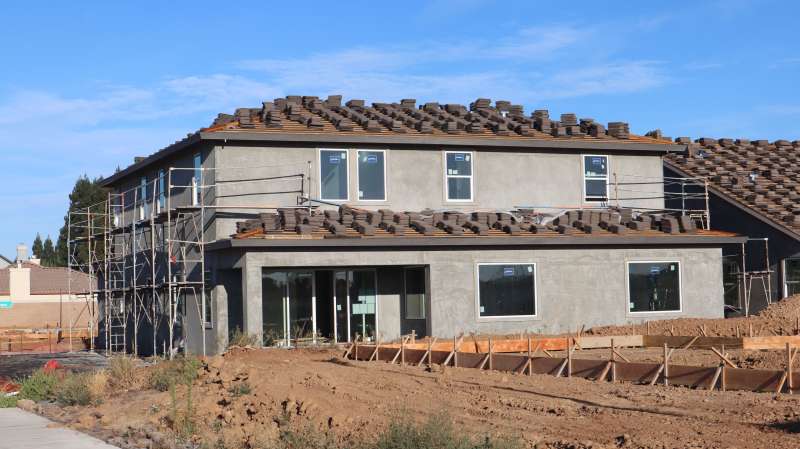
Arizona heads into the midterm elections as one of the least affordable states in the country, driven largely by surging rents and home prices according to an April report by the Common Sense Institute Arizona (CSI), a center-right think tank. The report ranked Arizona 45th out of the 50 states in terms of affordability.
A 2024 CSI Arizona report found that housing prices have risen 163% since 2010, with prices climbing since the COVID-19 pandemic in 2020, which it attributed to pandemic-era policies hindering supply and increasing demand for housing.
An August study by the Center for the Future of Arizona found that Arizonans broadly view the lack of affordable housing and high cost of home ownership as a concern, making it a rare bipartisan issue. The root causes of the issue and the proposed solutions are where opinions differ along party lines.
With these concerns in mind, candidates in Arizona’s governor race and two closely watched congressional races are making housing a major part of their platform on the campaign trail.
Where do Biggs and Hobbs stand and what have they done?
Incumbent Democratic Gov. Katie Hobbs and Republican challenger US Rep. Andy Biggs (R- Gilbert) have both made housing availability a focus of their campaigns, but disagree on what should be done to stimulate supply.
In 2024, Hobbs signed House Bill 2721, which allows more dense family housing near city centers in cities of 75,000 or more residents. That same year, she signed HB 2720 into law which allows for an increase of the housing supply on existing lots by permitting up to two “accessory dwelling units” (guesthouses or casitas) per property.
Hobbs also vetoed a bipartisan bill in 2024 dubbed the “Arizona Starter Homes Act,” which would have barred cities from requiring minimum lot sizes over 1,500 square feet for new developments of five or more acres, as well as limited HOA requirements, minimum home sizes and setbacks. In her veto letter, Hobbs called the act an “experiment” that would cause “unexplored, unintended consequences” and too much uncertainty within the Arizona housing market.
Hobbs has been mindful of the constraints on the housing supply brought on by water concerns as well, limiting certificates of assured water supply in 2023 for new residential developments that rely solely on groundwater. The move came after a 2023 state groundwater model that found that unchecked residential growth in Arizona could not be sustained on groundwater supplies alone.
A Maricopa County Superior Court judge struck down the limits in April. The Arizona Department of Water Resources has said it will appeal.
Biggs has framed the housing shortfall issue as one of too much bureaucracy and red tape, and his campaign website promises to address the gap by “streamlining state-level bureaucracy and working with local governments” to remove barriers to permitting new construction. Biggs has referred to the Hobbs vetoes as “anti-homebuilding policies.”
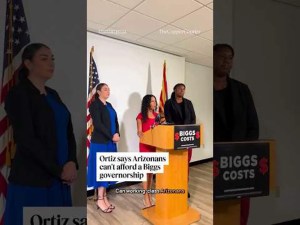
Biggs vowed at a September press conference at the state Capitol to limit the number of short-term rentals being purchased by investors if elected, but he joined fellow Republican US Reps. Eli Crane (R- Oro Valley) and David Schweikert (R- Fountain Hills) in a June vote against a bipartisan bill dubbed the “21st Century ROAD to Housing Act” in Congress, which includes a provision (Section 1001) to limit large institutional investors from buying single-family housing.
The bill passed the House 358-32 and the Senate 85-5, with Biggs joining Crane and Schweikert in voting no. Arizona’s House delegation voted 5-3 in favor of the legislation with Rep. Paul Gosar (R-Bullhead City) not voting, and it became federal law in July without President Donald Trump’s signature. Trump opted not to sign the bill into law to protest the Senate’s failure to pass the SAVE America Act.
In a September press release, Biggs framed the water shortage in Arizona as a matter of increasing the supply of water through infrastructure projects, and not of conserving water by limiting development.
Biggs has also proposed selling off parcels of state trust land to developers for more housing. The Arizona State Land Department has said that selling trust land to developers will not help bring up the housing supply if the necessary resources for housing are not there, which include an adequate groundwater supply.
Where do Feely and Shah stand?
In their race to replace Schweikert in Congress following his unsuccessful bid for Arizona governor, both Republican Jay Feely and Democratic former state lawmaker Dr. Amish Shah have identified different strategies for addressing home affordability in their district, which covers Scottsdale and the Northeast Valley.
Like other Republicans in these races, Feely largely framed the issue as one of deregulation and removal of barriers to homebuilding and opposes expanding subsidies to help with homebuying, as he explained in a CBS News interview Oct. 20. Shah largely framed it as one of redirecting federal funding and subsidies towards building out the housing supply, as well as expanding tax credits for homebuyers.
Feely expressed support for the bipartisan passage of the 21st Century ROAD to Housing Act in Congress.
In addition to identifying government regulation as a culprit behind the lack of affordable housing, Feely has also blamed illegal immigration for the high housing prices, saying that “30% of the housing cost” and “25% of the rent cost” are a result of illegal immigration driven by Biden-era policies.
Shah said the housing issue isn’t so much one of deregulation, but one of reallocation. Shah’s proposal is to redirect more federal money towards meeting housing needs.
He has been a proponent of subsidies in the form of federal tax credits like the Low-Income Housing Tax Credit, and co-sponsored House Bill 2805 in the Arizona House in 2021, which would have expanded this initiative at the state level.
Where do Ciscomani and Mendoza stand?
Both incumbent US Rep. Juan Ciscomani (R-Tucson) and Democratic challenger JoAnna Mendoza have made housing a cornerstone of their campaigns for the Tucson-area 6th Congressional District, and both have supported deregulation to address the affordable housing supply. Both have also made veteran housing a focus.
Ciscomani framed tackling the water shortage as a matter of “cutting red tape for developers” and seeking “collaboration, innovation, and public-private partnerships” to stimulate housing development, per a January 2025 op-ed from his website. Ciscomani voted yes on the 21st Century ROAD to Housing Act in June, joining Democratic colleagues, and co-led the VA Home Loan Affordability Act in Congress in April.
Mendoza agrees with Ciscomani on the need to develop programs that promote homeownership, restrict out-of-state investors from buying up the housing supply, and deregulate the housing market to allow homeowners more freedom to build additional dwellings on their property.
She has also made the expansion of housing support for veterans part of her platform, as part of her broader stance on improving life for fellow veterans.
Mendoza has pointed to Ciscomani’s support of Trump’s tariffs as a factor helping to make housing more expensive to build. She has also argued that Trump’s immigration enforcement policies are driving away the construction labor needed to build homes, which contributes to rising costs.
Like Hobbs, Mendoza has also highlighted the need for adequate water supply in an area before new housing developments can be built there.
Election Day is Nov. 3.