Data center developers applied for nearly as many tax relief applications in the two weeks before a three-year pause went into effect as the state approved in the past 13 years, according to new data from the Arizona Commerce Authority (ACA), the state’s economic agency.
Between June 15 and June 30, the last day before the freeze was implemented, the ACA received 113 applications. In contrast, between August 2013, when the program first launched, and June 14 of this year, the ACA had received 123 applications, 83 of which were approved.
The agency has 60 days to approve or deny the applications, depending on if the projects comply with qualifications under state law. Many of the recent applications submitted were not for new projects but for additional facilities at existing data centers, the ACA told the Arizona Republic.
The surge in applications came shortly after Arizona’s newest state budget, which includes a three-year long moratorium on data center tax breaks, was signed into law by Gov. Katie Hobbs on June 13. Starting July 1 until 2029, Arizona will not provide tax exemptions for new data centers built across the state. The freeze does not apply to data centers already grandfathered into the program.
Hobbs said the tax-break pause will save the state $57 million, and the money can instead go towards social services including food assistance, childcare, and healthcare.
“Arizona is a partner in progress. We are not a blank check,” Hobbs said at a July 7 press conference. “A state that puts servers before citizens is building for the future but forgetting the people that have to live in it.”
The tax breaks, approved in 2013, made Arizona more alluring to data center developers. The program waives sales taxes on equipment purchases for projects that meet investment minimums within five years of applying for the program. The tax exemptions typically last 10 years, but can extend to 20 years because data centers often replace their hardware every three to five years, offering developers the chance to obtain relief multiple times for the same project.
Arizona is home to 160 data centers across the Valley, according to the Data Center Map. The new moratorium could force developers to look elsewhere for new projects.
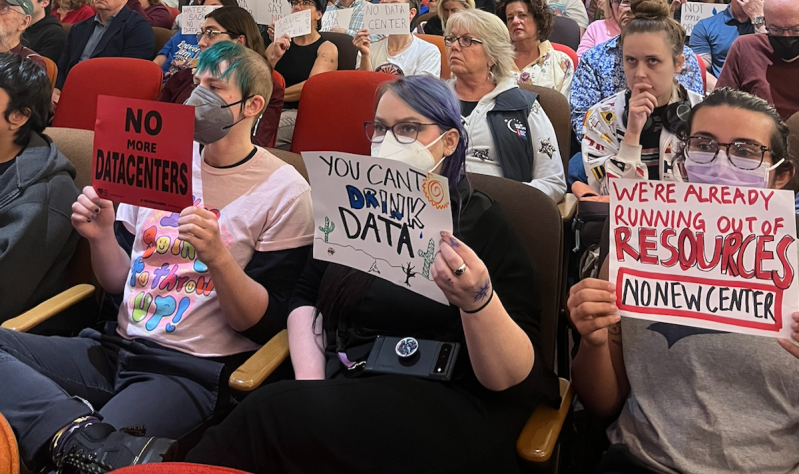
The pause comes after months of growing backlash against data centers. As more projects pop up across the Valley, in Tucson, Mesa, and Marana, local residents have increasingly protested the facilities, citing the heavy strain they put on local water and energy resources amid the state’s decades-long drought.
Advocacy groups celebrated the moratorium, calling it a “victory” for Arizona families.
“For years, billion-dollar data centers have benefited from public subsidies while Arizona families were told to accept less: less housing, less healthcare, less food assistance, less heat relief, and fewer basic services,” said Alejandra Gomez, executive director of Living United for Change in Arizona, a progressive group. “That money belongs in our communities, not in the pockets of corporations that drain our water, strain our energy grid, and give too little back to the people who keep Arizona running.”