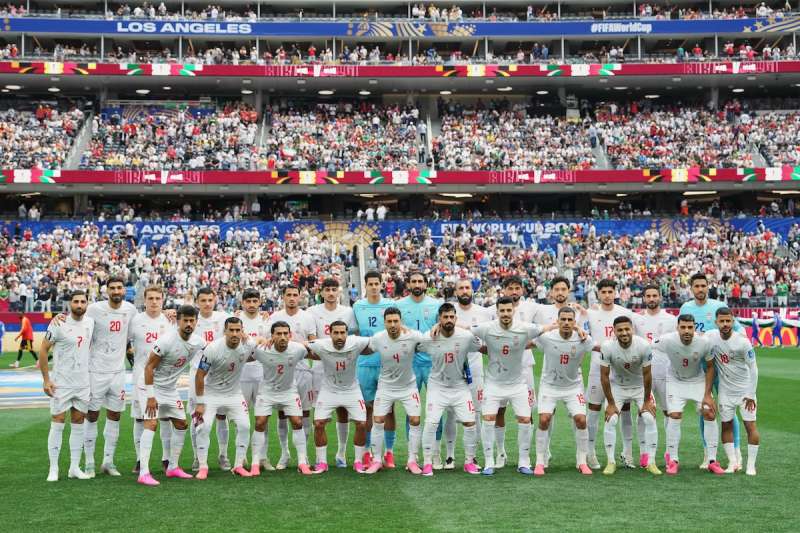
In the midst of war in their homeland, Iranian soccer players were dealt another setback ahead of the World Cup — a last-minute relocation driven by wartime security concerns and visa delays that affected their ability to train in Tucson and cost Pima County hundreds of thousands of dollars in losses.
Team Melli, the Iranian national team, had originally planned to train at the Kino Sports Complex in Tucson in preparation for the FIFA World Cup. But amid wartime security concerns and delays processing the team’s visas, the team had to reroute from Tucson to Tijuana, Mexico to train, instead, despite nearly two years of preparation from local officials to host the team.
The Iranian Football Federation accused the US of “vindictive behavior” after it denied visas to more than a dozen federation staff and officials — though no players or coaches — ahead of Iran’s group matches in June.
The move to Mexico came with a heavy price tag for Arizona. Through a contract with FIFA, the Kino Sports Complex was slated to receive approximately $213,000 for the team’s 22-day stay in June — FIFA had already paid half of that fee in April — but that wasn’t the only financial loss.
Players, coaches, and staff also planned on staying at Tucson’s Westward Look Resort for most of June, but because of the relocation, the team had to move its training base to Tijuana, instead. The abrupt cancellation meant the resort lost hundreds of thousands of dollars, as the team originally planned to occupy all 241 rooms for 30 days. Additional spending was expected from transportation providers, food, and other tourism-related expenses.
Sarah Hanna, director of Kino Sports Complex, told KOLD News the county spent $75,000 on security and local contractors.
Pima County also lost out on money that would’ve come from tourism and other related expenses, as FIFA had planned to issue about 100 media credentials per day, which, combined with traveling fans and other related spending, would have brought significant revenue to the county.
The cancellation came after officials spent nearly 20 months preparing for the opportunity.
“We were 98% complete,” Hanna said. “We started heavily preparing the facility once we were awarded a team.”
A rocky welcome
Andrew H. Giuliani, executive director of the White House task force for the World Cup, defended the move in a briefing this month.
“I think what we tried to do here on the White House task force was apply common sense to making sure the athletes could have fair play on pitch,” he said.
Iran head coach Amir Ghalenoei described his side as the “most oppressed team” at the World Cup, after the team was ordered to fly back to Tijuana immediately following its tournament-opening draw with New Zealand — played one day after the US and Iran announced a ceasefire ending their brief war..
The setback is similar to another loss Tucson faced last year, when visa issues stopped the Tucson Baseball Team’s plans to play at the Kino Sports Complex last year, which would have brought in a projected $12 million.
Team Melli went on to draw all three of its group games, against New Zealand, Belgium and Egypt, and was eliminated on tiebreakers among third-place teams — its seventh World Cup appearance without ever reaching the knockout rounds.