In April, shareholders of Warner Bros. Discovery approved a proposed $111 billion merger with Paramount Skydance, combining two of Hollywood’s biggest studios, in a preliminary vote.
The deal drew immediate backlash across Hollywood, with hundreds of entertainment figures signing a letter warning the deal could “consolidate an already concentrated media landscape, reducing competition at a moment when our industries—and the audiences we serve—can least afford it.”
The letter continues, “the result will be fewer opportunities for creators, fewer jobs across the production ecosystem, higher costs, and less choice for audiences in the United States and around the world.”
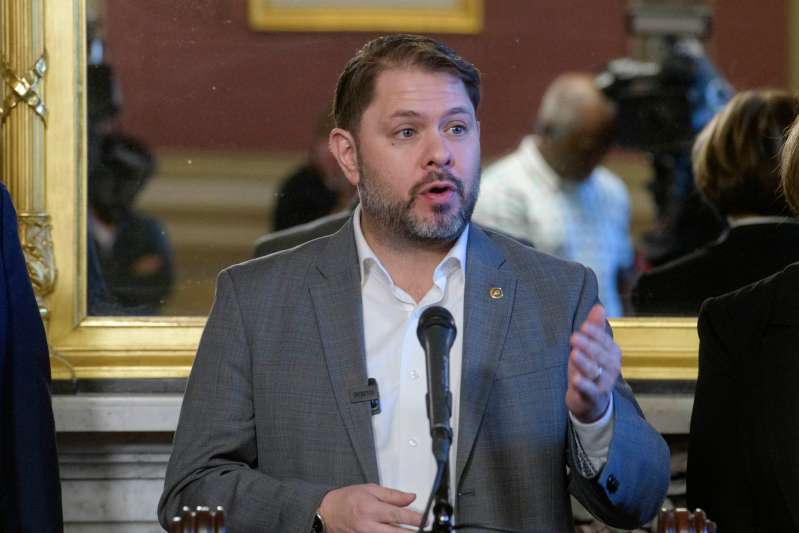
Now, US Sen. Ruben Gallego (D-Ariz.) is urging the Trump administration to conduct a thorough review and establish safeguards, according to a letter exclusively obtained by The Copper Courier.
In a letter to Omeed Assefi, acting assistant attorney general for the Justice Department’s Antitrust Division, Gallego wrote that while he’s not opposed to all mergers, “large acquisitions in already heavily consolidated markets like entertainment can pose serious risks.”
Gallego urged Assefi to conduct a “thorough, independent, and rigorous review,” of the merger and ensure it complies with Section 7 of the Clayton Act, the Department of Justice’s (DOJ) own guidelines on mergers. The 1914 law prohibits mergers and acquisitions that could lessen competition or create a monopoly.
In his May 18 letter, Gallego noted that billions of dollars worth of mergers and acquisitions have already reshaped the media and entertainment industry.
Over the last decade, mergers including Comcast and NBC Universal, AT&T and DirecTV, AT&T and Time Warner, and others were all approved, leading to reduced market competition, less diversity in choice, and sometimes even higher prices.
In 2025, more than 17,000 jobs were cut across media platforms — television, film, broadcast, news and streaming — up 18% from the previous year, with the most common reason being restructuring and market conditions, according to Challenger, an outplacement firm that tracks job cuts.
The Justice Department is already moving on the deal. In late March, it sent subpoenas to entertainment companies as part of its investigation into the acquisition, seeking information on how the deal would affect studio output, content rights, and streaming competition, according to Reuters. The DOJ also asked how the merger could affect movie theaters — a concern Gallego raises directly.
What it means for Arizona
The impacts could be felt at the local level, too, Gallego wrote, pointing to Arizona movie theaters specifically. Gallego wrote that the massive merger could lead to a reduction in theater releases, shortened release windows, or changes in distribution strategy, which would negatively impact Arizona’s local economy.
According to Beacon Economics, an economic research firm, for every $1 spent on a movie ticket, there is an additional $1.50 spent on other economic activities.
In 2023, movie theatre spending in Arizona supported more than 11,600 jobs, generated $530 million in labor income, and produced $1.64 billion in total output, according to a Beacon Economics study commissioned by the theater industry’s trade group. Film production has brought Phoenix about $30 million in 2024, with over 700 projects produced in the Phoenix area including feature films, television shows and commercials.
Both sides of the deal
While company executives argue the move will be good for consumers, with Paramount CEO David Ellison pledging a 45-day theatrical window guarantee and a target of 30 movies a year between the two studios — critics worry it will consolidate two of Hollywood’s five major studios and trigger “thousands” of layoffs. Paramount itself has projected $6 billion in cost “synergies” — widely understood to mean cuts.
The deal also carries significant foreign ownership implications. According to an FCC filing, nearly 50% of the merged company would be owned by foreign investors, including sovereign wealth funds from Saudi Arabia, the United Arab Emirates, and Qatar.
Gallego has been sounding the alarm against the merger throughout the year. His May 18 letter takes the fight directly to the Trump administration’s antitrust chief.
In the letter, Gallego asks the Justice Department to answer a series of questions about review protocols, timeline, impacts on the economy and potential job loss, downstream effects on states, and other potential risks.
The Justice Department, Warner Bros. Discovery and Paramount did not respond to a request for comment at the time of publication.
You can read the full letter below.