WASHINGTON — Rep. Juan Ciscomani voted on every roll call the House took that week in early June — except one:
Roll Call 14 would have shielded Deferred Action for Childhood Arrivals recipients from detention and deportation, with exceptions. Ciscomani, R-Ariz., voted before it. He voted after it. On the DACA amendment itself, he simply didn’t show up on the board — a silence that, bracketed by two clean voting records, reads less like an accident than a decision.
It’s a decision Ciscomani has now made twice. First on the floor of the House. Then, according to the Arizona Daily Star, at least five more times (1, 2, 3, 4, 5) — in response to five separate news inquiries asking a single question: does he still support a pathway to citizenship for DACA recipients?
A Congressman Who Won’t Answer
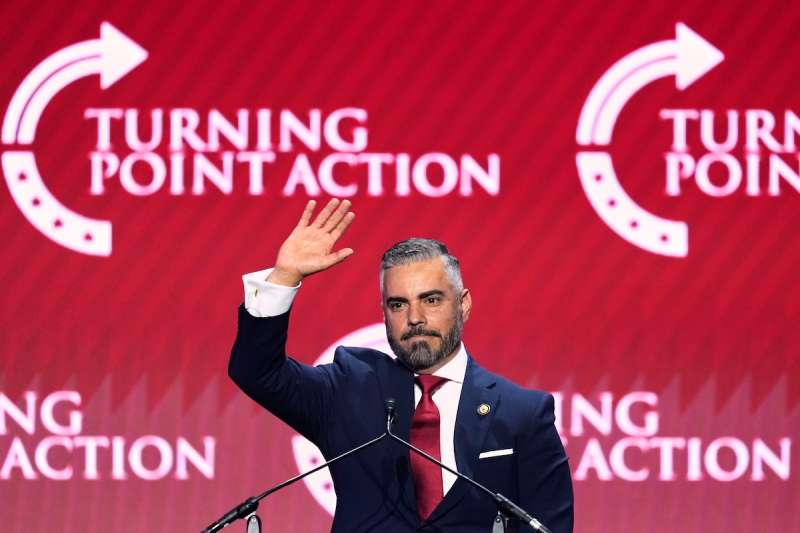
Ciscomani built his national profile as living proof that the American Dream survives the immigration system. Brought to the United States from Hermosillo, Sonora, at age 11, he became the first naturalized Mexican-American elected to Arizona’s congressional delegation — and in 2023, House Republicans put him at the podium to deliver their Spanish-language response to the State of the Union. He has spoken, repeatedly and publicly, about his father driving a bus so his son could someday sit in Congress.
That version of Ciscomani has not been available lately.
The Star’s five unanswered inquiries did not arrive in a vacuum. They came as one of his own constituents — a Tucson Dreamer — was detained by immigration officers who, according to the Tucson Sentinel, entered her home aggressively and without a warrant. She wrote Ciscomani an open letter in the Star, asking directly why the congressman who talks about his own immigration story has said nothing about hers. He has not answered that either.
His Democratic opponent, JoAnna Mendoza, did answer. She posted her support for the detained Dreamer’s due process rights before Ciscomani said a word.
The Father’s Visa, Revisited
The silence has reopened a story Ciscomani would rather not keep telling: the one about how his own family got here.
Ciscomani has said his father secured a religious-worker visa. But immigration lawyers — and members of Ciscomani’s own family, including his brother-in-law — have questioned how a man who spent his life driving a bus could have qualified. Tucson immigration attorney Maurice Goldman told the Star that path required proof the elder Ciscomani entered the country “solely to work as a minister or in a religious vocation” — a standard that doesn’t obviously square with a career behind the wheel.
Charles Kuck, an Atlanta-based immigration attorney who practiced in Arizona until 1993, said the loophole Ciscomani’s family may have used was common in that era. “There was very little to no oversight,” Kuck said. “This was the wild West.”
Ciscomani’s spokesperson called the scrutiny “insulting,” saying it sounds “like you’re saying, ‘Hey, Juan, show me your papers.’” It’s a defense that asks voters to treat questions about a congressman’s own biography as an attack on his identity — even as that same congressman won’t answer whether other people’s children get to stay.
The District That’s Watching
None of this is happening in a safe seat. Arizona’s 6th Congressional District — a border district running through Tucson and southern Arizona — is one of the most competitive in the country, and roughly one in four of Ciscomani’s constituents are Hispanic or Latino, according to Census Bureau data. This is not a district where a Dreamer’s detention is an abstraction. It’s a district where a Dreamer’s detention is a neighbor.
Ciscomani won his seat by threading a needle: a border-district Republican who could speak credibly about immigration because he’d lived it. Roll Call 14 and five declined interview requests suggest he no longer wants to be asked to.