A woman called the Creighton Family Resource Center (CFRC) to get an emergency food bag. She wanted to know which documents she would need to present at the center to access food, like she was accustomed to doing to get SNAP benefits.
“You could just hear it in her voice. She had been through this before,” said Kelley Blakslee, the center’s manager. “I was like, ‘Nothing at all. Just come show up.’ She almost didn’t believe it.”
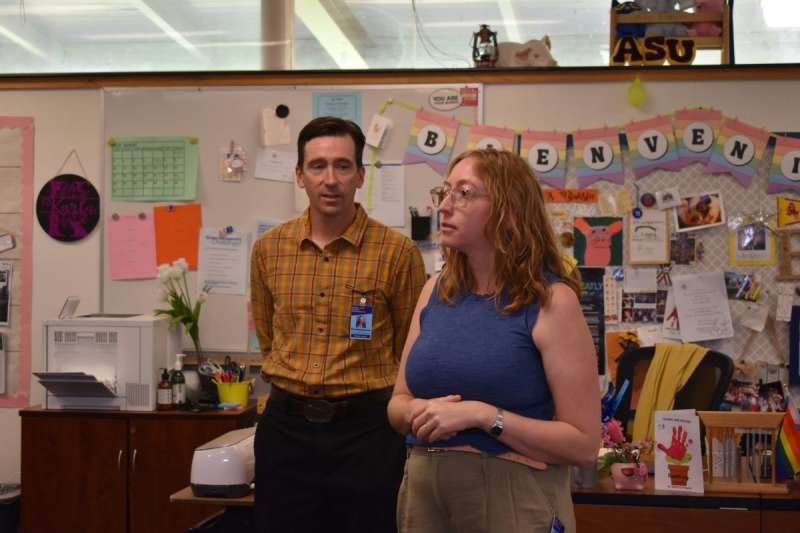
The Creighton Family Resource Center is located on 36th Street in central Phoenix, near Iron Mountain Academy. It is staffed by two full-time employees and a rotating group of volunteers. CFRC sits in the Creighton School District and serves around 1,500 families per year, according to Blakslee.
CFRC offers classes that are designed to prepare children and families for kindergarten and elementary school. The classes focus on motor, pre-literacy, and social skills, among other things.
CFRC’s food distribution program provides fresh and frozen food sourced through a partnership with St. Mary’s Food Bank of Arizona, and it draws families from the community who need aid immediately.
Families who visit CFRC can expect to receive an assortment of frozen protein, carbs, fresh veggies, eggs, and even snacks like potato chips, with contents varying based on what the center has in stock.
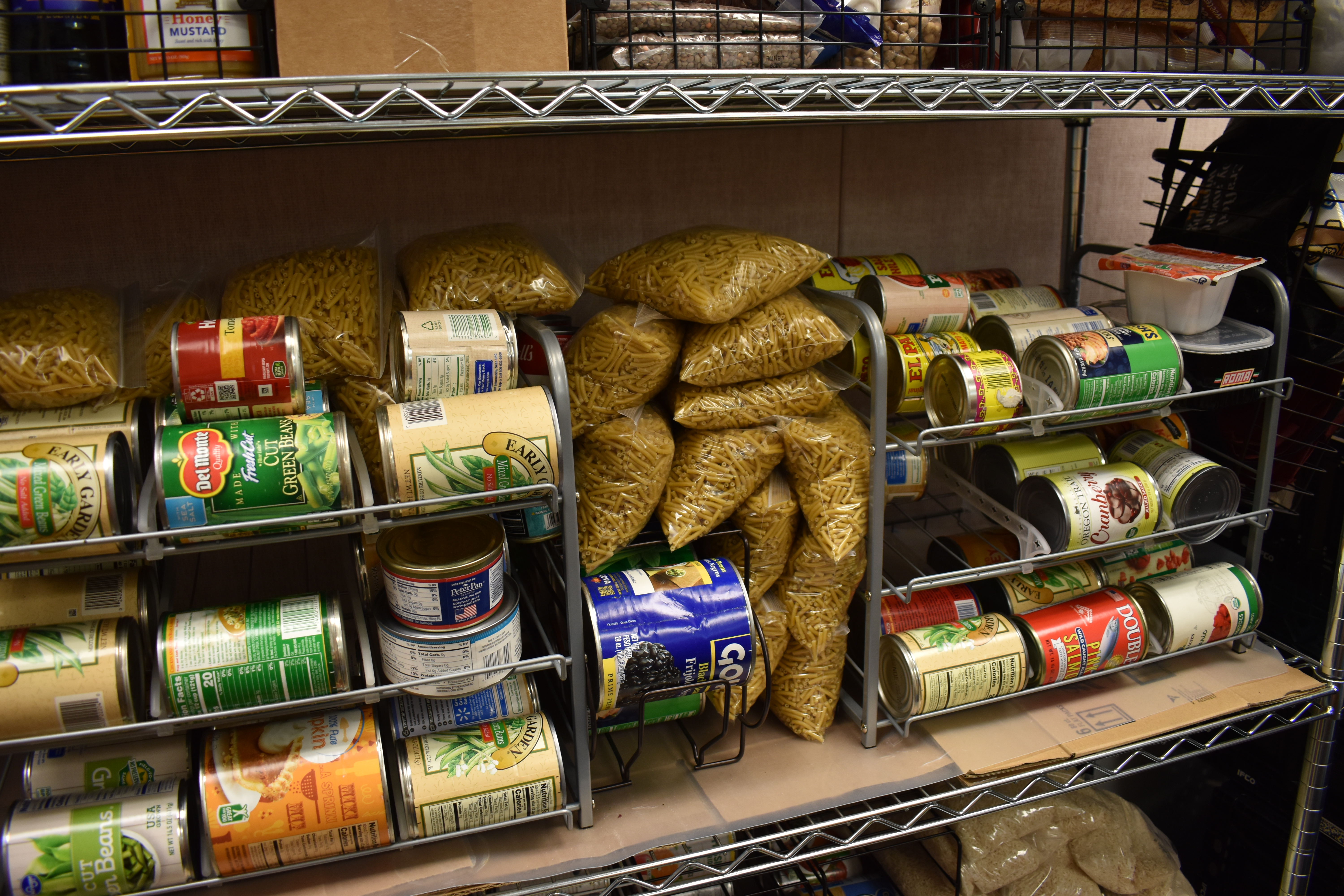
Since federal SNAP rules changed, cutting Arizona enrollment nearly in half, Blakslee said demand at the center has climbed by around 20%.
These federal changes were triggered by the “One Big Beautiful Bill,” a law passed by the Republican-controlled Congress and signed into law by President Donald Trump in July 2025.
The Arizona Department of Economic Security reported that roughly 47% of the state’s SNAP participants were dropped from the program under the new guidelines, including around 180,000 children.
Before SNAP laws changed, Blakslee said, the center would fill around five emergency food bags each week.
CFRC now puts together between 10 and 20 emergency bags every week, on top of its twice-monthly food distribution partnership with St. Mary’s.
“We put out the food bags every other Monday,” Blakslee said. “The distribution starts at 1 p.m., and they’re typically all wiped out. That’s 70 bags [gone] by about 1:30 p.m.”
Reducing red tape for food assistance
The same federal rule changes that pushed people off SNAP also added new documentation and verification requirements to remain enrolled. As a result, many families arrive at the center expecting to face another bureaucratic obstacle course.
But families won’t experience slow processing times or complex paperwork at CFRC, Blakslee says. This straightforward approach has drawn in people who might otherwise have avoided pursuing food assistance altogether.
Outside of walk-in demand, Blakslee said she’s seen an increase in callers rerouted to the center from 2-1-1 Arizona, one of the state’s community resource hotlines. People who don’t know where to go for food aid call 2-1-1, and 2-1-1 sends them to her.
The new law also tightened SNAP work requirements and expanded the age ranges for those requirements. Most families who walk through the door or call the center don’t even understand why their benefits disappeared or changed.
“In general, they just want to know when things are going to return to normal,” Blakslee said.
Blakslee returned to this point several times. She said family resource centers exist because the systems they are meant to supplement have been built to be difficult.
“We are outside of the red tape of a lot of government spaces,” Blakslee said. “We just trust that if the community says they’re in need, they are. And we’re there to help out where we can.”
CFRC also runs appointments three days a week to help people sign up for SNAP or Medicaid through the Arizona Health Care Cost Containment System.
“People will sign up for an appointment and tell me their benefits were cut or they’re changing, or they’re not sure exactly what’s going to happen,” Blakslee said. “That’s another entry point into the center, and [they’re] able to take advantage of our services because they can get help and support again.”
READ MORE: Arizona teachers see SNAP cuts and voucher costs hit the same families
Doing more with less
The surge in demand hit the center at the same time its capacity was shrinking.
CFRC used to have three full-time staff members. That number recently dropped to two, a challenge exacerbated by cuts to partnerships. Blakslee said one University of Arizona partnership used to bring financial literacy and health classes to families at the center, but it ended when the grant supporting it was defunded.
Other partner organizations have called Blakslee to let her know a staff member is gone, a position was eliminated, or a single employee is now doing the work that two used to do.
“In the last year, I’ve gotten more ‘That person is no longer with us,’ or ‘This position has been cut,’ or ‘I’m now taking on this job and this job and so I’m a little overwhelmed,’” Blakslee said. “There’s definitely been more of that.”
Blakslee was direct when asked whether the center is being asked to do more with less money and fewer people.
“Yes, 100%,” she said.
What has expanded, even though funding hasn’t, is the center’s volunteer base. According to Blakslee, CFRC’s core group of volunteers has grown steadily since she took over two years ago.
Many of the people stocking shelves, assembling food bags, and helping out around the center are themselves taking food home for their families that week.
“To me, it speaks to how important this community is,” Blakslee said. “I think even when people are struggling, they understand the benefit of coming together and doing something collectively.”
“While they’re filling food bags, they’re shooting the shit, talking about life, talking through some issues. The beauty of it is that they are getting something from it because they fill their food bags because they need it that week, right? But they’re also able to connect and find that space of community within other people,” she said.
Earlier this week, the center hosted a Día del Niño (Children’s Day) potluck. A new family, referred to the center by a friend, came through the doors for the first time and was surprised to find everything CFRC offered was actually free.
“And I jokingly, but seriously, said to them, ‘I believe that this potluck will fight fascism,’” she said. “Like this is how I think we get through it together and being able to create these spaces where people can do that is really important.”
A pitch to lawmakers
Blakslee said advocates for family resource centers have made a straightforward request of lawmakers: to fund prevention at the source before things get worse.
She said every dollar invested in family resource centers returns $3.65 in long-term and immediate financial benefits to the state. A report from the National Family Support Network put that number at $4.93, or a 493% return on investment.
Blakslee said she’d love to have a state legislator visit CFRC to see how effectively they’re making limited resources work.
“Come visit our center and see just how far we’re stretching any bit of money that we’re getting, and how much impact we can have,” she said. “I would love to see any other organization that’s doing as much with as little.”
Most days, she said, that’s what keeps her going.
“I’m grateful that I have this job that can help people because it helps me get through the days, honestly,” she said.