It’s been more than 10 months since federal immigration authorities raided four Colt Grill restaurants in northern Arizona and a fifth location in Foley, Alabama.
The targets of the raid were the husband-and-wife owners of the restaurants, Robert and Brenda Clouston. They were arrested on charges accusing the couple of conspiring to smuggle undocumented immigrants from Mexico to work at their popular restaurants at below minimum wage and harboring them in apartments they owned.
After pleading not guilty to the charges, the Cloustons were released on their own recognizance shortly after their arrests under the stipulation they not leave the state, documents filed in U.S. District Court in Arizona show.
But the Cloustons, 62, have left Arizona several times while they remain free awaiting trial, now scheduled for Nov. 10 after several postponements, the court documents show.
A federal judge granted their requests to travel out of state on five separate occasions, court documents show. Robert Clouston traveled to Alabama in August, September and October of 2025 and in January and May of this year to tend to several properties the couple own in Foley, including their former restaurant, a home and apartments.
Brenda Clouston traveled to Paso Robles, California, two times in September and January of 2025 to care for her elderly parents. She also accompanied her husband on three trips to Foley in August and September of last year and May of this year, court records show.
The Cloustons’ court-approved trips out of state have ranged from eight days to more than two weeks. The most recent was a 17-day driving trip to Foley the couple planned to make starting May 12 and ending on May 29, court records show.
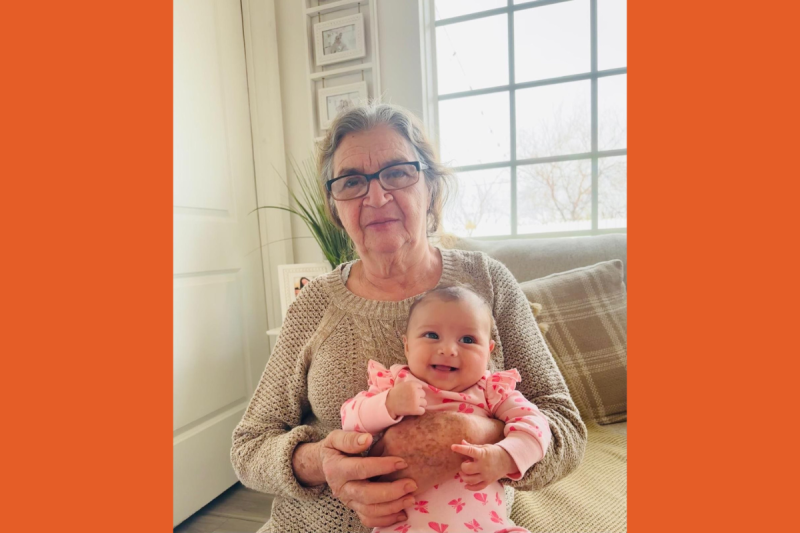
Meanwhile, in a disparity of treatment, one of the Cloustons’ former employees, a 71-year-old great-grandmother named Maria Cristina Tapia Cornejo has spent more than 10 months locked up in a federal immigration detention center in Eloy about one hour south of Phoenix.
She is one of 22 undocumented workers swept up during the July 15, 2025, raid by Immigration and Customs Enforcement and taken into custody for being unlawfully present in the United States, a civil violation under federal immigration laws.
On the day of the raid, Tapia Cornejo was working as a dishwasher at the Colt Grill in the center of Cottonwood. The burgeoning tourist town in Yavapai County is home to a large population of Latino immigrants, many of whom staff restaurants, hotels and resorts in the surrounding Verde Valley, which includes the international tourist destination Sedona.
Tapia Cornejo and the other undocumented workers were transported by ICE to a processing center in Phoenix and then to the 1,500-bed Eloy Detention Center.
It’s not clear what has happened to all of the other workers taken into custody during the raid. Some have been released on bond while they challenge their deportation. Others have already been deported, including Ingrid Ayón, a 24-year-old table busser who had lived in the U.S. since she was a 4-month-old baby before she was returned to Mexico.
But Tapia Cornejo has remained locked up at the Eloy Detention Center since the middle of July 2025 while she fights her deportation to Mexico.
ICE officials have refused numerous requests by Tapia Cornejo, her family and advocates that she be released on humanitarian grounds considering her lack of criminal record, her age, her declining memory and the fact that she is deaf in one ear and partially deaf in the other.
Liz Casey, an advocacy social worker at the Florence Immigrant and Refugee Rights Project, said it was rare to see older people without criminal records held in immigration detention. The nonprofit organization provides legal services to immigration detainees at the Eloy Detention Center and two other detention centers in Florence.
“Normally in other circumstances, under other administrations, people who were older, especially people with no criminal convictions or anything, were much more likely to either not be detained or released on humanitarian parole. So it’s not very common, or it wasn’t very common.”
But under the Trump administration’s mass deportation campaign, Casey has seen an alarming increase in the number of medically vulnerable people, including older people such as Tapia Cornejo, being detained.
The increase includes people with hearing impairment, vision impairment, people in wheelchairs, and people with chronic diseases, such as cancer, amyotrophic lateral sclerosis, and kidney stones, Casey said. She has also seen several pregnant women.
“So we can confidently say that that has definitely increased, people with severe medical issues or disabilities or other vulnerabilities that are being detained and staying detained for long periods of time,” Casey said.
As the Trump administration has ramped up immigration enforcement, the number of people being detained in ICE custody has skyrocketed. More than 60,000 immigrants were detained as of April 4, up 52% since January 2025.
Under previous administrations, ICE normally did not detain medically vulnerable people, or they were released from detention on humanitarian parole, Casey said.
ICE officials, she said, “absolutely have the discretion to release anybody that they want to and they should be releasing these folks with disabilities and other vulnerabilities,” Casey said.
The increase in the detention of medically vulnerable people under the Trump administration has resulted in a growing number of instances of medical neglect within detention centers and an unprecedented number of deaths of people in ICE custody, Casey said.
Since 2025, ICE reported at least 50 deaths of people in ICE custody. The number of deaths this year has reached 18, as of May 1, 2026. The number in 2026 include the March 2 death of 56-year-old Haitian asylum-seeker Emmanuel Damas who had been held at the Central Arizona Florence Correctional Center.
Detained worker said to have deep ties to the United States
Tapia Cornejo has deep ties to the United States, her 31-year-old daughter Carina Cardenas said. Her mother has lived in Cottonwood for more than 25 years, and has four adult children who live there, along with 18 grandchildren and one great-grandchild, Cardenas said.
Tapia Cornejo is married to Froylan Cardenas Barragan, 73. Cardenas said her mother and father had tried to legalize their immigration status through one of their U.S. citizen children. Her father gave up in 2022 and returned to Mexico, Cardenas said. Her mother was unable because she had a prior deportation order on her record, Cardenas said.
Cardenas, 31, now a nurse, is the mother of six children, ranging in age from two to 13. Before her mother was arrested by ICE, Tapia Cornejo took care of Cardenas’ six children while Cardenas was studying for her nursing degree and working as an ER tech.
“I remember that the day that they detained her. That night I came home and I told my kids that their grandma had been taken by ICE and my two older boys were really upset. They were like, ‘This is all Donald Trump’s fault,’” Cardenas said.
In the months before the ICE raid, Cardenas had been trying to convince Tapia Cornejo to finally stop working and retire after years of working in the restaurant industry as an undocumented immigrant.
“She told me, no, that she liked to work because that was like the only thing that kept her mind going, that it kept her busy,” Cardenas said.
Family members now take turns driving from Cottonwood to visit Tapia Cornejo at the Eloy Detention Center every Sunday, a six hour round trip, Cardenas said.
Cardenas has noticed her mother has lost weight in the detention facility and is now down to about 113 pounds. During their visits, she said her mother seems “sad” and “depressed.”
“Honestly, she looks fragile,” Cardenas said.
They are allowed to visit her for one hour.
“She tries to be strong when we’re there, but I could see how it affects her, especially when I take the kids in,” Cardenas said. When it’s time to say goodbye, “she cries and the kids cry. I don’t know if I’m doing good by taking the kids to see her or if I’m harming her more.”
Cardenas said she filed a complaint with CoreCivic, the for-profit private prison company that runs the facility under contract with ICE, after one of the detention officers in the kitchen area yelled at Tapia Cornejo.
“I guess that my mom wouldn’t move or something,” Cardenas said. “But I told them my mom has hearing issues so unless you’re making eye contact and you’re speaking clear and loud, sometimes she can’t comprehend what you’re saying, especially if there’s a language barrier because she only speaks Spanish.”
Tapia Cornejo has shared disturbing stories with Cardenas during the visits. During a visit in March, Tapia Cornejo said a women at the facility had tried to kill herself out of desperation.
“One of the inmates jumped from the top tier down onto like the ground to try to commit suicide,” Cardenas said. In another incident, a detainee “had bit an officer and that they had ripped a chunk of skin off the officer. “
Why is Tapia Cornejo fighting her deportation to Mexico?
ICE officials ignored multiple requests by The Arizona Republic to interview Tapia Cornejo in person at the detention facility.
They eventually allowed her to be interviewed over the phone.
During the 30-minute call on May 7, Tapia Cornejo could be heard sobbing quietly over the phone several times.
“I’m not well,” she said. “It’s just the stress sometimes. And then, well, since there are guards — some aren’t exactly nice people — the vast majority of them are actually very good. But sometimes they yell at us; they make us feel so insignificant, so humiliated.”
She often sees other detainees “break down in tears: it really gets to me. I feel the pain of these people when I see them crying. Also because of the sheer passage of time, it’s not easy being cooped up like this, stuck in here. It really weighs on us. It’s depressing. … I just feel myself breaking down.”
Tapia Cornejo does not want to return to Mexico because all of her children, grandchildren and great-grandchild are in Cottonwood. She said the city where she is from in Mexico, Lázaro Cárdenas, in the state of Michoacan, is plagued by “a lot, a lot” of cartel-related violence, kidnappings and extortion. She is afraid to return.
A first cousin told her how dangerous it is.
“He told me he has two missing children — he has no news of them. One of them was killed. They dismembered him and buried him in pieces. I mean, they didn’t even recover his entire body. They killed him, dumped him in bags,” Tapia Cornejo said.
She said she’d rather stay in detention fighting to be released in the United States than go back.
Women are segregated from men at the facility. Tapia Cornejo said she believes she is the oldest woman held at the facility, although she said she has met other older women in their 50s and 60s during the 10 months she has spent locked up in detention. In February, ICE released a 79-year-old asylum-seeker and grandmother from Cuba who had been held for nine months at the Eloy Detention Center.
Tapia Cornejo said she reached a low point earlier this spring, when she had problems with her memory.
“I was very worried because I was afraid that I was … that it was very damaged,” Tapia Cornejo said. “I was forgetting everything. Everything. I had forgotten everything.”
She said she stayed in her cell for several days.
“I just wanted to lie in bed all the time. I didn’t want to talk to anyone,” Tapia Cornejo said. “I’ve actually gone a few days without eating because I don’t hear when they call out (for meals) because I’m deaf. My ears, they aren’t very good.”
Lately, she was feeling better since she started working in the detention center’s laundry service because she likes to stay active.
She said detention officers wake her up at 4:30 in the morning, so she can start her shift at 5 a.m. She finishes at 10 a.m. She said she hasn’t been told how much she is paid, but believes it’s about $3 a day.
Why is ICE still holding her in detention?
Tapia Cornejo was one of several people arrested during the July 15, 2025, operation by the Prescott Valley office of Homeland Security Investigations, ICE spokesperson Fernando X. Burgos said in a written statement.
HSI agents were assisted by ICE Enforcement and Removal Operations officers to execute arrest and search warrants targeting Colt Grill restaurants and associated stash houses.
Several people were arrested and interviewed at the locations. Those found without legal status were taken to the Phoenix field office for processing, Burgos said.
Tapia Cornejo, an undocumented immigrant from Mexico, was among those detained and put in removal proceedings, Burgos said.
She was charged with “illegal presence in the United States without admission or parole,” Burgos said.
Tapia Cornejo was previously encountered at the Nogales port of entry around Sept. 5, 2000. She was arrested for violating U.S. immigration laws and removed to Mexico that same day, Burgos said.
At some point after that date, Tapia Cornejo re-entered the United States without admission or parole, a felony, Burgos said.
On Jan. 16, 2026, an immigration judge at the Eloy Detention Center ordered her deported to Mexico, Burgos said. Tapia Cornejo filed an appeal to the Board of Immigration Appeals.
She will remain in ICE custody pending her appeal, Burgos said. “ICE defers to the Department of Justice for any expedited outcome on her latest appeal,” Burgos said.
Burgos also said ICE provides “comprehensive medical care from the moment” noncitizens enter ICE custody. The care includes medical, dental, and mental health services as available, and access to medical appointments and 24-hour emergency care, he said.
Faith leaders join efforts for Tapia Cornejo to be released on humanitarian grounds
In April, a group of faith leaders cited biblical scripture in calling on ICE to release on humanitarian grounds Tapia Cornejo and several other people with medical conditions being held in immigration detention facilities in Arizona.
“We cannot remain silent while a (71)-year-old grandmother loses her mind behind bars,” the Rev. Kelley Dick, senior minister at Saguaro Christian Church in Tucson, said outside the ICE offices in Phoenix. “Maria is not a danger to anyone and is deserving of compassion and dignity.”
Cardenas, Tapia Cornejo’s daughter, also wrote an email to ICE in April requesting that the agency release her mother, noting the agency “has discretion to grant parole in urgent humanitarian situations such as this one.”
“Her current age and medical condition, combined with her long residence, family ties, and lack of any criminal record, strongly favor release,” Cardenas wrote.
Cardenas stated she would provide full financial support, ensure her mother attends medical appointments and any ICE reporting requirements, and guarantee compliance with all conditions of supervision.
“She will live in a stable home environment where her needs can be met,” Cardenas wrote.
David Elicio, an ICE detention officer, wrote back to Cardenas in an email thanking her for providing “new information that we were not aware of.”
Elicio stated, however, that Tapia Cornejo does not qualify for release on humanitarian parole because the reinstatement of an order of removal was final. What’s more, Elicio said, an immigration judge had postponed Tapia Cornejo’s removal to Mexico, but the final removal order still stands.
Cardenas wrote back, saying “we respectfully disagree” that Tapia Cornejo does not qualify for humanitarian release.
The family was exploring other legal options to free Tapia Cornejo “but as you know these proceedings take time that my mother doesn’t have. She is clearly deteriorating as she remains in detention.”
The family through a lawyer also has filed a habeas corpus petition in federal court seeking to force the Trump administration to release Tapia Cornejo, Cardenas said.
Meanwhile, Tapia Cornejo remains detained at the Eloy Detention Center. She said she looks forward to the weekly visits with her children and grandchildren. She keeps a running tally of every single visit by every single family member.
“I’ve had 138 visits from my family,” Tapia Cornejo said during the May 7 call. “That’s counting every single time: when my grandson comes, when my granddaughter comes. And I count each one as a separate visit.”
“That is what sustains me.”
Reporting by Daniel Gonzalez, Arizona Republic