Arizonans could blow a whistle and end up in jail if Republicans get their way.
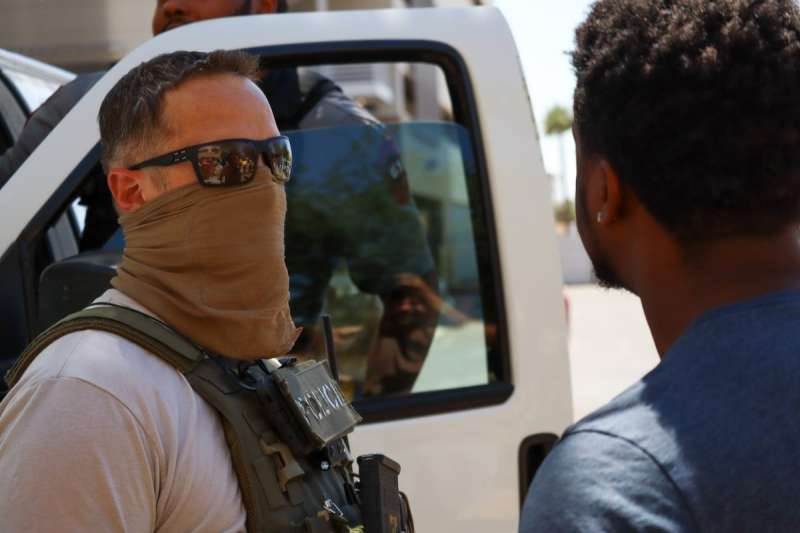
Senate Bill 1635, introduced by Senate Majority Leader John Kavanagh (R-Fountain Hills), would make it a Class 1 misdemeanor to alert others about Immigration and Customs Enforcement (ICE) activity. The bill applies to anyone who warns others about law enforcement activity — federal or local — with the intent to block or interfere with a lawful arrest. A conviction carries up to six months in jail and a $2,500 fine.
The bill designates “intentional signaling” as a violation, including the use of whistles, bells, gestures, written messages, and electronic communications. The bill includes exceptions for attorneys providing legal advice, journalists and communications “made without intent to interfere.”
The bill’s origins trace to a single Instagram post. Last August, ICE agents detained two brothers outside Southwest Elementary School on the southwest side of Phoenix — one was dropping off his child — and a community group posted an alert about it on social media. Ortiz, whose district includes parts of Maryvale and west Phoenix, reposted it on Instagram. Republican lawmakers called for her expulsion from the Senate; those efforts stalled. Kavanagh later acknowledged the post was likely protected speech, but said it “motivated” him to introduce SB 1635 anyway.
In a statement, Kavanagh framed the bill as supporting President Donald Trump’s immigration enforcement agenda.
“As President Trump works to remove criminal illegal aliens from our communities, radical Democrat lawmakers, including Sen. Analise Ortiz, have chosen to interfere and help criminals evade arrest,” Kavanagh said. “That behavior endangers law enforcement officers, threatens public safety, and shows a complete disregard for the rule of law.”
The legislation comes after waves of protests across the country against ICE activity. Demonstrators have used whistles, social media and rapid-response networks to warn neighbors — aiming to shield immigrants, including those with legal status, from being caught up in raids and held in what are often concerning conditions within detention facilities.
Now, Arizona Republicans are pushing to criminalize those efforts to support federal authorities’ efforts to target Arizonans.
But, is that legislation legal?
“Absolutely not,” said Darrell Hill, policy director of the American Civil Liberties Union of Arizona. “Arizonans have a First Amendment right to talk about ICE activity in their communities, warn their neighbors, and provide information on how to protect their communities.”
The First Amendment protects freedom of speech, including whistleblowing and social media posts, Hill said. It also prevents government interference with those rights.
“You have, 100%, a First Amendment right to talk about public law enforcement activity, whether that be the arrest of someone in your neighborhood, a checkpoint, an ICE action, a local law enforcement action,” Hill said. “We all have the right to know, talk about, and relay law enforcement activity to our neighbors.”
If passed, the legislation would have “chilling” effects on free speech, Hill said. The bill’s broad language would make it easier for authorities to categorize speech as “criminal,” — putting journalists, passerbys, and bystanders at risk of prosecution.
Kavanagh disputed that the legislation violates the Constitution, saying the measure has protections in place and “narrowly” targets individuals who knowingly inform a specific person being sought by law enforcement — not journalists or bystanders.
The broadness of the bill, however, sets the foundation for law enforcement to target any speech they deem as criminal.
“By muddying the waters, by making the law more vague and broad for both the public and for law enforcement, it increases the opportunity for abuse or trampling of a person’s rights,” Hill said.
Despite the bill, Hill said the law remains on the side of those speaking out.
“We are allowed to record activities. We’re allowed to post those activities online. We are allowed to instruct people who may be encountering law enforcement or their rights and how to assert their rights,” Hill said. “We have to be careful not to criminalize speech and criminalize activities where we’re just informing people about their rights and their privileges under the Constitution.”
The legislation passed the Senate along party lines and now heads to the House. A veto by Gov. Katie Hobbs is widely expected — she has vetoed dozens of Republican bills this session and in April placed a moratorium on signing any legislation until Republicans release a budget proposal. Still, Hill urged Arizonans not to take that for granted.
“I don’t think we want to ever take for granted any action by the governor’s office. Folks should contact the governor’s office and let them know how they feel about this legislation.”